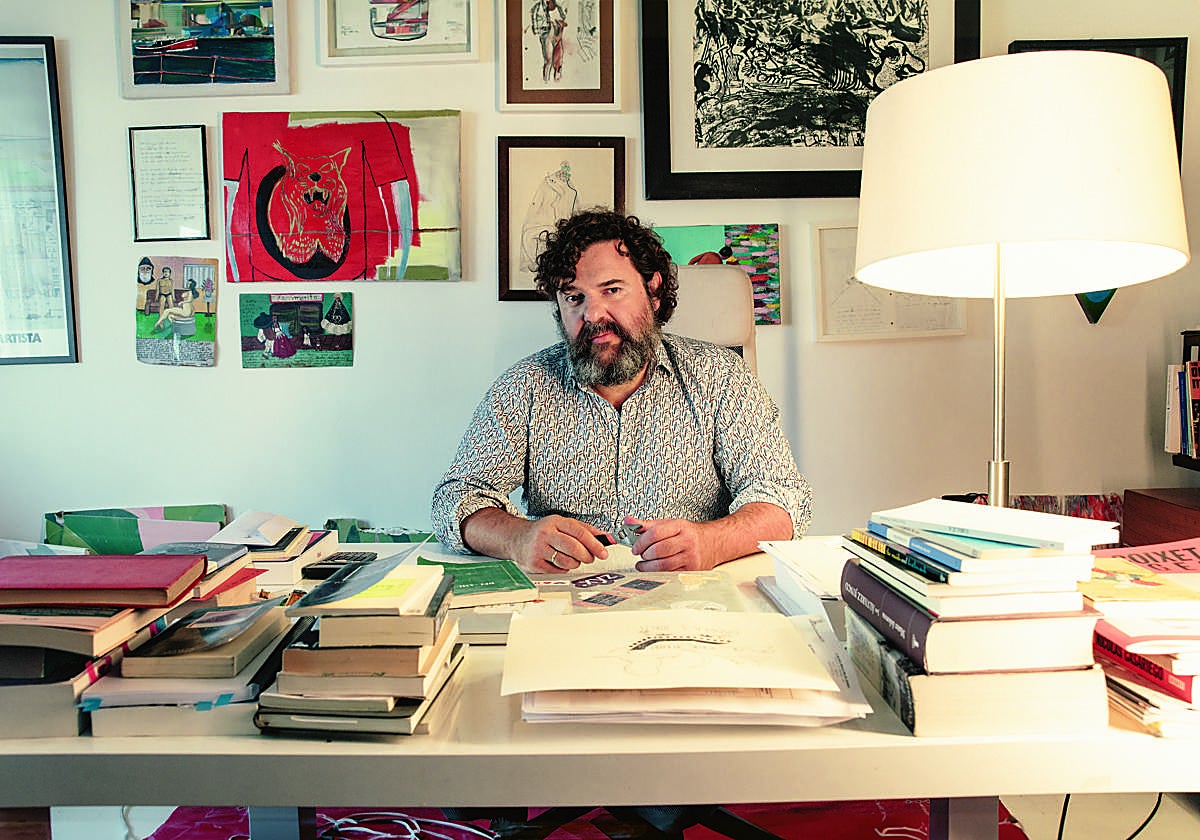
Spanish author Jacobo Bergareche has published a new book, Tío Grande, out through publisher Asteroide, telling the story of his unlikely friendship with Amadou, a man from Guinea-Conakry who fled his homeland for Spain at the age of 12.
Bergareche, who was born in London in 1976 and raised in Madrid, met Amadou through an annual card tournament he organises in the Spanish capital. Amadou ran the venue where the games of mus, a traditional Spanish card game, took place. Bergareche started the tournament in memory of his younger brother, Roque, who was murdered in Angola in 2012.

Bergareche said he is drawn to people's stories, and that migrants often have extraordinary ones: leaving home, risking their lives, searching for a future without knowing where they will end up or whether they will ever return. He said he listened to Amadou honestly, and Amadou in turn told his story honestly, which is what created the connection between them.
A friendship that became a book
The project grew into a literary road trip after Bergareche decided to accompany Amadou on a visit back to his country. He said the hardest question was how to tell someone else's life without appropriating it: a comfortable white man who likes cooking paella on Sundays recounting the poverty of a much younger black man would, he admitted, sound wrong on the surface. But he argued literature demands total honesty, and said he has always loved Africa without ever viewing it with condescension, adding that he also has a tragic bond with the continent because his brother is buried there.
He insisted he had not invented anything in the book, saying a writer's job is to arrange material, leaving some things out and giving others more space. He spent eight months trying to get access to a minors' reception centre in Melilla, because he felt it was important to write about the places Amadou had actually been.
Roles reversed in Guinea-Conakry
On the journey into the interior of Guinea-Conakry, which he described as not the safest place in the world, Bergareche became the outsider dependent on Amadou, who worried the pair could be robbed because travelling with a white man signalled they had money.
The trip coincided with Ramadan. Bergareche called the experience incredible, joking that losing seven kilos was far cheaper than Ozempic injections, but said what struck him most was being physiologically in step with billions of people worldwide, waking, eating and fasting at the same hours, which helped him understand what it means to live a religion as a community.
He argued that modern life has turned spirituality into something people buy, through relaxation and mindfulness apps, when real connection comes from practices like praying together with others, feet touching feet, everyone repeating something they don't fully grasp.
Dreams built to be chased
Asked whether Amadou's dream of reaching a "white" country resembles the dreams of young Europeans shaped by social media, Bergareche said the parallel runs deep. He said many people chase a place that doesn't exist, built deliberately to make them want it. Migrants who do make it to Europe, he said, often return home with five mobile phones and expensive sneakers and sunglasses despite sharing a flat of about 30 square metres with seven other people, acting out a version of success rather than admitting they live in the worst corner of Orcasitas, a Madrid neighbourhood, sharing a room with five others, sleeping on mattresses on the floor, without papers, working a bad job.
A shared experience of loss
The book also recounts the murder of Bergareche's brother Roque alongside the loss of Amadou's family when he was a child. Bergareche said the two losses are alike: Amadou lost his place in the world, no longer feeling African but never fully accepted as Spanish even with citizenship, while Bergareche lost a brother and the future he had imagined for their children together. He said mourning is easier when nothing is left unsaid, adding that there was nothing he wished he had told his brother that he never did. His earlier book, Estaciones de regreso, published by Círculo de Tiza in 2019, was written while he was still deep in that grief, and he said every page of it hurt; Tío Grande, by contrast, was written once his mourning had already been resolved.
A story he insists is not political
Bergareche said the book's release coincided with events in Ceuta, which worried him because he feared it would force a political reading onto a story he says is not political, centred instead on Amadou, his fiancée Hamada, both of their families, and his own. He said literature's purpose is to put readers in someone else's shoes, and that dehumanising others costs people their own humanity in return. He admitted that before writing the book he did not know what a minors' reception centre was or what the surrounding debate even concerned, and said he came to realise that unaccompanied minors have become a national debate despite making up less than 0.1% of migrants in Spain.
What Amadou thought of the book
Asked how Amadou reacted to reading the finished book, which he called raw and full of intimate details, Bergareche said Amadou's only comment was that it was gripping. At the launch, which drew people from across the political spectrum, Bergareche said he invited Amadou to join everyone for dinner, but Amadou preferred to go to a Senegalese restaurant with his own friends, saying their connection was something private between the two of them. Bergareche said Amadou often judges people by whether they have what he calls a clean heart, a skill Bergareche described as a kind of superpower, born of having had to trust strangers, from the car he boarded in the desert to the boat that carried him to Spain, in order to survive the journey.
Test yourself
What is the title of Jacobo Bergareche's new book?
How did Bergareche and Amadou first meet?
According to Bergareche, what share of migrants in Spain are unaccompanied minors?
Where it happened
Madrid, Spain