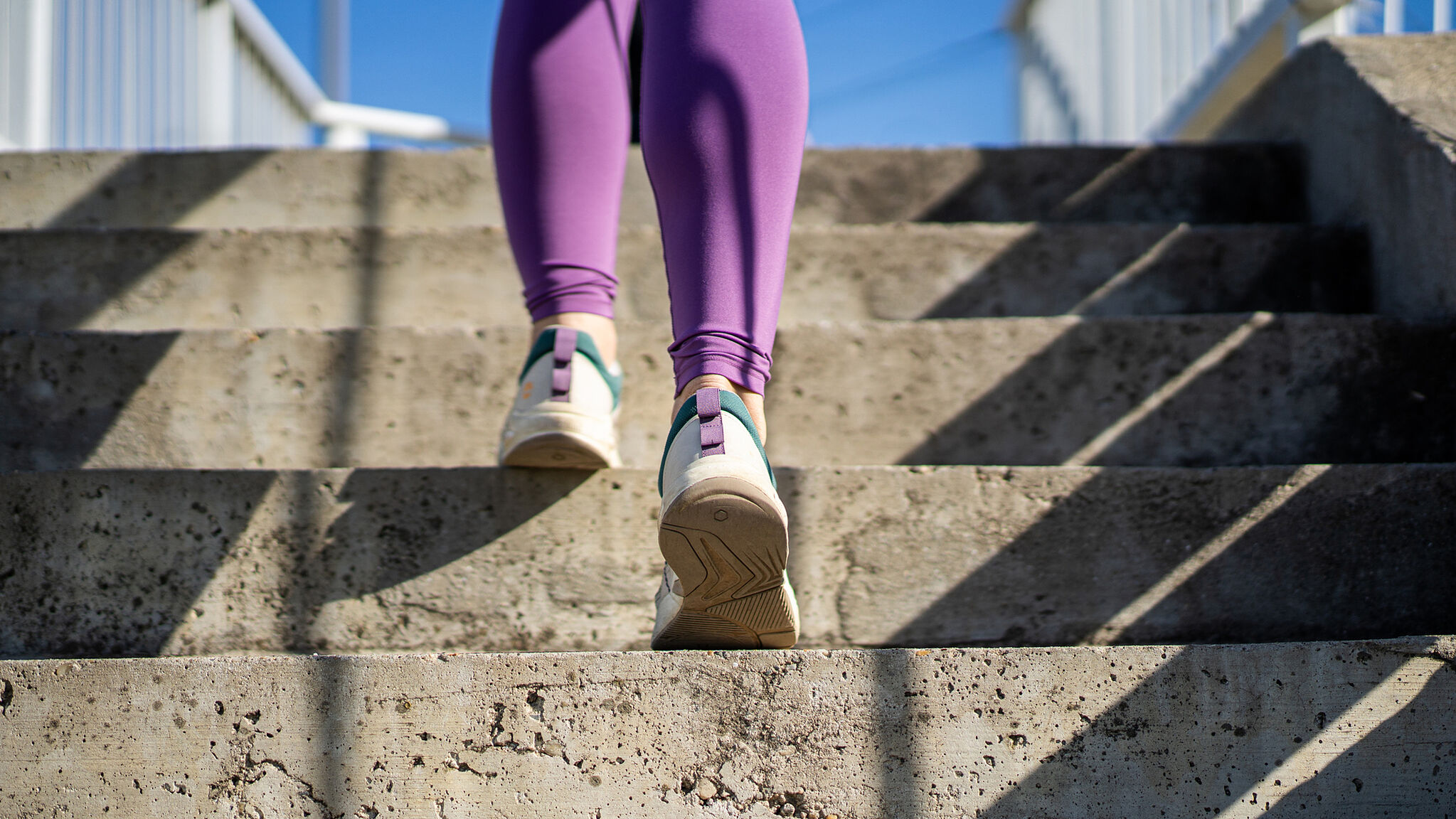
Personal trainer Álvaro Puche says that if someone could only add one active habit to their daily routine, climbing stairs would be among the best choices. He argues that stairs, found at home, at work or in public transport, work as a health tool on a par with weights, resistance bands or a pilates ball.
Puche explains that climbing stairs allows a person to work at a higher intensity than they would get from simply going out for a walk. When someone climbs steps, the heart works harder, oxygen demand rises and a greater amount of muscle mass comes into play, he says, producing a stronger cardiovascular and metabolic stimulus than a conventional walk.
Why Stair Climbing Works
According to Puche, many people believe they get enough physical activity because they walk every day, but the effort involved often does not reach the intensity needed to produce an extra benefit for overall quality of life. That, he says, is exactly why he considers stairs one of the most effective tools for staying active without having to set aside specific time to train.
He points out that every climb forces the ankles, knees, hips and torso to coordinate in a single integrated movement. It also intensely activates the glutes, quadriceps, hamstrings and calves, lower-body muscles that are essential for maintaining independence and functional capacity as people age. Puche says that, metabolically speaking, climbing stairs has a far greater impact than walking because it engages far more of the leg and glute muscles.
Starting Small
Climbing stairs can become a genuine workout if it is done regularly, and the advantage is that no one needs to start big. One of the messages Puche repeats most often is that meaningful change comes from small, sustained doses over time.
He says this approach is especially useful for persuading people who have gone years without exercising to start moving again. Even so, he recommends beginning gradually, particularly for anyone who feels unsteady with the movement. In those cases, a single step can be used to work on mobility, balance and strength, with progression as confidence and fitness improve.
Posture Matters
Working the glutes on stairs requires a specific posture, Puche says. If the torso leans forward while climbing, the area that gets worked most is the back of the leg, including the glutes and hamstrings. Posture while climbing determines which part of the body is being trained, he explains, adding that when the torso stays fully upright, the quadriceps are activated instead.
Puche also suggests that steps can double as a home gym. Raising the heels, tapping the feet, performing slow, controlled descents, working on hip lifts or strengthening the soleus muscles are among the exercises that can be done directly on a staircase.
Combining With Other Exercise
Puche says that from age 60 onwards, walking is excellent for health, but it helps to add an extra layer of stimulus. Walking and climbing stairs every day is great, he says, because a higher daily rate of physical activity makes everything work better. However, he adds that it is also important to include exercise that stimulates fast-twitch muscle fibres, which are more closely linked to strength and functional capacity.
At the same time, Puche cautions against becoming obsessive about it. Climbing stairs should not become the only exercise a person does, he says. The key is to fold it into an active lifestyle that also includes strength work, mobility and progression. He recommends that stair climbing be complemented with ankle and hip mobility exercises and strength work for the calves, quadriceps, hamstrings and glutes.
Stairs, he notes, have become one of the favourite tools among experts in longevity and healthy ageing, precisely because the movement is available to everyone, requires no equipment and can be adapted to any fitness level.
Test yourself
According to Álvaro Puche, why is climbing stairs more effective than regular walking?
Which muscles does Puche say stair climbing intensely activates?
What does Puche say determines whether glutes or quadriceps are worked more while climbing stairs?
Have your say
Do you usually take the stairs instead of the elevator?