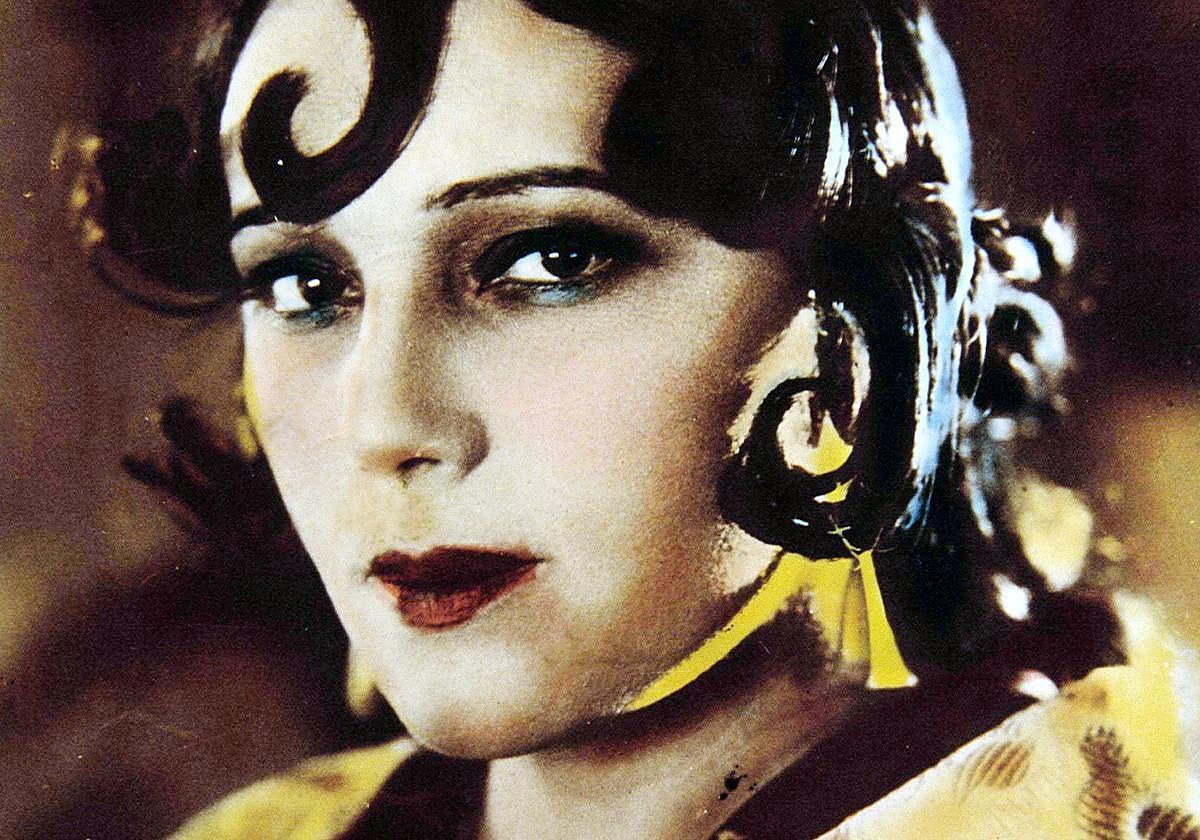
Raquel Meller, the Spanish cupletista and silent film actress referenced in the Movistar Plus series La bola negra, is being remembered for an off-stage drama as vivid as anything she performed: a public slap she delivered to fellow performer La Argentinita on a Madrid stage after being mocked in a parody act.
La bola negra, created by Javier Ambrossi and Javier Calvo, known together as los Javis, draws partly on the work of Greek painter Yannis Tsarouchis for its depiction of sailors. In one scene, the cupletista Nené Romero, played by Penélope Cruz, explains to a stunned Sebastián, played by Guitarricadelafuente, who Edmond de Bries was, a transformist performer who impersonated the leading singers of the day before the war. When Romero lists the artists Edmond de Bries imitated, she names herself and Pastora Imperio, but makes clear that no one dared impersonate Meller.

Real life bore that out. In November 1915, at the Teatro Romea on Madrid's Calle de Carretas, La Argentinita parodied one of Meller's songs, El matrimonio, without realising Meller was in the audience. According to a report in the newspaper El Liberal dated 6 November 1915, once the curtain fell, Meller left her seat and strode onto the stage.
La Argentinita had just recited the parody's closing lines when Meller answered with a line of her own and slapped her, a blow the paper said rang out even louder than the words themselves. La Argentinita, who had already finished performing, pulled back the curtain and told the audience she could not continue because Raquel Meller had hit her. The crowd broke into applause, and the evening turned, as the paper put it, from a cuplé into a sainete, a short comic farce.
Meller vs La Argentinita
The two women were heavyweights of Spanish entertainment. La Argentinita, born Encarnación López Júlvez, was a dancer, singer and flamenco performer who leaned toward folk tradition. She later recorded the 1931 album Colección de canciones populares españolas with poet Federico García Lorca at the piano, featuring songs such as Anda jaleo and Los cuatro muleros, for which she provided the voice, footwork and castanets. She was a friend of Lorca and the lover of bullfighter and intellectual Ignacio Sánchez Mejías.

Meller, born Francisca Romana Marqués López, was a cupletista and actress and the most famous Spanish woman in the world at the time, acclaimed for her performances of La violetera, written by José Padilla, and El relicario. Her rendition of El relicario helped put her on the cover of Time magazine in April 1926.
Admirers from Chaplin to a king
The Time feature described one of her performances at the Empire Theatre in New York, where the curtain had to rise 23 times at her farewell because the audience would not let her go. Rudolph Valentino, Cecil B. DeMille and Charlie Chaplin were reportedly among those watching. Chaplin is said to have offered her the lead role in one of his films, which she turned down, though he did use her song La violetera in City Lights, in the scene where Charlot meets the blind flower seller.
Painters were equally taken with her. Julio Romero de Torres painted her in black and a mantilla, and nude in a portrait he called La Venus de la poesía, while Joaquín Sorolla painted her in white, lit in his Impressionist style. Playwright Jacinto Benavente, winner of the Nobel Prize in Literature, said that Raquel's art always left him wondering where such an angel had learned so much mischief.
Writers Manuel Machado and Vicente Blasco Ibáñez were also among her admirers. According to accounts, King Alfonso XIII, a devoted fan of cuplé, fell for her and invited her to the royal palace. Meller sent back word that the distance from the theatre to the palace was the same as from the palace to the theatre, so if he wanted to see her, he could come to her instead. The king did just that, attending a performance at Madrid's Teatro Maravillas with his wife, Queen Victoria Eugenia.
From Tarazona to Paris
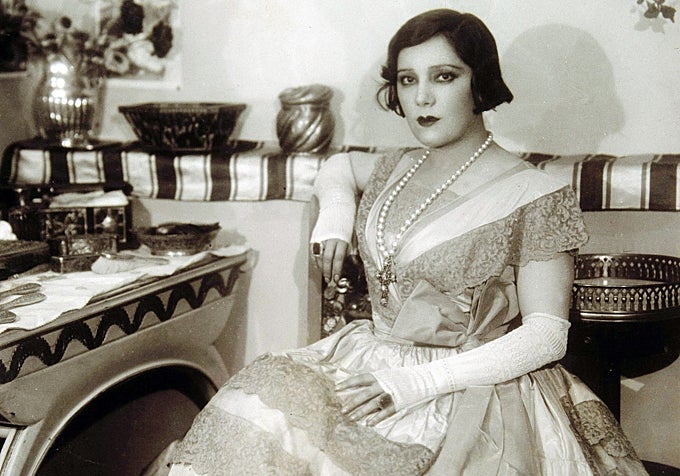
Raquel Meller was born in 1888 in the Cinto neighbourhood of Tarazona, in the Zaragoza province, the daughter of a blacksmith and a shop assistant who later emigrated to Catalonia. She spent part of her childhood in France in the care of an aunt who was a Poor Clare nun, before returning to the Poble-sec district of Barcelona, where she worked as a seamstress and then began performing in cuplé theatres of ill repute. She first went by the name La Bella Raquel before adopting the stage name Meller, reportedly taken from a German lover. A recent documentary by filmmaker Vicky Calavia, titled Insumisa y divina, sums up that defiant reputation.
Films, fortune and a second marriage
She recorded her first records in 1912 and made her film debut in 1919 with Los arlequines de seda y oro. That year she also married the Guatemalan diplomat and writer Enrique Gómez Carrillo and moved to Paris, though the couple had separated by 1922. More films followed, including Violetas imperiales, directed by Henry Roussel; La ronda de noche, directed by Marcel Silver; and Carmen, directed by Jacques Feyder. Filming on Lola la de Triana was interrupted by the Spanish Civil War.
At her peak, Meller lived in luxury hotels and owned a mansion in Versailles, a villa in Villefranche-sur-Mer on the French Riviera, and a chalet called Villa Tinuca in Madrid's Ciudad Lineal district. Her homes held paintings by Pablo Picasso, Henri Matisse and Pierre-Auguste Renoir, along with a piano that had once belonged to Mozart. Her income reportedly exceeded that of tango singer Carlos Gardel.
War, decline and death
In 1937 she travelled to Argentina. After the war she returned to Barcelona, where she regained some popularity, and in 1940 she married again, to French businessman Edmond Sayag, though the marriage lasted only three years. She gradually faded from public life and died in 1962 following a fall that worsened a heart condition. Though she had long been away from the stage, her funeral at Barcelona's Montjuic cemetery drew a full turnout.