

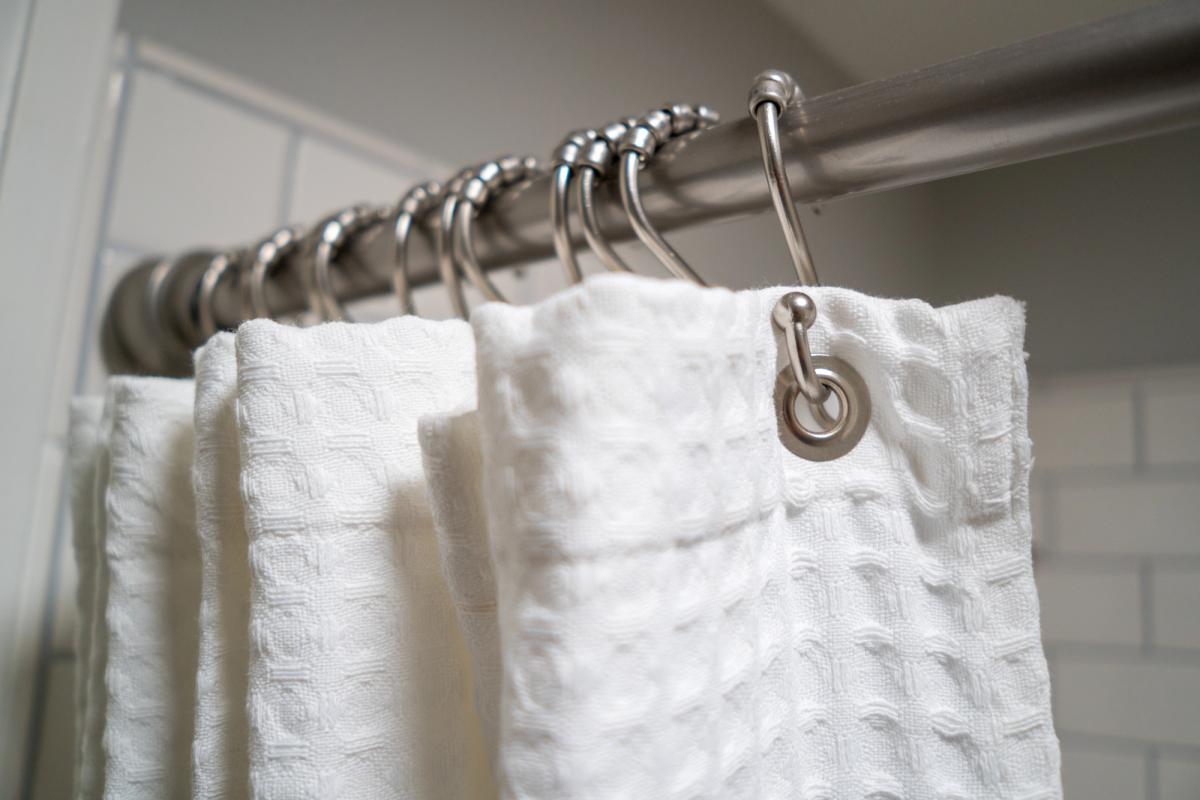
Shower curtains should be left open for at least an hour after bathing to prevent mold from developing between the folds, home care expert Marla Mock has advised in Southern Living.
The advice addresses a longstanding debate among homeowners over whether leaving a shower curtain drawn shut or pushed open provides the best protection against bathroom moisture. Mock explained that while both positions offer distinct advantages, leaving the curtain open allows air to circulate freely and ensures the fabric dries completely.
According to Mock, the primary benefit of an open curtain is preventing moisture accumulation. Free airflow around the material speeds up drying time, significantly reducing the risk of mold and mildew taking root. Leaving the curtain open can also make a bathroom feel fresher and visually larger, although it leaves stored toiletries like shampoo bottles in full view.
Weighing the benefits of closed curtains
Leaving a curtain drawn closed also carries practical and aesthetic benefits. Mock noted that a closed curtain conceals the shower interior and stored toiletries, creating a tidier appearance. In addition, closing the curtain allows its inner side to dry more evenly and prevents residual water from dripping onto the floor, which protects walls and corners from moisture accumulation that can lead to mold.
Despite the merits of both options, Mock recommends leaving the curtain open for at least 60 minutes after taking a shower. That duration provides sufficient time for the curtain to air out and dry thoroughly without moisture becoming trapped on its surface.
Preventing mold with ventilation and liners
Managing the position of the curtain is only one component of preventing mold growth in bathrooms. Mock emphasized that regular cleaning, adequate ventilation, and choosing water-resistant materials are equally critical for maintaining a hygienic space.
To reduce moisture in the air, Mock recommends running the bathroom exhaust fan during showers and leaving it on for a period afterwards to clear lingering steam. Homeowners can also use a dehumidifier to lower indoor humidity levels. When purchasing bathroom fixtures, Mock suggests choosing curtains or liners made from water-repellent materials, or at least selecting fabrics that are easy to clean.
Even water-resistant materials require routine maintenance. Mock advised using a protective liner to shield the primary decorative curtain from moisture. Depending on the material, many curtains and liners can be cleaned in a washing machine or wiped down with a detergent solution, and both should be cleaned regularly or replaced when worn out.
Additional bathroom maintenance tips
Proper bathroom care also extends to fixtures and glass surfaces. Cleaning specialists note that citric acid can easily remove limescale build-up from shower heads. Using citric acid helps improve water pressure, extends the lifespan of the shower fixture, and maintains a consistent water flow.
Specialists have also shared guidance on keeping glass shower doors free of spots and streaks. Experts pointed out that glass shower doors vary, with some manufactured with specialized coatings designed to repel water droplets and fingerprint marks.


