


Malaga-born Spanish singer Antonio Mellado Escalona, known professionally as Zenet, will perform at the Gran Teatro Caixabank Principe Pio in Madrid on Wednesday, September 30, as part of his national concert tour.
The performance forms part of his tour for his latest studio album, Las manos y la voz, which was released last year and has taken him across Spain since January.
Following his Madrid show, Zenet is scheduled to perform at the Casino L'Aliança del Poblenou in Barcelona on November 12 before traveling to Mexico for international dates.
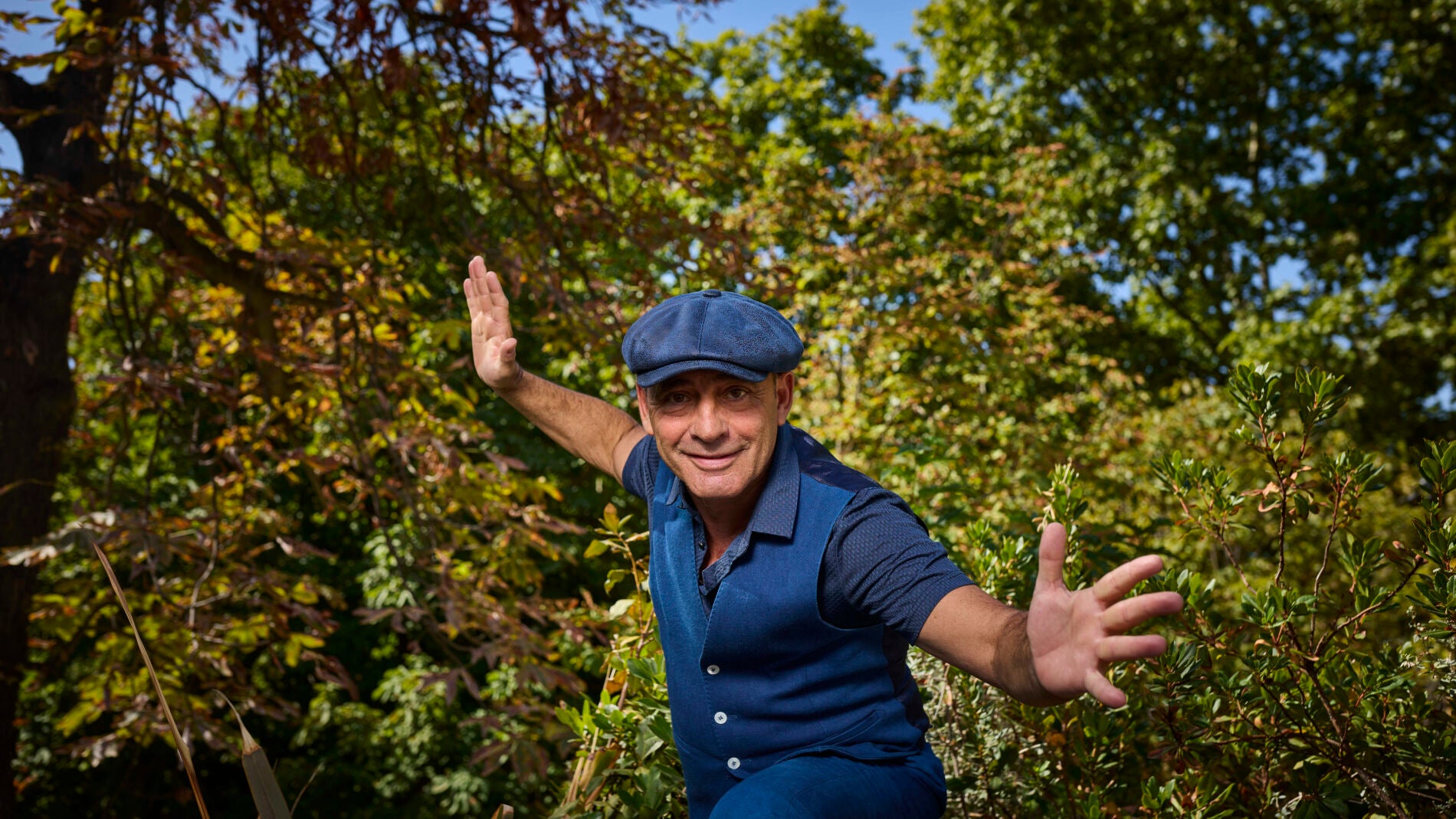
Born in Malaga in 1967, Zenet is a multi-talented artist who sings, composes, acts, and paints, earning wide recognition over a career spanning nearly two decades. His discography includes seven studio albums and one duet album, blending musical styles such as jazz, bolero, tango, copla, bossa nova, and Cuban feeling.
Addressing his label as a crooner, Zenet stated that while he accepts the definition, he views it as a stereotype stemming from Anglo-Saxon tradition. He explained that a crooner is often understood as a singer who interprets songs by other writers, dresses with elegance, and performs alongside an orchestra.
He noted that performing with a jazz ensemble and drawing inspiration from harmonic styles of the 1940s, 1950s, and 1960s makes him fit the description, but he considers himself primarily a melodic singer. He described melody as the foundation upon which his work rests.
Zenet added that discovering Cuban feeling allowed him to blend jazz-style harmonization with singing in Spanish. Although he considered singing in English earlier in his career and continues to perform select cover songs in English, he said he feels far more comfortable performing in his native language.
Early career and transition to music
Zenet launched his music career relatively late, releasing his debut album in 2008 at the age of 40. Reflecting on starting his recording career later in life, he remarked that it was neither good nor bad, but rather a reflection of adjusting to life's changing paths.
Before focusing on music, he worked extensively in theater and cinema. Realizing that acting required waiting for productions, directors, producers, and auditions to materialise, he chose to take initiative by founding an independent theater company to generate his own work.
His acting credits include two or three prominent roles, notably playing artist Pablo Picasso in the 1994 television miniseries El joven Picasso, directed by Juan Antonio Bardem. He also appeared in director Pedro Olea's 1995 feature film Morirás en Chafarinas.
Zenet explained that the same desire for creative independence led him to launch his own music project in his early 40s. He observed that while contemporary culture heavily focuses on youth, a music journalist told him upon his debut that an empty space existed for a traditional melodic singer that he was uniquely positioned to fill.
Reflections on Ceuta and political discourse
Having filmed Morirás en Chafarinas in the North African enclave of Melilla, Zenet shared his perspective on the ongoing crisis surrounding the neighboring city of Ceuta. He cautioned that offering simple solutions to complex geopolitical questions is a prevalent danger in modern political discourse.
He characterized the situation in Ceuta as a complex historical anomaly similar to Gibraltar and other modern regional disputes. When asked if he believed Spain was in danger, Zenet rejected the notion entirely, emphasizing that he did not feel the country was at risk.
Drawing on his personal experience living and working in Ceuta and Melilla, Zenet described the atmosphere there as one of exceptional coexistence. He likened the harmony he experienced to the historical ideal of medieval Toledo, where Muslim, Jewish, and Christian cultures lived side by side.
He warned against sensationalized headline writing designed for online engagement, urging the public and commentators to exercise restraint and careful reflection before offering opinions. He noted that while the King of Morocco permitted a chaotic border crossing, local authorities and responders handled the situation with remarkable calm and humanitarian care rather than violence.
Zenet suggested that resolving such diplomatic tensions requires direct, honest dialogue. He proposed that leaders sit down with the King of Morocco to openly clarify territorial intentions and negotiate transparently based on explicit statements.
Work as an addiction therapist
Before securing financial stability through music, Zenet worked a variety of odd jobs, including serving as a waiter and selling books door-to-door. He recalled enjoying his time as a waiter, maintaining that appreciating one's work is an important life philosophy.
Alongside his music career, Zenet operates a parallel practice as a qualified addiction therapist. After dropping out of his university psychology program in his third year, he later resumed his studies following his own personal recovery from addiction ten years ago.
Realizing he possessed the skills to assist others going through recovery, he pursued specialized training in addiction therapy. He subsequently earned two master's degrees in music therapy and art therapy at the Instituto Superior de Estudios Psicológicos de Madrid (ISEP).
As part of his post-graduate work, Zenet authored a pioneering thesis examining the application of art therapies in treating drug dependency. Throughout the previous year, he worked professionally at Doctor Carrascal's clinical practice in Madrid, the same facility where he had previously received treatment, and he continues to advance his research in the field.
Childhood memories and artistic inspirations
Profile writer Javier Menéndez Flores described Zenet's dramatic stage presence, noting how he captivates audiences when recounting stories behind songs such as Alfonsina. Zenet recalled being fascinated by the song's ocean themes as a child before understanding its tragic depth in adulthood.
Menéndez Flores reflected on how art served as a vital sanctuary for Zenet during his upbringing in Malaga. Growing up in the Pedregalejo neighborhood during Spain's rapid economic expansion, Zenet spent his youth playing barefoot football on the beach, fishing with bread dough and saffron bait, and exploring unpaved streets.
Channeling his energy into drawing, playing instruments, and singing helped protect Zenet from the dangers that claimed others in his youth. Though the old neighborhood of Pedregalejo has largely disappeared, those formative memories continue to shape his artistic identity.
Drawing parallels between musical influences, Menéndez Flores noted that listening to jazz legend Billie Holiday sing Blue Moon evokes the immersive narrative feel of a classic novel or film. He added that Zenet's mastery of Cuban music earned him accolades from Cuban musicians, a rare honor comparable to a pop musician earning the praise of traditional Spanish flamenco artists.
Approaching his sixties, Zenet reflected that life has been exceptionally generous to him across his artistic and therapeutic pursuits. He stated that his primary wish for the future is simply to maintain good health so he can continue pursuing the creative curiosity that has driven his career.