A star-studded premiere in Moscow on November 23 unveiled the first episode of "Stalin," a new television series about the Soviet leader's final years in power, written and directed by Vladimir Bortko. A special correspondent for the Natsionalnaya Sluzhba Novostei attended the screening, where the opening instalment drew a mixed and sometimes bewildered response from viewers rather than the straightforward historical drama many had expected.
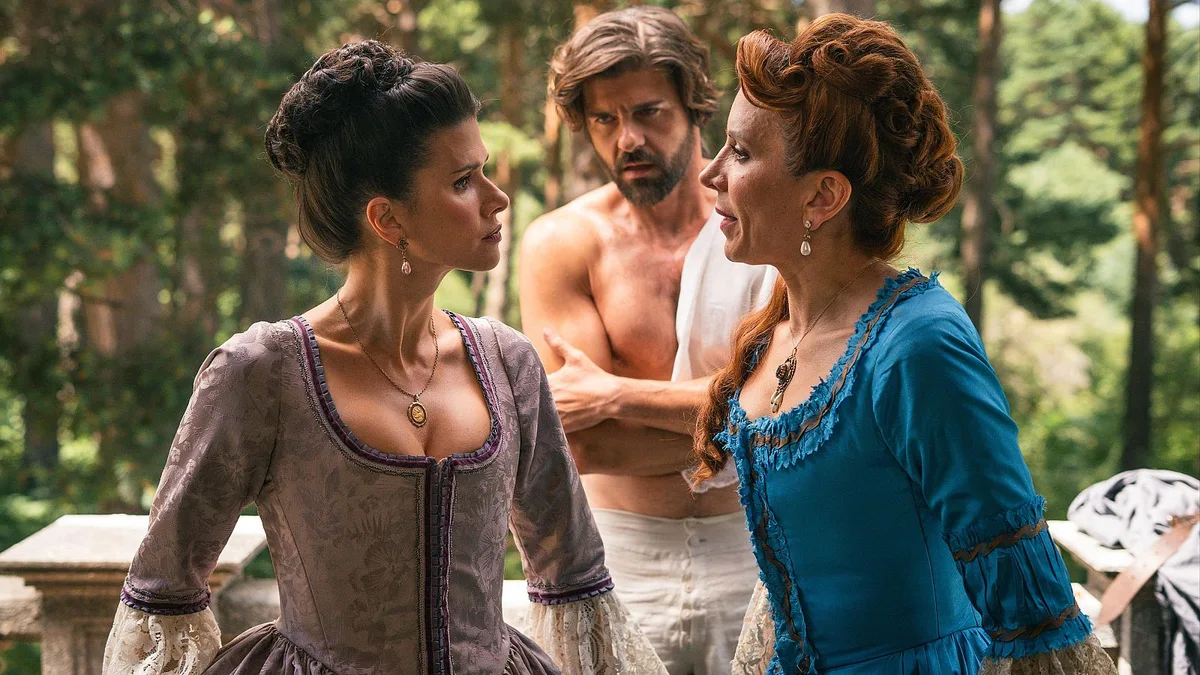
Bortko had told reporters before the release that he intended to portray a reflective, introspective version of the Soviet leader, something he said had not been attempted in earlier films about Stalin. The opening episode delivers on that promise from its first seconds: Joseph Stalin, played by Igor Mirkurbanov, is shown reclining on a couch at his dacha as though at a psychoanalyst's session, confiding his private thoughts to his housekeeper, Varvara Istomina. He tells her he has worked out the soul of the Russian people, who he believes need a strong leader regardless of what title that leader holds.
The camera, however, repeatedly drifts from these weighty lines to linger on a peignoir and a glimpse of a woman's breast, a detail that may allude to the widely reported, though never officially confirmed, account of Stalin's final romantic relationship. The first episode leaves the point unresolved.
History Bent Into Fan Fiction
The opening run of episodes centres on the final months of the Great Patriotic War, as the Second World War on the Eastern Front is known in Russia, and the questions that dominated that period: which army would capture Berlin, how to speed up development of the atomic bomb, and what shape the postwar world should take. At this stage the series plays more like a road movie than a historical drama, with Stalin constantly in motion, travelling by train between diplomatic meetings in Europe and sessions back at the Kremlin.
The series also rearranges real historical events. Winston Churchill's Fulton speech, the former British prime minister's address widely regarded as marking the formal start of the Cold War, is moved from 1946 to the summer of 1945 in the show, apparently to suggest that Stalin had no time to rest after victory before a new struggle began, this time against his wartime allies.
Well-known anecdotes and bits of folklore about Stalin also make it onto the screen. In one scene he puts Churchill in his place during a conversation that never actually took place; in another he teases security chief Lavrentiy Beria in a park. Marshal Georgy Zhukov is given the assignment to storm Berlin in the series specifically because of his Russian surname, framed as recognition of what the show calls the decisive role of the Russian people in the victory over fascism.
The episode also includes a tragic subplot involving Mikhail Kalinin, the Soviet head of state known as the "all-union elder," who is shown fading in front of Stalin after more than two decades at his side, in a scene meant to add emotional depth to the leader's portrayal. According to the report, that hospital conversation never actually happened. Left out of the episode is the fact that Kalinin's wife spent seven years in Soviet labour camps on Stalin's orders and returned from them disabled.
Communists and Critics React
Reaction in the audience split sharply. Gennady Zyuganov, leader of the Communist Party of the Russian Federation, was among the first to see the episode and told reporters briefly that he liked it before leaving the cinema ahead of the formal premiere event.
Alexander Khirurg, leader of the pro-Kremlin Night Wolves motorcycle club, said Stalin as portrayed did not resemble the real man but that the acting was strong enough to hold his attention, and that he planned to keep watching future episodes in hopes of seeing new sides of the leader.
Television host Dmitry Dibrov told the correspondent that he found the premiere one-sided. He said he knew the son-in-law of both Marshal Zhukov and Marshal Alexander Vasilevsky, actor Sergei Prokhanov, and had heard their accounts, and that such contradictory stories do happen, much as an elephant can be compared to a cauldron, a telegraph pole or a snake depending on which part is being described. He asked why the series did not also show that, as a result of the period it depicts, the country fell 60 years behind world scientific thought and is still catching up today.
Actor Viktor Sukhorukov, who plays Nikita Khrushchev in the series, told the correspondent he hoped his co-star's performance would be recognised with awards. He said the film ought to turn out to be a grand production because the underlying material is powerful, substantial and current, adding that he had lived an artistic life under the name Stalin and that Mirkurbanov's performance in the role was brilliant enough to deserve a state prize. He later said he had not yet watched the finished film in full himself.
What Comes Next
Audience members kept debating the episode inside the Khudozhestvenny cinema, and the arguments continued outside and on the way to the metro. The dispute itself may reflect the point of the series: a portrait designed to provoke, divide opinion and leave no one indifferent, much like the historical figure it depicts. Khirurg said he intends to keep watching the coming episodes to see what further sides of the Soviet leader the show reveals.
What happens next
Night Wolves leader Alexander Khirurg said he plans to keep watching the coming episodes to see what further sides of the Soviet leader the series reveals.
Test yourself
Who plays Joseph Stalin in Vladimir Bortko's new series?
Which real event does the series move from 1946 to summer 1945?
What detail about Mikhail Kalinin's wife is left out of the episode, according to the report?
Where it happened
Moscow, Russia