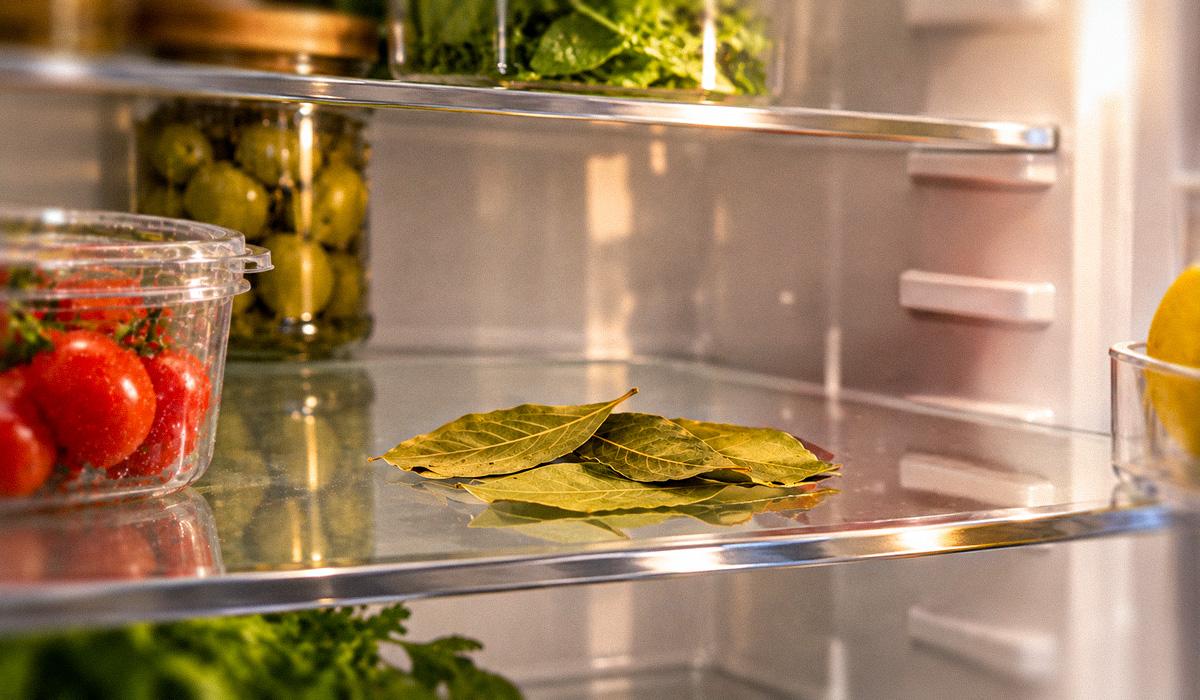
Cleaning experts say a handful of bay leaves placed on a fridge shelf can clear out stubborn, unpleasant odours in just a few hours, according to the French outlet Maison&Travaux. The trick takes about a minute to set up but is credited with a striking effect on smells such as fish, damp and rot.
Bay leaf has long been used as a cooking spice, but the outlet reports it is increasingly valued as a household deodoriser. The herb contains essential oils, including cineole and eugenol, which absorb stray odours in the fridge and mask them with the leaf's own scent. The effect is said to be stronger when the fridge has good air circulation and is kept at a temperature no higher than 4 degrees Celsius.
Where to place the leaves
Positioning matters, according to the experts cited by Maison&Travaux. They advise against leaving bay leaves on the fridge door, where the effect is minimal, and against the vegetable drawer, where the leaves quickly turn soggy. Instead, they recommend a free spot on the middle shelf or near the back wall, where the scent spreads evenly through every compartment. Vents are also a good spot, since air carries the fragrance around the whole fridge from there.
The suggested method is to take four or five leaves, place them in a small bowl, and break them up to release more of the essential oils. Once positioned, the smell should begin to fade within a few hours.
A stronger version with baking soda
For odours that do not clear with bay leaves alone, the outlet suggests mixing a couple of teaspoons of baking soda with several bay leaves in a bowl. Baking soda absorbs the smell while the bay leaves freshen the air, producing what the experts describe as an even more effective fridge deodoriser.
The leaves should be replaced roughly every 10 to 15 days, once their scent evaporates, while the baking soda mixture can be changed about every three weeks. The outlet recommends pairing the method with regularly wiping shelves down with vinegar and promptly removing spoiled food, so that unpleasant smells never build up in the first place.
Test yourself
According to the experts cited, where should bay leaves NOT be placed in the fridge?
Which essential oils in bay leaf are credited with absorbing fridge odours?
How often should the baking soda and bay leaf mixture be replaced?
Have your say
Would you try putting bay leaves in your fridge to tackle bad smells?