

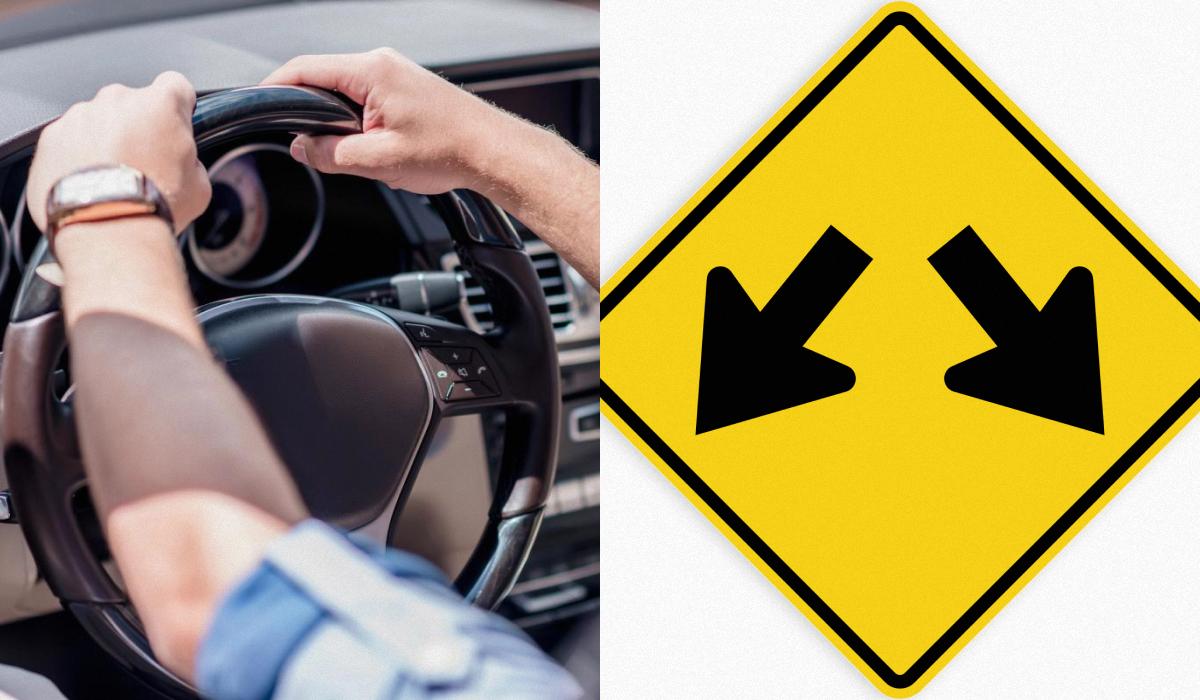
A yellow diamond traffic sign with two downward arrows guides drivers around road obstacles and splitting lanes, according to automotive publication SlashGear.
The warning sign displays two arrows set at angles of approximately 45 degrees, with one pointing slightly left and the other pointing right. Positioned directly ahead of traffic islands, median dividing strips, or physical obstacles in the road, the marker informs motorists that they are permitted to pass safely on either side of the barrier.
SlashGear noted that the sign also alerts drivers that a downhill slope or hill descent lies ahead. In some road configurations, the divided lanes merge back into a single lane after passing the obstacle, such as when lanes split before toll plazas. In other instances, the lanes diverge permanently in different directions. The sign also serves to notify drivers that shifting into the left lane is safe.
While standard versions of the sign use a yellow background to signal general caution, an orange version is commonly deployed in active work zones. In North American traffic safety conventions, yellow signs indicate standard road warnings while orange signs denote temporary construction areas. Orange markers show where lane separation is needed until work is completed. SlashGear highlighted that these yellow and orange markers are most frequently encountered on roadways across North America.
Headlight requirements on challenging roads
Ukrainian news agency UNIAN previously explained another unusual road symbol, often described as the squinting eyes sign. The round traffic sign features a bright red outer border encircling two white circles, with the upper half of each circle filled in black.
Despite its appearance, the symbol depicts vehicle headlights rather than eyes, signaling that drivers are legally required to turn on their headlights. Traffic authorities position these signs ahead of difficult road segments with poor lighting, such as bridges, tunnels, sharp turns, and winding mountain serpentines. The marker is also placed where lighting changes abruptly, helping drivers maintain visibility and prevent collisions in hazardous driving conditions.


