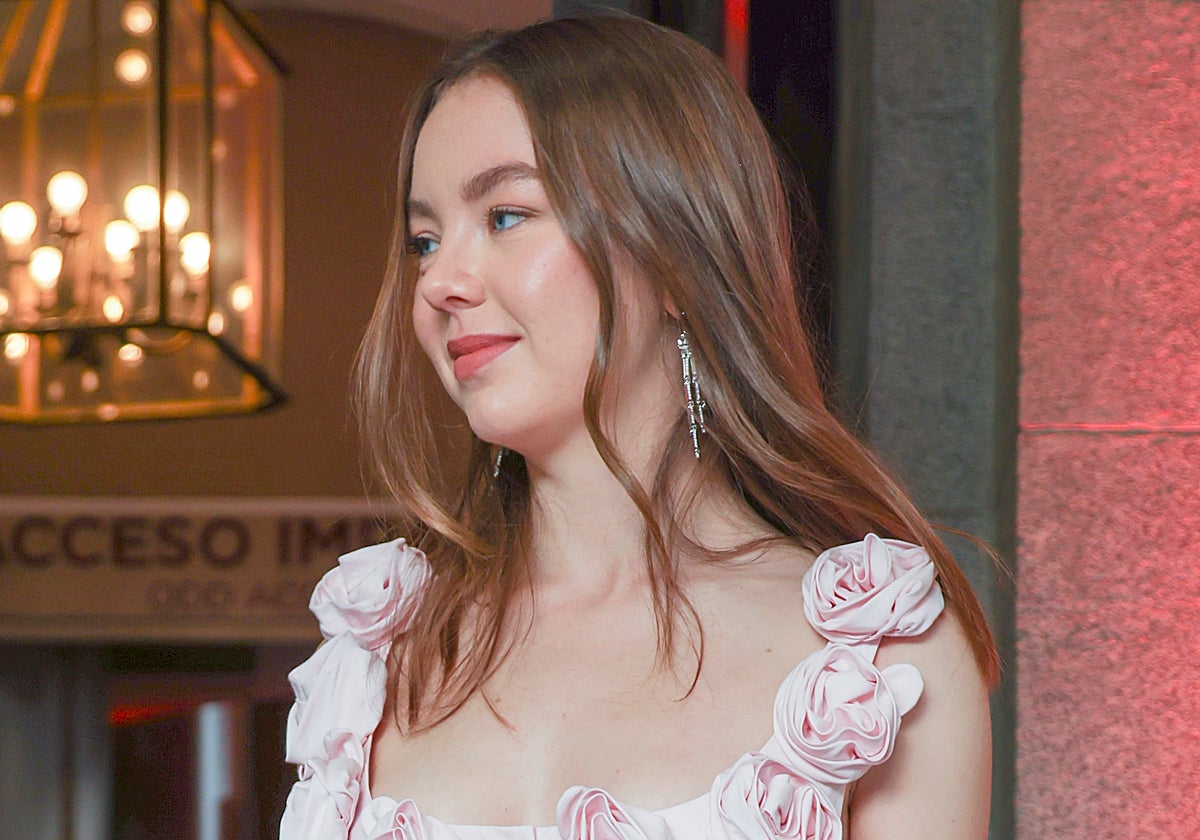
Princess Alexandra of Hanover, 27, has written an extensive and admiring review of the Spanish film La bola negra (The Black Ball) on her Substack newsletter, calling the experience a landmark moment for queer cinema.
After watching the film by directors Javier Ambrossi and Javier Calvo, known together as Los Javis, she wrote that it was a fantastic moment to go to the cinema and a fantastic moment for queer film. She described the title as a kind of homoerotic epic weaving together the stories of Spanish gay men across a century through three different plotlines, and said she left the cinema stunned.
Alexandra is the youngest daughter of Princess Caroline of Hanover and Prince Ernst August of Hanover, and the sister of Charlotte Casiraghi. She is also the niece of Prince Albert II of Monaco. She recently announced her engagement to Sylvester Strautmann and, like her sister, has begun publishing her own writing, channelling her literary and personal reflections in a popular Substack newsletter called Hyperbole For Breakfast, which she describes as a vomit of existential words, opinions against the mainstream, and hyperbole at all costs.
Praise from Hollywood
Alexandra joins a growing list of international celebrities who have urged fans to see La bola negra. Madonna described watching the film on social media as a transformative experience, while Anne Hathaway has spoken about it on several occasions and even held a video call with its directors to discuss it in detail. Taylor Swift, Pedro Pascal and Glenn Close have also praised the film.
Three storylines, one poet
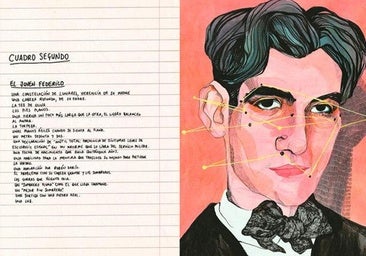
In her review, Alexandra wrote that Federico García Lorca, one of Spain's most important poets and playwrights, is perhaps the thread tying together the film's three storylines. She said his death at the start of the Spanish Civil War gives meaning to the film, calling it a magnificent piece of fan fiction set against the backdrop of history and the masculine posture Spanish society expects of men.
She then described each of the three timelines. In 1932, Carlos applies to join an exclusive casino and is rejected, and expelled, by the committee over rumours about his homosexuality. In 1937, viewers meet Sebastián, docile, with a melancholic look and out of place, who is assigned to watch over an injured anti-fascist Republican, Rafael, and extract information from him. In 2017, Alberto is introduced not immediately as a historian and playwright but as a gay man writing on Grindr.

Alexandra wrote that the terrible circumstances of homosexual desire faced by Carlos, Sebastián and Rafael are idealised almost to the point of seeming romantic, or at least shown in a way that makes them appear more noble and beautiful in the face of danger and powerlessness. She added that all the pieces of the film, which come together somewhat unevenly and at times confusingly, ultimately unite into an epic and ambitious whole.
A special mention for the women
Alexandra closed her review with what she called a special mention for the film's women. She praised Lola Dueñas in the role of Alberto's deranged mother, who she said adds an intense layer of family drama to the film, Penélope Cruz as a wise and witty cabaret dancer, and Glenn Close as a Lorca scholar. She called all three performances incredible, but said it was the character of Carlos, played by Milo Quifes, who won her heart.
An ode to queer cinema
Alexandra's review of the Los Javis film appeared on her blog alongside a write-up of another queer-themed film she had watched just days apart, Club Kid, which follows the story of an underground party promoter in decline who must take custody of a 10-year-old son whose existence he did not know about.
In a culture that came after Rivals, she wrote, it was only a matter of time before someone made Club Kid, which she said reveals a real, already existing queer subculture. She noted that in the race for the film industry's most important awards, which has just begun, other notable titles with similar themes include Elsinore, in which a theatre actor takes on the role of Hamlet a few months before dying of AIDS, and Artificial, by Luca Guadagnino, which she called undoubtedly a representation of queer identity in the world of technology.
What happens next
Alexandra noted that other queer-themed films, including Elsinore and Luca Guadagnino's Artificial, are competing in the film awards season that has just begun.
Test yourself
What is the title of the Spanish film Alexandra of Hanover reviewed?
Who directed the film she praised?
Who did Alexandra of Hanover recently announce her engagement to?