


Archaeologists excavating on the Greek island of Crete have discovered a ritual tomb containing the remains of more than 450 mice, pointing to the existence of an ancient rodent cult. The discovery was reported by GreekReporter.com.
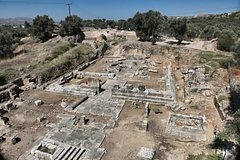
The ritual site was uncovered inside the sanctuary of Apollo in ancient Gortyn, a major city-state on Crete. Researchers found the remains of over 450 rodents deposited alongside ceramic vessels and traditional ritual objects, representing a burial of unprecedented scale for animal offerings in the region.
Archaeologists have linked the find to the cult of Apollo Smintheus, a title derived from the ancient dialect word sminthos, meaning mouse. In ancient Greek religion, Apollo was worshipped under various epithets, with this specific manifestation regarding the deity as both a guardian against destructive agricultural pests and an exterminator capable of inflicting plagues.
The discovery at Gortyn provides the first direct physical evidence that ritual veneration of mice or religious ceremonies aimed at controlling pests took place on Crete during the Hellenistic period. The Hellenistic era covers the three centuries of Mediterranean history between the death of Alexander the Great in 323 BC and the establishment of the Roman Empire.
Excavation leaders noted that discovering several hundred buried mice inside the main sacred enclosure fundamentally alters understanding of religious life in the ancient city. The presence of the remains indicates that multiple aspects and manifestations of Apollo were worshipped concurrently within the same sanctuary complex.
Ancient Accounts and Classical Mythology
Before the Gortyn excavation, physical archaeological evidence associated with the cult of Apollo Smintheus had only been documented in the Troad, a historical region in northwestern Turkey. In classical literature, the ancient Greek poet Homer recounted in the Iliad how the priest Chryses prayed to Apollo the Mouse God to unleash a plague upon the Greek forces besieging Troy.
However, ancient authors, including the Greek geographer and historian Strabo, maintained that the mouse cult originally emerged on Crete. According to ancient mythology, Cretan colonists established a sanctuary after vast swarms of mice devoured their leather armor, an event interpreted as the fulfillment of a prophecy guiding their settlement.
Scientific Analysis of the Remains
Osteologists are preparing a detailed scientific analysis of the bone fragments recovered from the tomb. Researchers plan to determine the exact species of the rodents, look for physical traces of ritual sacrifices or ceremonial preparation, and date the remains to establish precise timelines.
The report also noted an earlier discovery in the United Kingdom, where a metal detectorist unearthed a rare gold ring from the ancient Roman era set with an engraved gemstone depicting the goddess of victory.


