

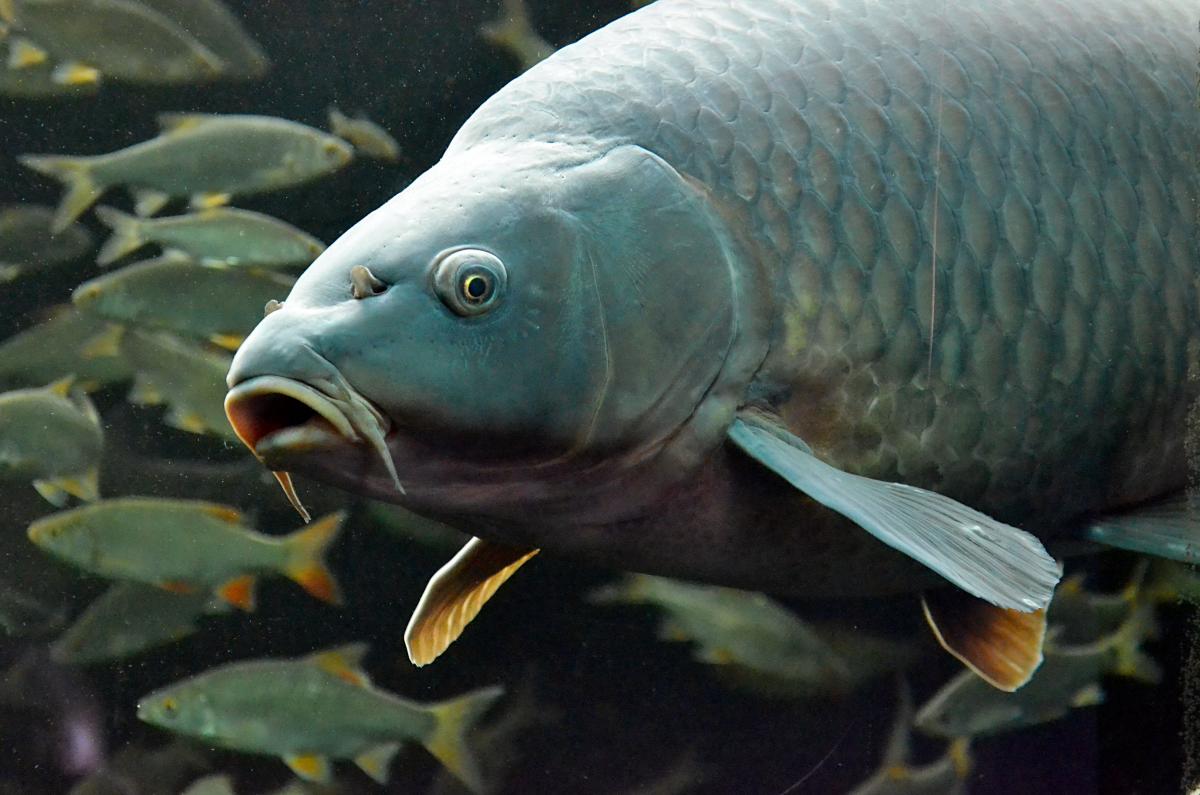
More than 50 years ago, the United States imported four species of Asian carp, bighead carp, grass carp, black carp and silver carp, to naturally clear ponds of algae and snails. Instead, the fish escaped from farms and became one of the country's biggest invasive species problems, according to The Times of India.
Grass carp were brought in during the early 1960s specifically to control aquatic weeds. Bighead and silver carp followed in the 1970s to improve water clarity, since they feed on algae and suspended organic particles. Black carp were introduced around the same time to fight snails, mollusks and the yellow grub parasite in aquaculture ponds, according to the University of Illinois.
The fish broke free in the 1970s during floods, when rising water overwhelmed farm ponds and treatment facilities and carp washed straight into the Mississippi River basin, the US Fish and Wildlife Service reports. The University of Minnesota's Aquatic Invasive Species Research Center says silver carp escaped after a severe flood forced fish farm ponds to overflow their banks.
How the carp spread through US rivers
Once loose, the fish quickly colonized the region's extensive river network. Within a decade, according to the US Geological Survey, carp had spread through the Mississippi, Missouri and Illinois rivers, establishing stable populations across a vast area.
The species spread unevenly. The US Fish and Wildlife Service says grass carp became the most widespread, turning up in every Great Lake except Lake Superior, while bighead and black carp have largely stayed within the Mississippi basin, though their range keeps pushing north. In Minnesota, the first grass carp was caught in 1977 near Winona, a bighead carp turned up in Lake St. Croix in 1996, and a silver carp was found in the Mississippi basin in 2008. Black carp have not yet been recorded in the state's waters.
Ecological damage and a risk to boaters
The problem goes beyond ecology. The carp compete directly with native species for food and habitat, disrupting the food chain of major Midwestern rivers, as bighead and silver carp filter out the plankton that paddlefish, shad and young commercial fish depend on.
Silver carp pose an added danger to people. Startled by the noise of a boat motor, the fish can leap several meters out of the water, an occurrence that has repeatedly gone viral on social media and poses a genuine risk to those boating on affected rivers.
Efforts to contain the spread
Federal agencies and state authorities continue to monitor the Mississippi basin to stop the carp from reaching new waterways. Minnesota has run a dedicated containment program since the early 2000s, combining trapping, fish tagging and environmental DNA analysis. The state's action plan for invasive carp was last updated in 2024.


