

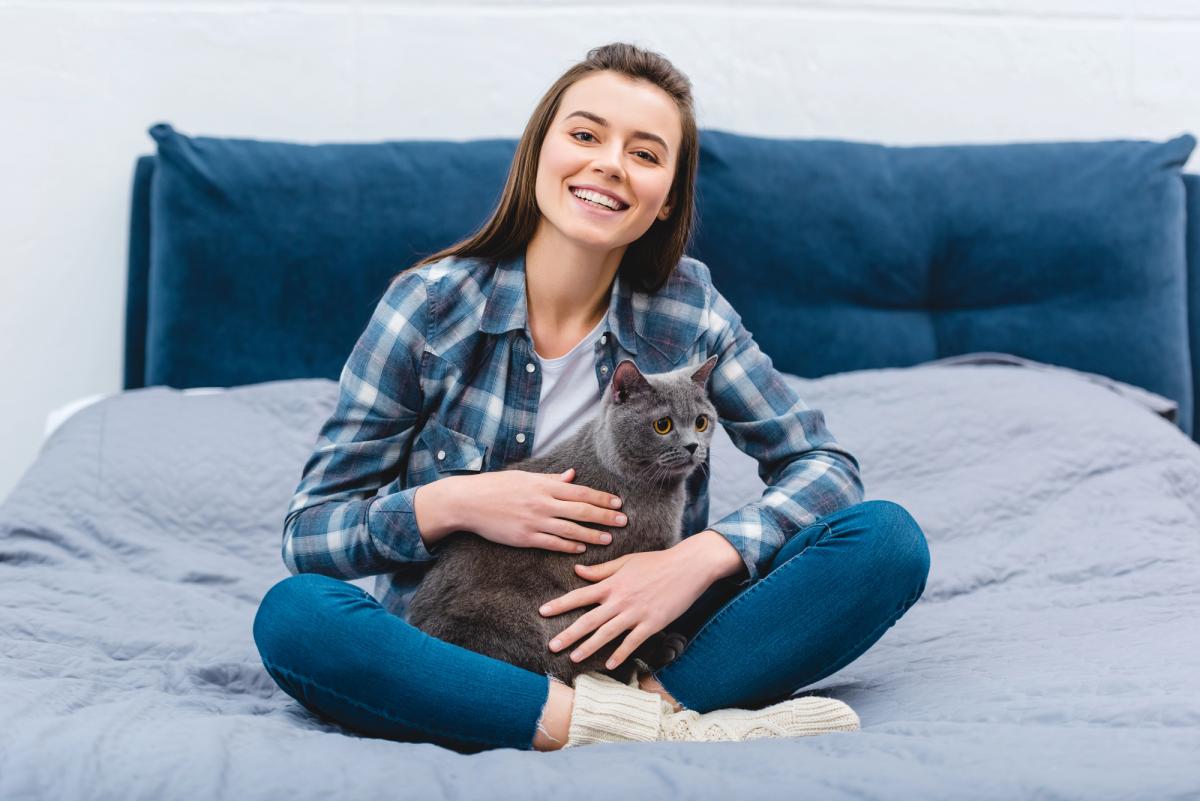
Cats naturally choose human companionship over food or toys and prefer calm individuals who respect their boundaries, according to research compiled by BBC Science Focus.
Despite the popular reputation of domestic felines as aloof animals, scientists found that cats frequently seek out human company. In a study involving 50 cats from homes and animal shelters, a majority of the animals selected interacting with a person over eating food or playing with toys.
BBC Science Focus, a science magazine published in the United Kingdom, highlighted several experiments investigating how felines perceive humans through scent. Cats possess a keen sense of smell that allows them to distinguish between their owner and a stranger. When presented with fabric carrying their owner's scent alongside fabric scented by an unfamiliar person, cats spent longer sniffing the stranger's sample, showing clear recognition of familiar people.
Researchers also found that cats detect human emotions through sweat. In an experiment testing reactions to sweat samples from people feeling happiness, fear, stress, and calm, the scent of fear triggered a strong negative response. Cats exposed to fear scent flattened their ears, twitched their tails, grew tense, and backed away, showing they are unlikely to approach a frightened person.
Human Anxiety and Cat Attraction
Human personality traits also influence feline reactions. In a study of 119 participants interacting with shelter cats, researchers observed that people with higher anxiety behaved more controllingly toward the animals and struggled to read feline body language signals.
Conversely, individuals described as cat magnets tend to be less anxious. The study noted that these individuals treat animals with greater respect, allowing cats to initiate contact.
Cat Biology and Behavioral Skills
The temperament of individual cats plays a role as well. In a 2022 pilot study, participants spent two hours in animal shelters or cat cafes, which are businesses where visitors interact with resident felines, while researchers monitored cat behavior and analyzed urine samples. Male cats with lower testosterone levels, a hormone linked to social traits, proved significantly friendlier, as did cats raised around humans from an early age.
Scientists concluded that attracting cats is not an innate talent, but a skill developed by behaving appropriately and respecting feline boundaries.


