

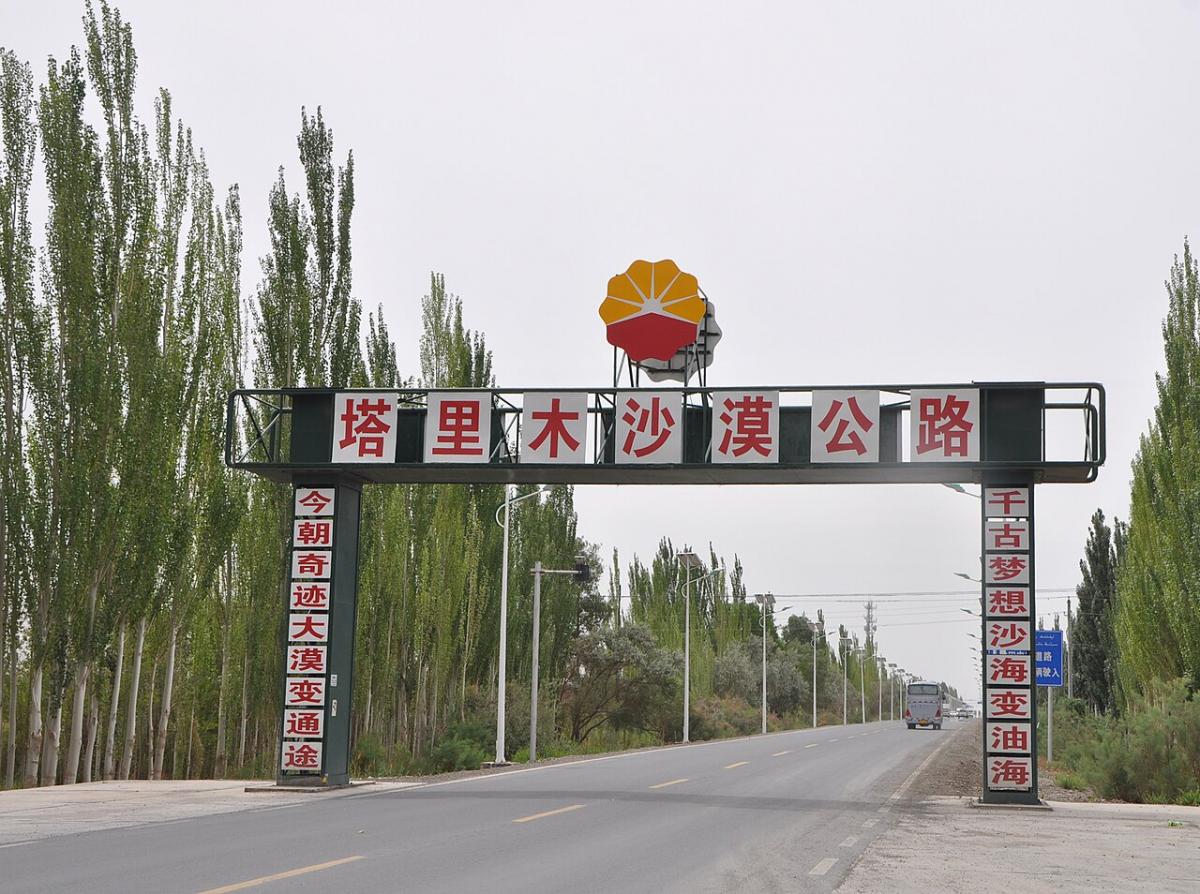
China completed a 3,046-kilometer tree belt along the southern edge of the Taklamakan Desert in 2024, which now absorbs more carbon dioxide than the desert emits. A study published in the journal PNAS in January 2026 revealed the carbon absorption results of the artificial forest. Indian Defence Review reported that workers planted the protective barrier over several decades.
Authorities originally created the green belt to protect roads, farms, and settlements from advancing sand dunes rather than to absorb carbon. Carbon dioxide levels above the desert dropped from 416 parts per million during the dry season to 413 parts per million during the rainy season, directly correlating with the planted area. Trees planted under the reforestation program grow faster than natural forests and respond better to rising atmospheric carbon dioxide levels.
Shelterbelt Program and Environmental Impact
The Taklamakan ring is a visual result of China's shelterbelt creation program in three northern regions, which began in 1978. Billions of trees were planted across arid northern areas to slow desertification, which accelerated following city expansion and land conversion for agriculture after the 1950s. Nationwide forest coverage increased from 10 percent of China's total land area in 1949 to more than 25 percent today.
Study co-author Professor Yuk Yung said human intervention was shown for the first time to effectively boost carbon absorption in extreme arid landscapes. Yung said the project demonstrates the potential to turn deserts into carbon sinks while halting desertification.
Desert Geography and Water Management
The Taklamakan Desert covers about 337,000 square kilometers, and shifting sands cover more than 95 percent of its surface. High surrounding mountains block moist air for most of the year, leaving the deep interior with almost no vegetation, leading experts to long consider it a biological void.
The long-term survival of the green belt depends heavily on water access rather than seasonal rainfall alone. Annual rainfall across most of the Taklamakan River basin is too low to sustain plants without active support. China plans to continue planting and restoration along the perimeter, including diverting floodwaters to restore poplar forests on the northern edge.


