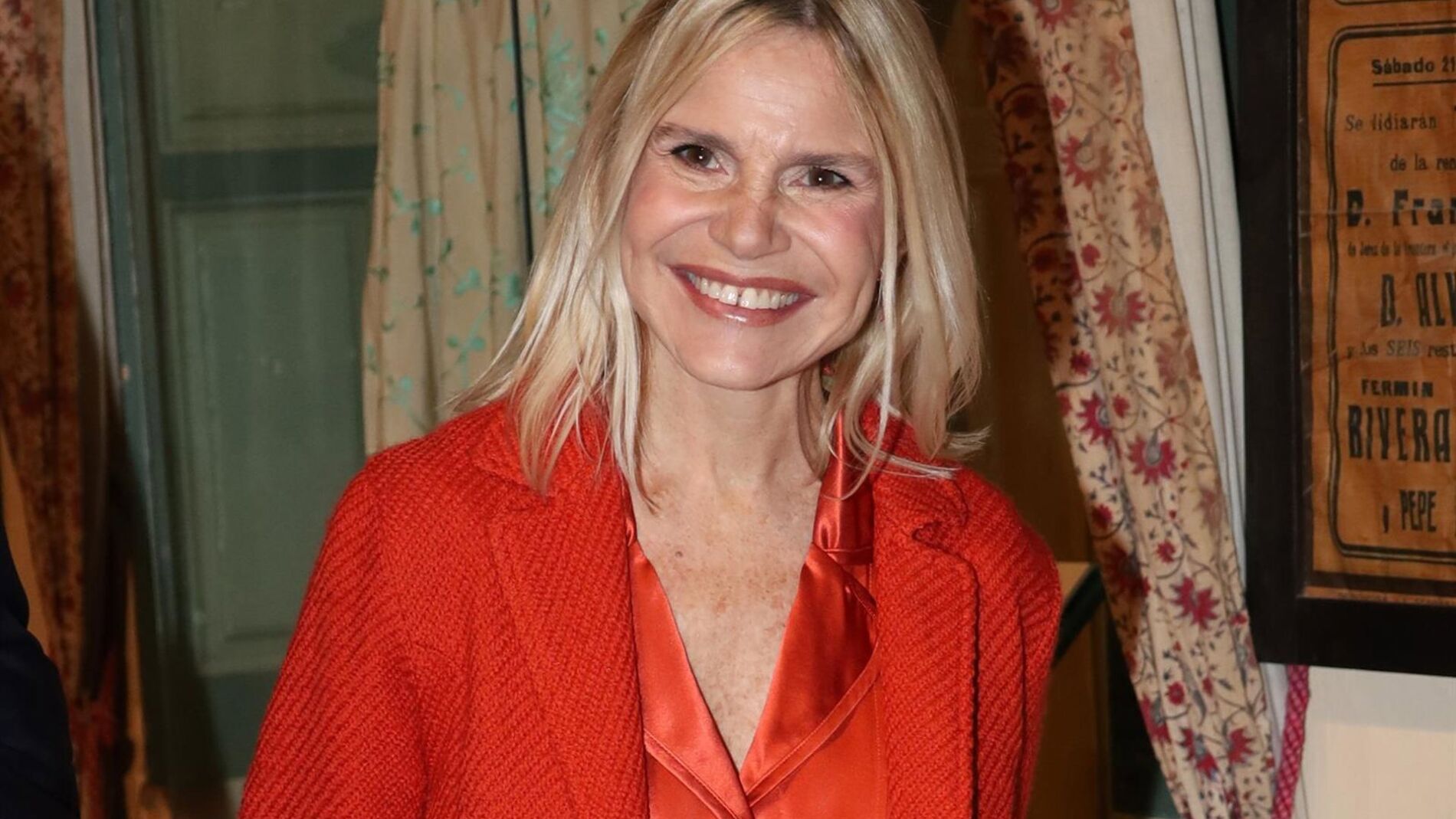
Eugenia Martínez de Irujo has showcased a flamenco-inspired outfit featuring a bright red fringe skirt during a stay in Seville, Spain.
The Spanish aristocrat made intense red the center of her wardrobe while posing on the terrace of the Hotel Serras Sevilla, where she shared photos of her style choices with followers on social media.
In her posts from the city, she expressed her enthusiasm for the venue, stating on social media that she was passionate about the establishment.
The standout piece of the look was a long red skirt covered in sweeping fringe that created continuous movement as she moved. The upper portion of the skirt featured decorative detailing before opening into long fringe strands across the lower silhouette.
Flamenco styling and white shirt detail
To balance the striking red skirt, she selected a sleeveless white shirt adorned with small ruffles and openwork cutouts across the front. The romantic design added subtle texture while letting the skirt remain the focal point of the outfit.
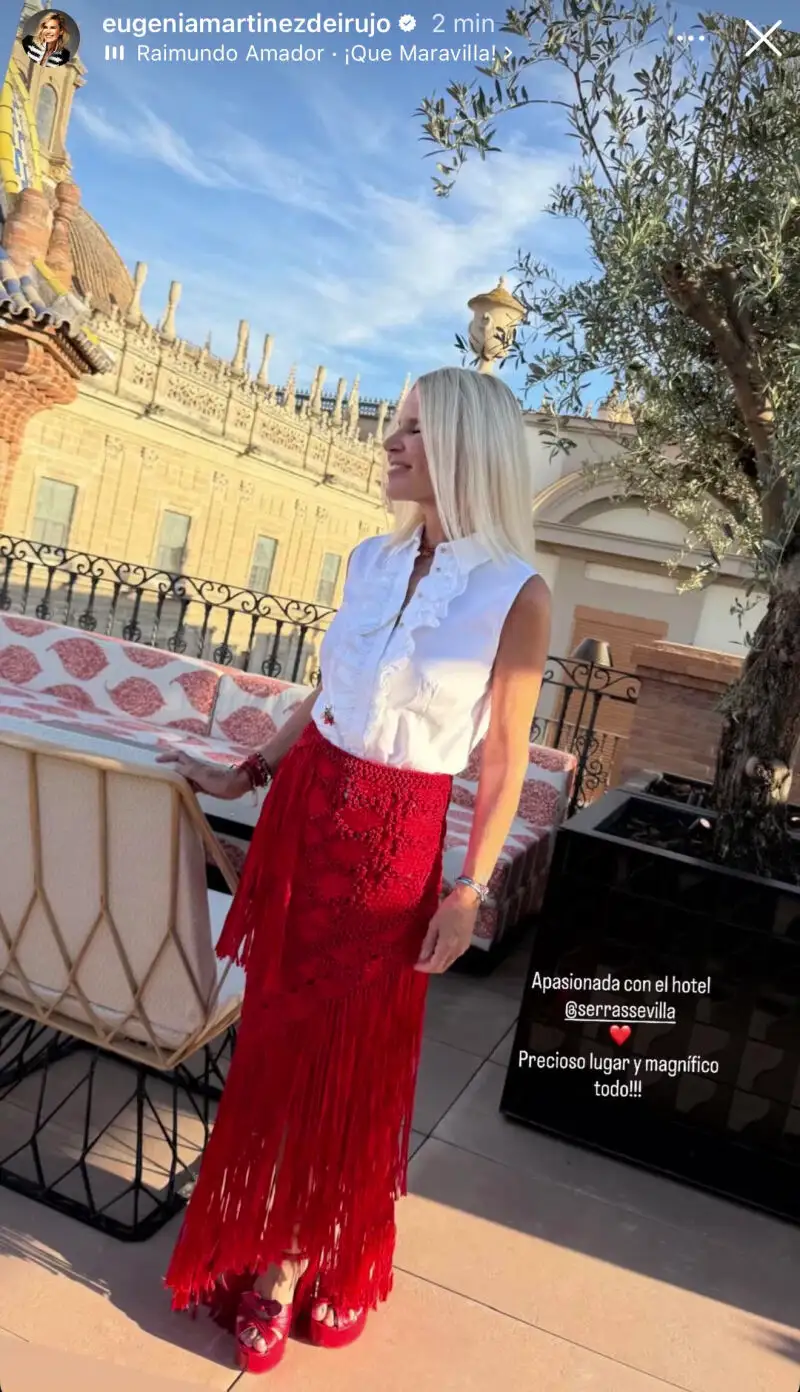
The classic combination of crisp white and deep red reinforced an Andalusian aesthetic without relying on a traditional ruffled gown. The pairing allowed the vivid red tone to stand out in the heart of Seville.
She completed the look with red platform sandals featuring wide heels in the exact same shade of red as the skirt, creating an extended visual line. She added her signature touch with stacked bracelets on her wrists while keeping her blonde hair loose and straight.
Background on Eugenia Martínez de Irujo
Eugenia Martínez de Irujo, the 12th Duchess of Montoro, is a well-known figure in Spanish fashion and high society. She is the youngest child and only daughter of the late Cayetana Fitz-James Stuart, the 18th Duchess of Alba and former head of one of Spain's most historic noble families.
Throughout her public life, the duchess has established a personal style defined by vibrant colors, artisanal details, bohemian patterns, and flowing garments. Alongside her public appearances, she works as a jewelry designer and has launched several collections with Spanish luxury brands.
Cultural context of Andalusian style
Seville is the capital of the autonomous community of Andalusia in southern Spain and is recognized worldwide as the historic heart of flamenco culture. Traditional Andalusian dress, often seen at annual events such as the April Fair, heavily features ruffles, bold colors, and intricate embroidery.
Fringe elements in Andalusian clothing trace back to the traditional Manila shawl, an embroidered silk shawl trimmed with hand-knotted silk fringe that became central to regional fashion in the nineteenth century.
Contemporary take on traditional fashion
By pairing a fringe skirt with platform sandals and a simple white blouse, she demonstrated how traditional flamenco elements can be adapted into versatile modern outfits beyond festive fairgrounds. The look highlights how movement and primary colors remain enduring elements of Spanish design.