

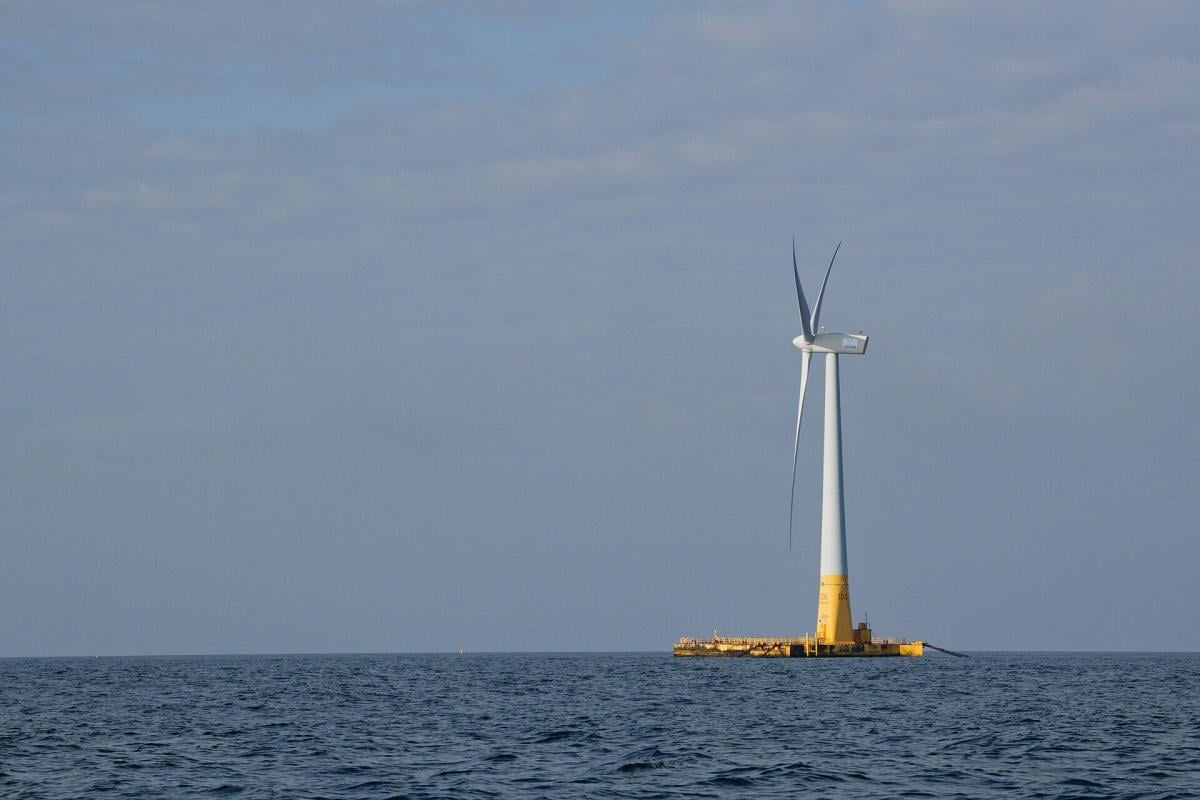
Engineers have installed 32 customized shell-filled cages on a floating wind turbine about 15 kilometers off the coast of France in the Mediterranean Sea.
The deep-water steel platform, anchored at a significant depth, has become an artificial habitat for vulnerable young fish seeking shelter from large ocean predators. Marine biologists are currently investigating whether deep-water steel structures used to support offshore wind turbines can serve as viable homes for marine life, according to Ecoportal.
While the Mediterranean Sea hosts rich marine ecosystems, many of its natural rocky reefs have been destroyed over time. As a result, fish fry frequently drift toward floating offshore platforms looking for refuge. Scientists monitoring the turbine reported that young fish began gathering around the structure's hull and mooring cables just a few weeks after operation started.
Predator threats and platform design
Standard turbine platforms present smooth steel walls with almost no crevices for small fry to hide. Predatory species, including sea bass and yellowtail, regularly patrol the underwater structures. Scientists warned that unmodified offshore installations can quickly turn into intensive feeding zones for large predators, leaving young fish as easy prey.
To convert deep-water installations into functional marine nurseries, engineers and marine biologists designed specialized modular structures. These additional modules were engineered to withstand strong wave forces and ocean currents while remaining light enough to avoid increasing the total weight load on the turbine itself.
Shelter design and long term limitations
The resulting installation features 32 additional cages packed with oyster and scallop shells, creating dedicated shelters for small marine life. The dense shell layers form numerous micro-crevices where young fish can swim deep inside, safe from larger predatory sea bass that cannot squeeze through the narrow openings.
Researchers noted one potential drawback to the design. Over time, the structures naturally become overgrown with silt or marine shells, which gradually reduces the amount of accessible hiding space for the fry. Despite this limitation, scientists hope the project will help increase overall fish populations in the surrounding area.
Precedent in Gulf of Mexico restoration
The Mediterranean initiative follows similar shell-based habitat restoration efforts, such as an experimental project conducted along the Florida coast. Between 2007 and 2024, workers deposited more than 500,000 tonnes of recycled oyster and clam shells into the Gulf of Mexico, establishing a durable foundation that successfully developed into a new oyster reef.


