

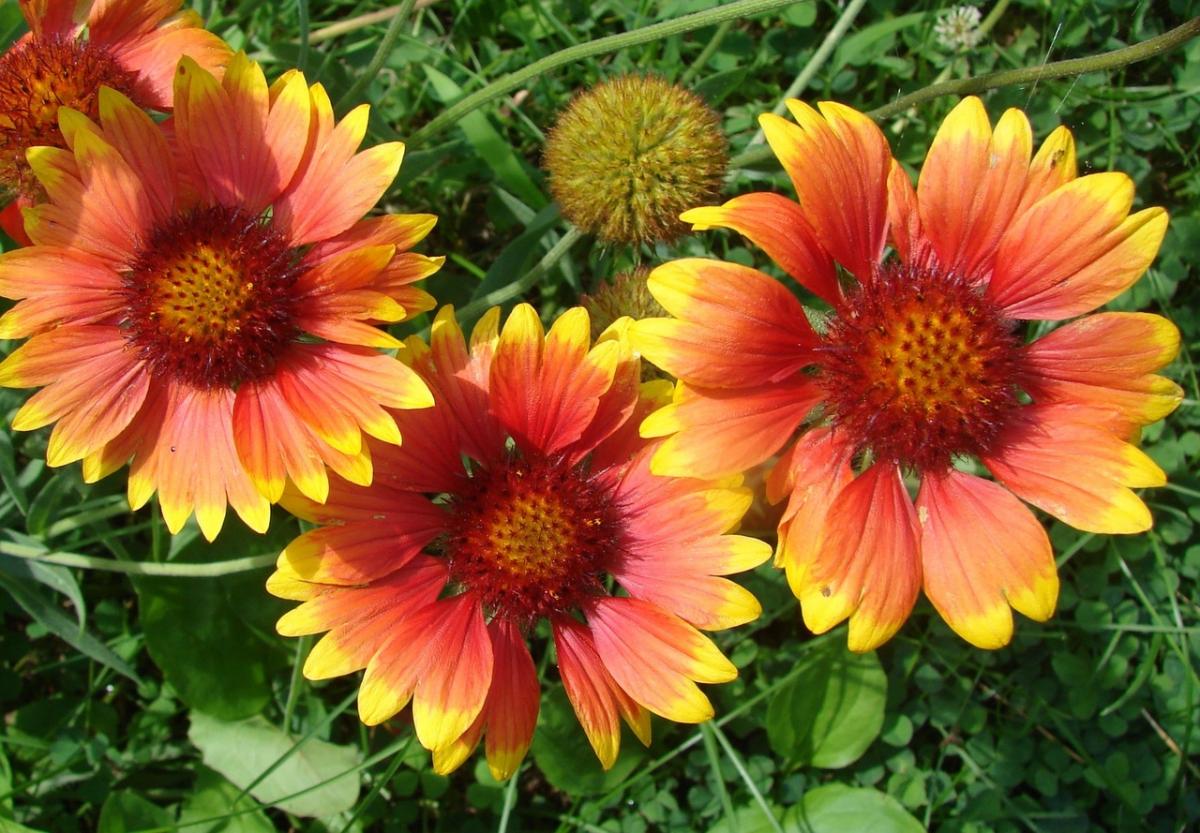
Gaillardia flowers provide vibrant red and yellow color to garden beds in late summer and early autumn while requiring minimal care and watering, according to gardening experts cited by Homes and Gardens.
The perennial plants, commonly known as blanket flowers, bloom continuously from summer until the first frosts of the season. Once rooted, gaillardia tolerates high temperatures and needs little moisture, making it an ideal choice for sunny landscapes.
Growing gaillardia requires little effort while yielding abundant flowers over many months. Gardeners can purchase seeds, which are widely available and affordable, or gather them from flower beds in parks and neighboring yards.
Landscape designer Stacilyn Feldman said gaillardia was an unpretentious and cheerful garden plant that attracted pollinators like bees and butterflies because of its long flowering period. She added that the blooms were also suitable for cut flower arrangements, lasting a long time in indoor display bouquets.
The plant produces distinct red and yellow blossoms that stand out brightly against fading late-summer grass and surrounding vegetation. Standard varieties reach heights between 61 and 91 cm, while compact cultivars are available for planting in containers or smaller garden borders.
Growing conditions and planting care
Gaillardias perform best when planted in full sun and positioned in well-drained soil. Mary Phillips from the US National Wildlife Federation advised that gaillardia was a dependable plant that would perform exceptionally well during the hottest period of the growing season.
Gardeners should avoid overwatering or applying extra fertilizer, except during the plant's first year when regular watering is necessary for establishment. It remains possible to plant gaillardias late in the current season, with flowers set to emerge in the spring following winter. Once established, the plants reproduce actively and spread with minimal human intervention.
The species evolved in open prairies, meadows, and sandy terrains, where conditions feature intense sunlight, sustained high heat, and periodic droughts. Native prairie species have adapted to nutrient-poor soils and seasonal dry spells over generations.
A deep root system enables the plant to store water and remain in bloom through summer droughts. Gaillardia thrives in poor, well-drained soils, particularly in sandy or gravelly spots, but cannot survive in waterlogged or constantly wet conditions.
While the foliage of gaillardia is relatively plain, it forms a thick mat across the soil surface. This dense ground cover helps suppress weeds, retains soil moisture, and provides shelter for beneficial insects.
Caring for long-blooming zinnias
Homes and Gardens also highlighted zinnias, known in some regions as majors, as another low-maintenance flower with an extended blooming season. Zinnias are popular warm-weather annuals valued for their bold colors and easy upkeep.
To maximize flowering, gardeners should remove the large zinnia blossoms after they begin to fade. This practice of deadheading prevents the plant from directing energy toward seed development, allowing it to produce new blooms over a longer period.


