

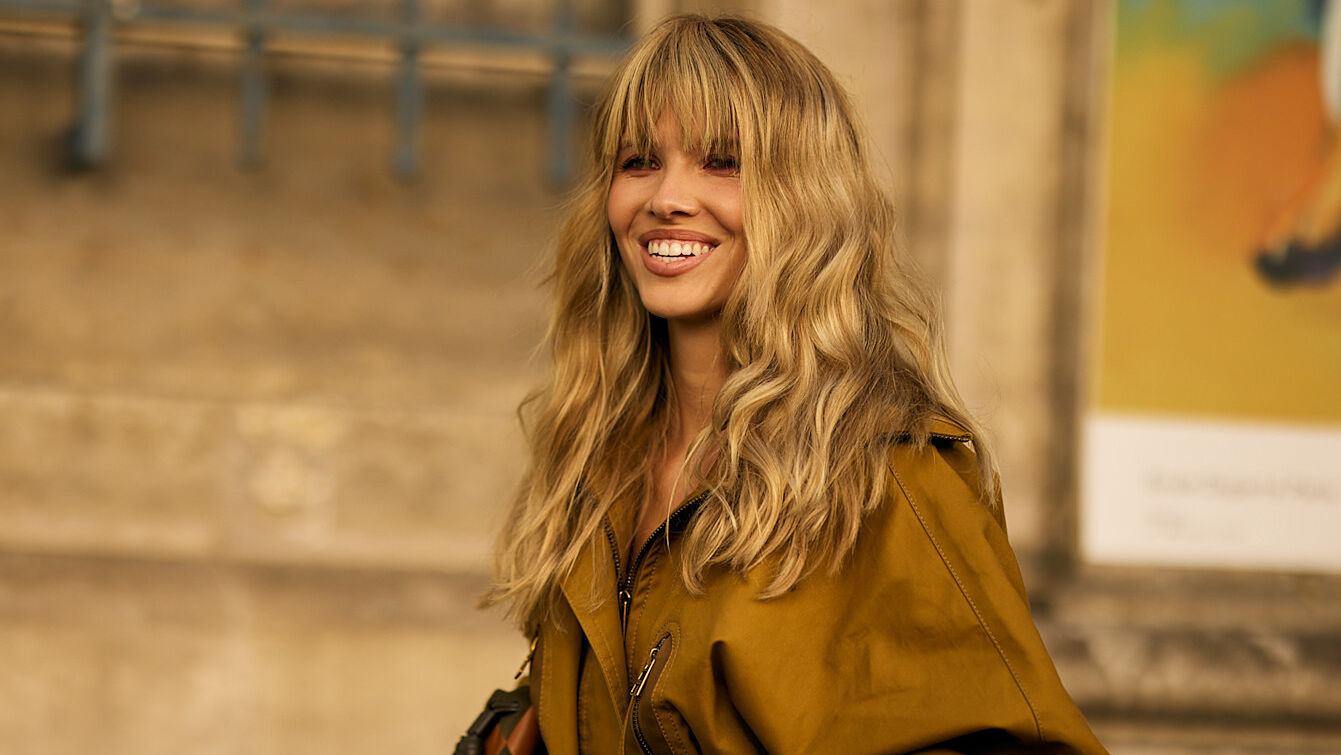
The glass hair trend is dominating beauty salons as hair stylists and cosmetic specialists develop targeted routines to give clients a mirror finish. The look relies on a liquid, translucent shine that was once considered exclusive to digital camera filters or luxury salon appointments. Industry professionals say achieving the finish depends primarily on the physical condition of the hair cuticle rather than heavy cosmetic layering.
Juandiegoteo, a hairstylist and brand ambassador for Redken and Olistic, said shine is an integral component of both haircuts and styles rather than a secondary cosmetic detail. He explained that well-maintained fibers with intact cuticles produce a uniform surface that appears visibly brighter. While finishing products provide added luminosity, he warned that clients should use them sparingly to prevent hair from losing volume or feeling weighed down.
Porous, dehydrated, or chemically damaged strands lose their reflective ability and become prone to frizz. Juandiegoteo noted that salon clients frequently focus on how they plan to style their hair while neglecting preparatory care. He said achieving movement and shine requires tailored home routines, professional fiber hydration, heat protectants before using styling irons, and salon conditioning treatments.
Cuticle health and light reflection
Optical shine occurs when the cuticle, the outermost layer of the hair shaft, lies flat and closed to reflect light evenly. When heat exposure, sunlight, or chemical processing damages the cuticle scales, light scatters across the rough surface and leaves the hair looking dull even when freshly washed.
Aurelio Tabares, a hairstylist, visagism specialist, and cofounder of the ¡Qué Bárbaro! Air & Care Salon and art gallery in Torremolinos, said split ends drain light from the entire length of the hair. He recommended trimming ends every two to three months to maintain a healthy perimeter. Tabares added that multi-tonal hair color reflects light more effectively than a flat shade, and advised booking a salon gloss bath after color treatments to replace the reflective sheen that fades through regular washing.
Other stylists point to color techniques that complement hair health. Alberto Sanguino said grey blending offers clients a highlighting method to transition away from permanent dye while displaying natural grey hair. Juan Leal, another hair specialist, noted that silver framing uses ash and soft silver reflections to soften the contrast between natural roots and colored lengths.
Washing mistakes and scalp cleansing
Proper shampooing techniques directly influence surface shine. Tabares said shampoo is formulated specifically for the scalp rather than the lengths of the hair. He advised emulsifying the shampoo between wet hands before massaging it into the roots using the pads of the fingers rather than fingernails. When the product is rinsed out, the lather slides down the lengths with enough cleansing power to clean them without mechanical friction. Piling hair onto the crown and rubbing the lengths together lifts the cuticle and causes tangles.
Clients who use heavy styling products should wash their hair twice. Tabares said the first wash should use a small quantity of shampoo to loosen surface residue, while the second wash cleanses the scalp thoroughly. Conditioner should follow from mid-lengths to ends, combed through with a wide-tooth comb while the formula sits.
Washing errors can quickly dull hair. Tabares said hot water strips moisture and leaves hair fibers rough, making lukewarm water preferable alongside a final cool rinse to close the cuticle. He warned against washing too frequently or applying excess product. An occasional clarifying shampoo removes the cloudy film left by accumulated styling products, while rubbing wet hair with a standard towel damages strands. He recommended gently pressing moisture out using a microfiber towel or a cotton T-shirt.
Blow-drying techniques for smooth lengths
Heat styling habits can also compromise shine when handled incorrectly. Tabares warned against applying maximum heat to soaking wet hair with the dryer nozzle pressed against the strands. Stylists advise squeezing out excess moisture and coating strands in heat protectant before drying.
Airflow should always move from roots to ends in the direction of the cuticle scales, using a concentrator nozzle while maintaining brush tension on each section. Tabares noted that drying against the grain creates volume at the root but causes frizz through the lengths. Hair must be dried completely, as any residual dampness causes frizz upon contact with outdoor humidity. Stylists finish the process with a burst of cold air to set the shape and seal the cuticle.
Tabares said that less is more when applying finishing oils and serums. Warming one or two drops between the palms and smoothing them onto the ends is sufficient, whereas using too much product leaves hair looking greasy rather than glossy.
Skincare crossover and acid glossing
Caroline Greyl, president of the haircare brand Leonor Greyl, said the secret to mirror shine lies entirely in aligning the cuticle scales. When the scales lie flat, light bounces back uniformly to create a smooth, luminous texture. Greyl stressed that mirror hair cannot be achieved solely through straightening irons, because dehydrated fibers become porous, absorb ambient humidity, and produce frizz.
The demand for deep hydration has led the hair industry to adopt skincare ingredients, a trend fueled by social media. The hashtag #HyaluronicAcid has accumulated more than 2.4 billion views on TikTok, where Generation Z consumers have popularized the skinification of haircare.
In response, L'Oréal Professionnel introduced its Hyaluronic Glossing service, tested at the Alegra salon in Barcelona. The professional color treatment uses the brand's Dia Light Hyaluronic Acidic Gloss Color formula, which infuses 1 percent hyaluronic acid into an acidic gloss. The service is designed to repair, hydrate, and seal the hair cuticle in a single appointment. The brand reported that the formula contains 96 percent natural origin ingredients, enhances color shine, boosts moisture, and reduces breakage.
Emotional effects of hair health
Research indicates that hair condition carries significant psychological weight. Findings from the First Iraltone Hair Health Observatory, organized by Cantabria Labs to examine hair wellness in Spain, showed that hair represents an essential component of personal identity and public presentation.
Concha Hidalgo, a psychologist with more than 20 years of experience in the emotional impact of personal image changes, said hair damage or hair loss has a profound effect on individuals. She explained that losing hair health undermines self-confidence, complicates interpersonal relationships, and causes distress during routine activities such as taking photographs. Hidalgo emphasized that validating these aesthetic concerns is vital for emotional wellbeing.
Specialists from Kérastase also noted that a loss of shine serves as a biological indicator of hair aging. The brand identified dullness, alongside dryness, loss of volume, hair thinning, and frizz, as a key microscopic and visible symptom of aging hair fibers.
Product routines and salon formulas
To prevent dullness without flattening fine hair, stylists recommend a weekly clarifying wash to remove product buildup from color-treated strands. Finishing serums should be applied starting at the ends and working upward while avoiding the scalp. Stylists advise against layering two heavy formulas, noting that fine strands benefit from a single light finisher, while thicker textures can tolerate a leave-in conditioner followed by a small amount of oil. Shine sprays should be applied over dry hair as a final styling step.
Brands have released several specialized formulas and tools to support mirror shine routines:
- Pantene launched its Glowtox Capilar range, a five-product routine tested by the Swiss Vitamin Institute that draws on 80 years of brand research. The line includes the Glowtox Capilar detox shampoo, priced at 4.20 euros, which uses high levels of histidine to protect against heat up to 230 degrees Celsius, remove hard water deposits, and eliminate up to 97 percent of impurities.
- L'Oréal Professionnel offers the Absolut Repair Molecular bi-phase oil, priced at 57.40 euros, which uses peptide technology and five amino acids for internal structural repair alongside an external oil phase that protects against sun oxidation.
- Clarins produces the L'Elixir hair serum, priced at 49 euros, which combines milk thistle, jojoba, and cashew oils with mastic extract to provide eight hours of shine and anti-frizz defense.
- Kérastase developed the Longevity Potion scalp concentrate, combining Pro-Xylane and ochrophyte algae to slow biological scalp aging and enhance fiber thickness, smoothness, and volume.
- Dyson designed the Airstrait straightener in Plum and Copper, priced at 399 euros, which dries and straightens wet hair using directional airflow rather than hot plates, reducing styling time by an average of 25 percent while lowering breakage.
- Sisley sells the Huile Précieuse Cheveux hair oil for 104.50 euros, blending passion fruit oil, shea butter, and cotton and moringa seed extracts to form a protective light-reflecting layer.
- Philips created the Aqua Edition hair dryer, priced at 349.99 euros, which uses Aqua SenseIQ technology to release water ions that wrap the fiber in moisture, seal the cuticle, and improve break resistance.
- Cantabria Labs provides the Iraltone Reset Deep-Cleansing Shampoo, priced at 23.90 euros, to balance the scalp microbiome and remove excess oil in weekly clarifying washes.
- Living Proof offers the Leave-in Conditioning Spray for 30 euros, formulated to strengthen, detangle, and soften hair fibers.
- Leonor Greyl produces the Sérum de Soie Sublimateur for 36.50 euros, a silicone-free serum featuring silk proteins, sweet almond oil, hazelnut oil, and vitamin-rich brown algae extract to smooth and detangle without weight.


