

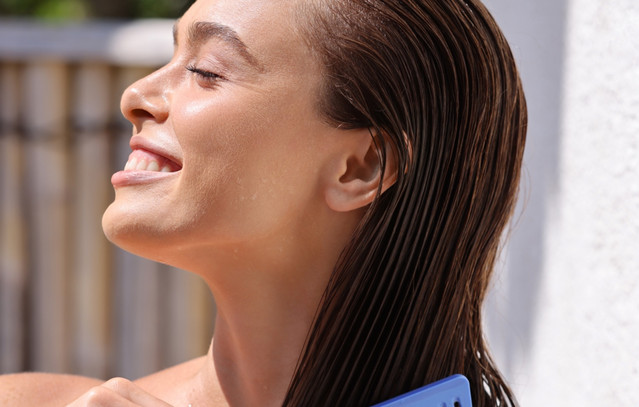
Hair mask results depend on correct product dosage, application technique, and hair moisture levels rather than heavy volume, beauty guidance confirmed.
Many consumers incorporate conditioning masks into their weekly routines but fail to achieve optimal smoothness due to common application mistakes. While users often assume that applying larger amounts yields softer hair, excessive product frequently leads to heavy, limp strands.
Hair mask dosage rules
Product dosage must be customized according to hair length and density. Long or thick hair requires a larger amount than a short or fine haircut. However, the fundamental rule requires applying just enough mask to coat mid-lengths and ends evenly without overloading the hair shaft.
For shoulder-length hair, a starting dose measuring between the size of a small hazelnut and a single teaspoon is recommended. Very long or dense hair may require additional product to achieve complete coverage.
The best indicator of correct dosage is how the product performs on the hair rather than the initial amount placed in the palm. Strands that feel heavy or overly coated after application indicate that too much product was used.
Moisture control before application
Hair masks should never be applied to dripping wet hair immediately after shampooing. Squeezing excess water out by hand or using a microfibre towel prepares the hair for conditioning.
Microfibre towels feature fine synthetic fibers that absorb excess moisture rapidly without roughing up the delicate outer cuticle. When hair remains soaking wet, excess water dilutes the formula and causes it to slide off the hair shaft before nourishing ingredients can penetrate.
Strands should remain damp to touch rather than saturated before smoothing the mask through the lengths.
Targeted application areas
Proper application begins along the mid-lengths and extends down to the ends for most hair products. Users should avoid applying standard masks near the scalp unless the product is specifically formulated for scalp care.
Scalp glands naturally produce sebum that keeps root areas hydrated, making rich conditioning treatments unnecessary at the base. Coated roots frequently result in a greasy, weighed-down appearance.
Conditioning focus should target the ends, particularly when hair is dry or damaged by chemical dyes and thermal heat styling. Heat tools and dyes break structural bonds, making hair ends particularly susceptible to moisture loss.
Gentle spreading techniques
Hair masks require gentle distribution across the hair rather than energetic friction. Users should spread the formula across their palms before smoothing it through mid-lengths and ends.
Dividing hair into two or more sections helps ensure even product distribution across all strands. Running fingers through the hair or using a wide-tooth comb allows the mask to coat every strand uniformly.
Wide-tooth combs feature broad spacing between tines to detangle gently. Users must avoid aggressive combing, as damp hair stretches and breaks easily under high tension.
Processing time and rinsing guidelines
Extending processing time beyond package instructions does not yield smoother or softer hair. Product formulas are engineered to achieve maximum efficacy within the specific duration printed on the packaging.
Most standard masks require only a few minutes to work effectively. Leaving a mask on for 30 minutes or an hour when instructions recommend five minutes provides no additional benefit.
Rinsing thoroughly with lukewarm water is critical to complete the treatment. Water should be rinsed until all product residue vanishes from the hair.
If hair appears heavy, dull, or sticky after drying, the issue typically stems from excessive dosage or incomplete rinsing rather than an ineffective product formula.
Recommended usage frequency
Application frequency depends on individual hair condition and product formulation. Dry or damaged hair generally benefits from treatment once or twice per week.
Fine hair that weighs down easily requires less frequent application to maintain natural lift. Standard washing routines should not transform into intensive conditioning treatments during every shower.
Finding the correct routine leaves hair soft, manageable, and smooth while preserving natural volume and movement.


