

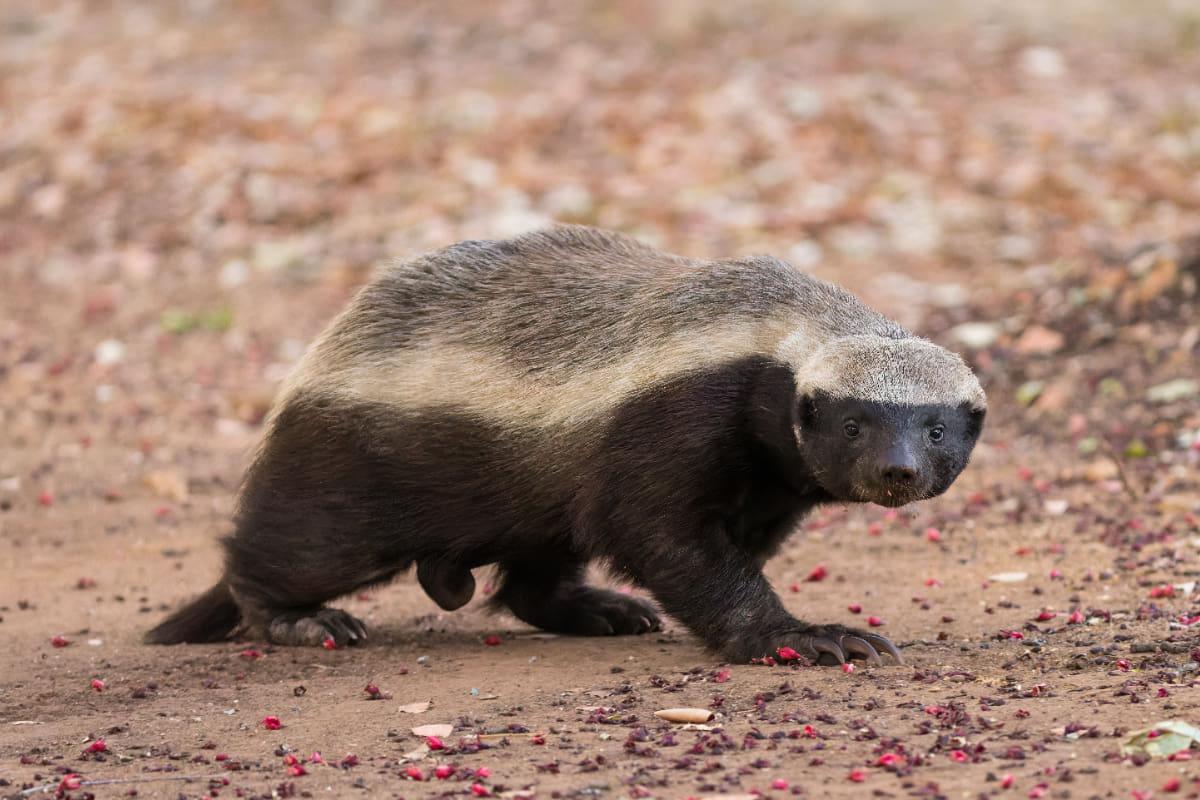
Honey badgers attempt to avoid conflict with larger animals despite their reputation as fearless fighters, BBC Wildlife reported. The predator, also known as the ratel, is the size of a fox but attacks lions and leopards, raids beehives, and survives bites from venomous snakes.
The honey badger is the largest land-dwelling mustelid in Africa, belonging to the same family as badgers, weasels, and otters. It measures 55 to 77 cm long with a 12 to 30 cm tail and a shoulder height of 23 to 28 cm, with females smaller than males. Equipped with 4-centimeter claws and teeth that crush turtle shells, the species was reclassified from true badgers into its own subfamily, Mellivorinae, after scientists found it closer to martens.
Defensive behavior and traits
Naturalist Colleen Begg told BBC Wildlife that honey badgers try to avoid trouble, noting she had seen them rush to burrows upon finding fresh lion or leopard tracks. She said they attack mostly when surprised while digging, as weak vision and noses in the dirt prevent them from sensing danger. A startled badger releases a sharp scent from its anal glands, raises its fur, and uses its loose skin to turn and bite attackers even when grabbed.
Diet and snake immunity
Honey badgers mainly eat rodents, reptiles, insect larvae, and occasionally young antelopes, cheetah cubs, or eagle chicks. They also hunt venomous snakes like the puff adder and Cape cobra, developing immunity over time. Begg recalled one badger bitten in the face by a puff adder that resumed chasing snakes five hours later despite severe swelling.
Habitat range and predators
Found across Sub-Saharan Africa, Southwest Asia, and the Indian subcontinent, honey badgers conflict with farmers and beekeepers by breaking into sturdy chicken coops. In India, they have also dug up human graves. Lions, leopards, and hyenas prey on them, especially young badgers, but the International Union for Conservation of Nature lists the species as least concern due to its wide range and adaptability.
Binturong characteristics
UNIAN previously reported on the binturong, a mammal called the bearcat despite no relation to cats or bears. Female binturongs average 22 kg compared to 9 kg for males, featuring a prehensile tail and a scent like fresh popcorn.


