Spanish historian Antonio Manuel Moral Roncal has published a new biography reclaiming the forgotten legacy of Infanta María Luisa de Borbón, a Spanish royal who resisted Emperor Napoleon Bonaparte during the Peninsular War.
The book, titled Una infanta frente a Napoleón and published by Ediciones Encuentro, examines how the infanta challenged French imperial dominance across southern Europe. Over the past two decades, historiography covering the Peninsular War has evolved across political, cultural, military, and gender perspectives. However, traditional accounts have largely relegated the Spanish Bourbon dynasty to a secondary role, focusing primarily on internal disputes between King Charles IV and his son Ferdinand VII, the royal departure from Madrid that triggered the Dos de Mayo uprising, and the eventual surrender of the crown to Napoleon at Bayonne. Moral Roncal, a professor of history, argues that María Luisa remained the final unexamined figure of that crisis.
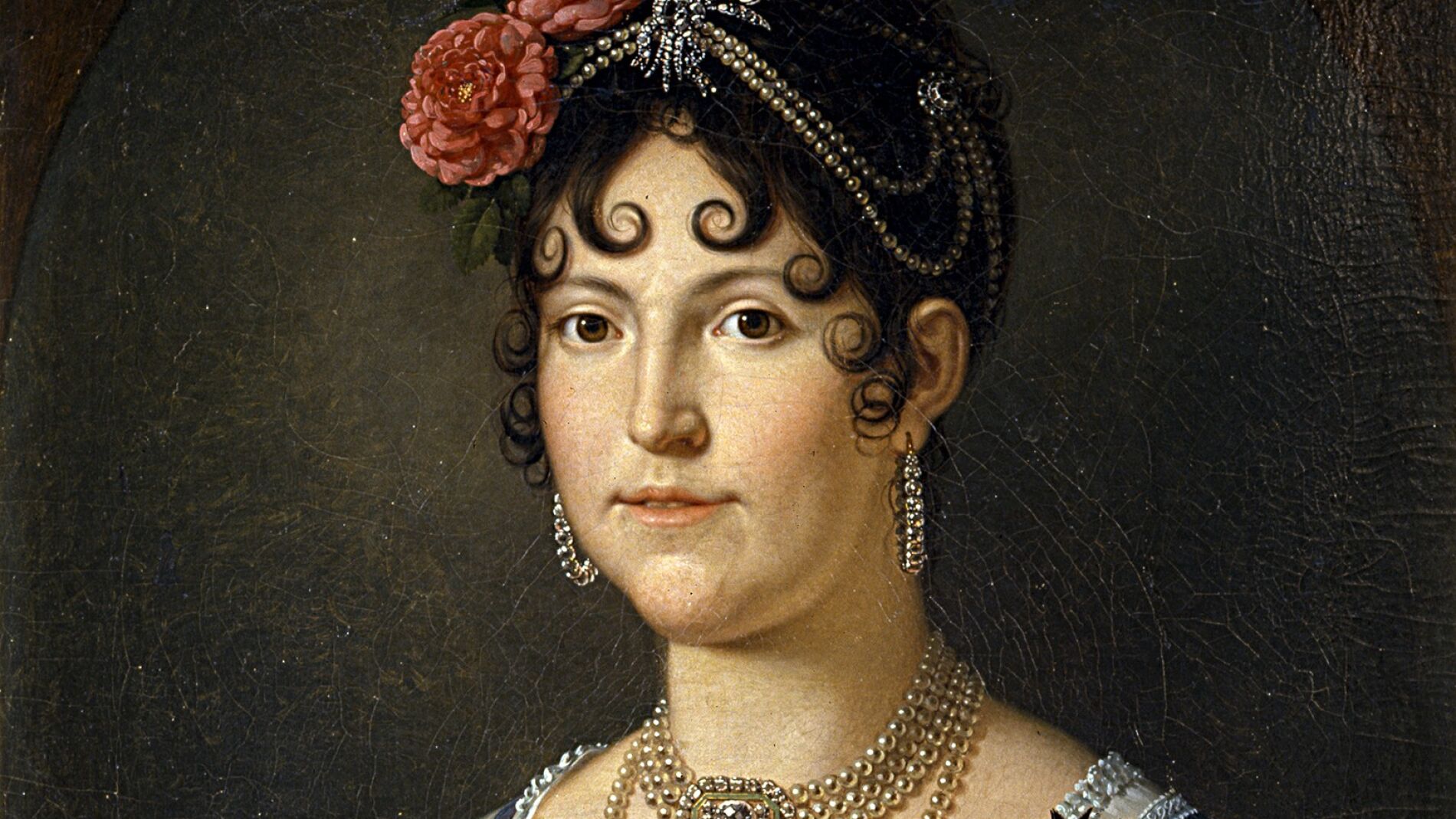
Royal Upbringing and the Crown of Etruria
Born in 1782 amid the splendor of the Royal Palace of La Granja de San Ildefonso, María Luisa de Borbón was not initially educated to exercise political power. Her initial role was designed as a queen consort, serving as a pawn in dynastic marriages arranged by Spanish royal minister Manuel Godoy alongside her parents, King Charles IV and Queen María Luisa de Parma.
In 1795, at the age of 13, she married her cousin, Prince Louis of Parma. Following diplomatic realignments in Western Europe, she became Queen of Etruria in 1801, a kingdom established in central Italy within the historic region of Tuscany.
Her life changed dramatically when she was widowed at the age of 20. She immediately assumed the regency on behalf of her young son, Prince Carlos Luis, governing a territory that functioned as a French satellite state. Instead of submitting to directives issued from Paris, María Luisa developed an independent domestic and foreign policy supported by her mother and Godoy.
Moral Roncal dismantles the historical myth that the Spanish infanta operated as a passive Napoleonic puppet. During her regency, she reversed secularist policies introduced under French influence and insisted that Tuscan territory be defended by local inhabitants rather than imperial forces, a stance that generated deep suspicion within the French colonial administration.
The Bayonne Abdication and Resistance to Napoleon
The decisive turning point in her political career occurred in May 1808 in the French border city of Bayonne. Her brother, King Ferdinand VII, informed her that he had renounced the Spanish throne in favor of Napoleon Bonaparte, an act that stripped the Spanish Bourbons of their sovereignty.
The revelation ignited a fierce desire for vengeance and active resistance within María Luisa. While other members of the Spanish royal family accepted a comfortable, gilded exile on French estates with servility, the infanta refused to remain captive in what she regarded as a gilded cage.
Secret Escape Plots and Imprisonment in Rome
In his research, Moral Roncal uncovers two clandestine escape plots organized by the infanta that rivaled the intrigue of dramatic fiction. The first attempt, coordinated with a local merchant, was designed to transport her secretly to the coast of Nice, where she planned to board a ship for Sicily or territory controlled by the British military.
A second, more elaborate scheme involved a Florentine nobleman and reached the highest levels of the British government under King George III. Both covert operations unravelled after being betrayed by informers and intercepted by Napoleon's secret police network.
The failed escape attempts brought severe reprisals from French imperial authorities. Several of María Luisa's key co-conspirators were executed for their involvement, while the infanta herself was arrested and confined for two years inside a Roman convent.
Patron of the Arts and Cultural Diplomacy
Beyond her political opposition to France, the biography presents a detailed portrait of María Luisa as a sophisticated cultural figure. She was a dedicated patron of the arts and a passionate music enthusiast who composed her own symphonies.
Operating within a male-dominated political arena, she utilized cultural patronage as a strategic instrument of statecraft to elevate the international prestige of the Spanish Crown. Among the artists she actively promoted was the prominent Spanish painter José Aparicio Inglada.
Ruler of Lucca and Historical Revision
Following the final collapse of Napoleon's empire in 1815, María Luisa refused to retire from public affairs. Demonstrating persistent determination, she lobbied the diplomatic representatives at the Congress of Vienna to recognize her dynastic rights over Etruria, conducting an extensive correspondence with her brother Ferdinand VII to back her claim.
Although she did not recover the kingdom of Etruria, European diplomats awarded her sovereign authority over the Duchy of Lucca in northern Italy. She ruled Lucca as one of Europe's last enlightened despots from 1815 until her death in 1824.
A major contribution of Moral Roncal's study is the rebuttal of centuries of negative propaganda directed against the infanta. Contemporary critics frequently mocked her physical appearance, describing her as plain, or accused her of collaborating with French occupiers.
By comparing her trajectory with that of her sister, Carlota Joaquina, who served as Queen consort of Portugal through her marriage to King John VI, Moral Roncal concludes that the women of the royal house articulated the most effective survival strategies for the dynasty during its greatest historical crisis.
Moral Roncal combines rigorous archival research with a dramatic narrative, revealing a courageous royal who chose imprisonment over servility and confronted imperial war with political boldness.