

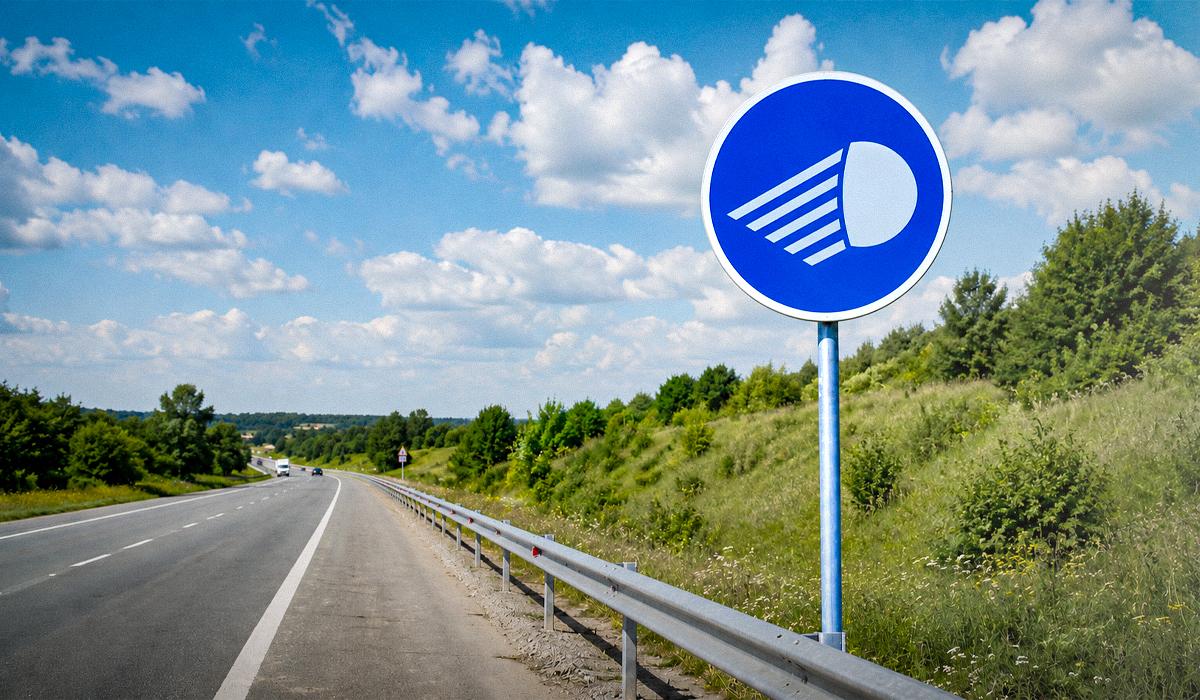
A circular blue road sign featuring a white emblem resembling a jellyfish requires drivers travelling across Europe to turn on low beam headlights. The unusual symbol confuses many motorists, but it simply mandates vehicle lighting before entering hazardous or dimly lit stretches of road.
The sign is positioned before tunnels, bridges, and other dark road sections to warn motorists that continuing without illumination could pose a danger. Drivers are most likely to encounter the marker while travelling in Poland, Spain, and Portugal.
Although the illustration resembles sea life, the symbol actually depicts a vehicle headlight emitting rays of light. The sign is not included in official Ukrainian traffic regulations or in the Road Signs of Ukraine reference books.
Optional lighting and historical rules
Motorists may also spot a secondary variant of the sign that features the same headlight graphic alongside a question mark on the right side. Placed after dark road segments end, this sign indicates that drivers may choose whether to leave their low beam lights on based on surrounding visibility, rather than imposing a strict requirement to turn them off.
Both road signs were established in 1968 under the Vienna Convention on Road Traffic, an international treaty created to standardise traffic signs, signals, and road safety rules across participating countries. Low beam headlights are standard vehicle lights designed to illuminate the roadway ahead without glaring into the eyes of oncoming drivers.
The signs are installed far less frequently today because traffic regulations across most of Europe, including Ukraine, now require drivers to keep low beam headlights on by default when travelling outside built-up areas during the day. In addition, many modern vehicles feature automatic lighting sensors, making dedicated warning signs redundant in most driving situations.
Fines and international driving advice
Despite their declining use, motoring authorities caution that drivers should not ignore the jellyfish symbol when it appears, as it signals heightened risk on the upcoming section of road.
Daytime headlight requirements vary across European nations outside urban centers. While many countries mandate headlight use year round on rural highways, some nations enforce the rule only during winter months or during poor weather conditions.
Travelers are advised to verify local traffic rules before driving abroad. Failure to comply with daytime lighting requirements in European countries can result in fines ranging from 7 euros to 200 euros.


