

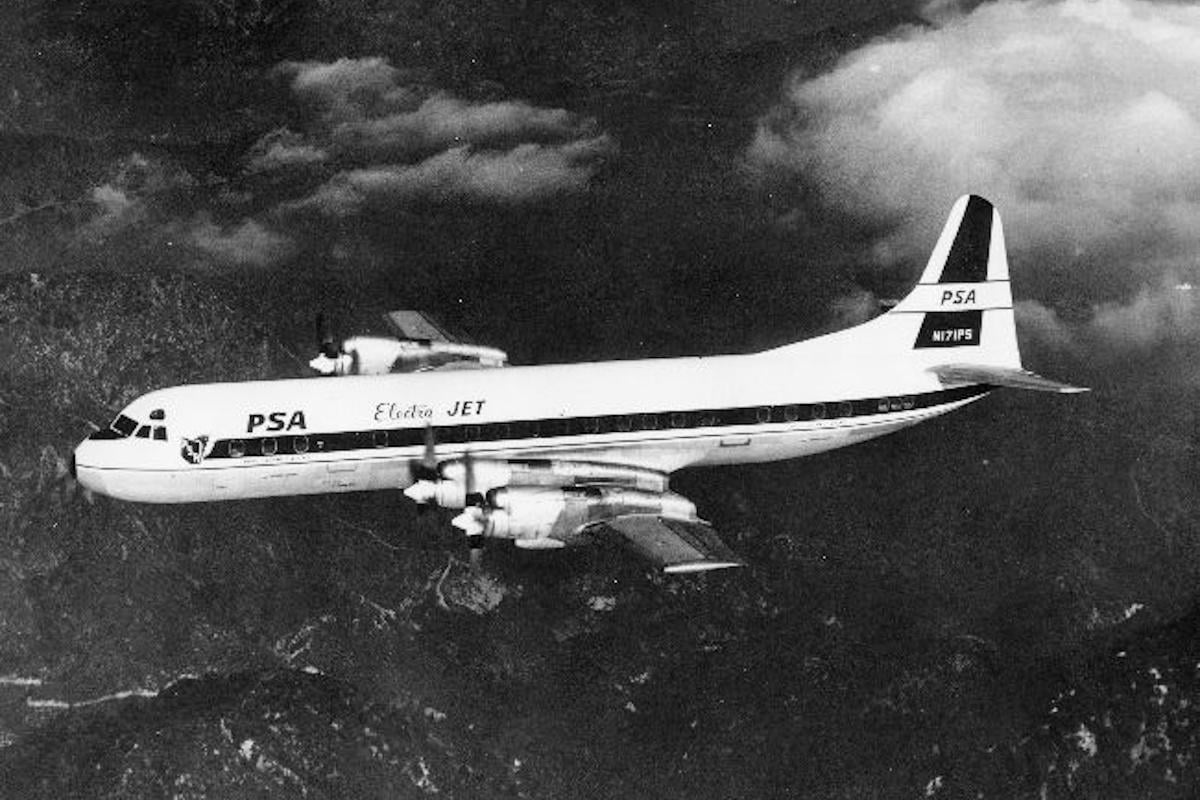
Seventeen-year-old German passenger Juliane Koepcke survived a three-kilometer fall into the Peruvian Amazon after LANSA Flight 508 disintegrated during a 1971 storm.
The teenager was traveling with her mother, ornithologist Maria Koepcke, on Christmas Eve 1971. Their flight departed the Peruvian capital of Lima around 11:45 a.m., bound for a remote research station in the jungle following a delay of several hours.
The flight was operated by Peruvian airline LANSA using a Lockheed L-188A Electra turboprop airliner. LANSA had already developed a troubling safety reputation at the time following two previous fatal crashes in 1966 and 1970.
While crossing the Andes, the plane encountered a severe thunderstorm over the rainforest. The sky darkened rapidly, and violent turbulence escalated into dangerous vertical air currents. Despite near-zero visibility, the flight crew pushed ahead through the storm clouds.
Disintegration Over the Rainforest
A strike of lightning hit the right wing, igniting the fuel tanks and destroying the structural integrity of the aircraft. The airliner broke apart mid-air, scattering debris, seats, baggage, and passengers across a vast area of dense jungle.
Koepcke lost consciousness during the drop and awoke on the jungle floor still strapped to her airplane seat, which had served as a shield during the fall. She later described the realization to filmmaker Werner Herzog, recalling that she knew at that moment she had fallen from the sky to the earth.
After recovering her senses, Koepcke searched for her mother but quickly realized there was virtually no chance of finding her alive. Explaining her actions to Herzog years later, she said it was clear to her that remaining near the scattered wreckage to wait for rescuers was hopeless.
Eleven-Day Trek to Safety
Equipped with only a single bag of sweets for sustenance, Koepcke relied on survival principles taught by her parents. She located a small stream and began following the water downstream, reasoning that it would eventually lead to a larger river and human civilization.
Her trek through the rainforest turned into an eleven-day struggle against exhaustion, concussion symptoms, deep mud, and relentless insect bites. Maggots infested one of her open wounds as she continued trekking along the waterway.
Koepcke eventually spotted a small boat moored by the water. She initially assumed the sight was a hallucination caused by severe fatigue, but confirmed it was real after touching the hull. Nearby, she discovered a small shelter hut and collapsed inside to rest.
Rescue and Search Findings
Three local loggers discovered Koepcke in the hut the following day. The men treated her maggot-infested wound with gasoline to extract the larvae before transporting her by boat to the nearest settlement. From there, she was taken to a hospital in Pucallpa, where she reunited with her father and began a rapid physical recovery.
Search and rescue teams faced immense obstacles locating the crash site because the wreckage was scattered over such a wide area. Popular Mechanics reported that investigators later determined up to 14 other passengers may have survived the initial fall, but died in the days following the crash before rescue teams could reach them.
Koepcke later became a professional biologist, dedicating her career to the study and conservation of the Amazonian environment. The harrowing experience left long-term psychological marks, and she continued to suffer from recurring nightmares about the aviation disaster for many years.


