

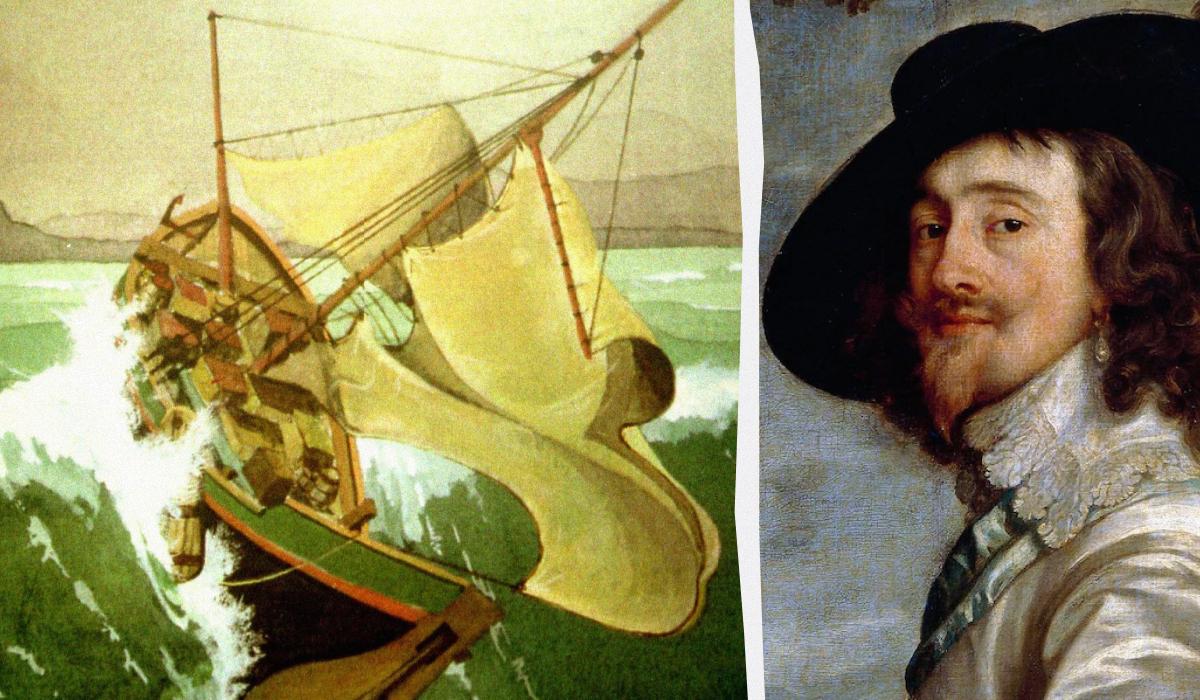
Researchers from the Charles Wreck project believe they have located the underwater wreckage of King Charles I's royal vessel, the Blessing of Burntisland, in Scotland's Firth of Forth.
According to research team findings reported by the Daily Mail, the ship lies approximately one mile off the town of Burntisland. Modern technology has enabled investigators to locate the vessel, which had been considered hopelessly lost for nearly 400 years.
The vessel sank during a severe storm in July 1633 while travelling across the estuary from Fife to Leith as part of a royal coronation tour. Of the 35 passengers and crew members on board, only two survived the shipwreck.
Royal cargo lost at sea
A massive royal treasure went to the seabed with the ship, valued at the time at 100,000 pounds, or roughly 20 million pounds in modern equivalent. Historical records indicate the cargo contained hundreds of gold and silver items, including 280 dining services originally ordered by King Henry VIII.
King Charles I ruled England, Scotland, and Ireland from 1625 until 1649, while King Henry VIII was the Tudor monarch who ruled England a century earlier. The Firth of Forth forms the major estuary where the River Forth meets the North Sea, separating the Fife peninsula from the port of Leith near Edinburgh.
Decades of underwater searches
Volunteers from Burntisland Heritage spent approximately 30 years searching for the lost vessel under extremely challenging maritime conditions. Heavy silt, strong tidal currents, poor underwater visibility, and strict diving restrictions long hindered exploration efforts.
Previous searches in the area recovered historic ceramics, leather shoes, and pieces of clothing. However, researchers lacked definitive evidence to link those artifacts directly to the royal ship.
The latest discovery relied on underwater ground-penetrating radar and advanced scanning techniques capable of detecting structures buried beneath thick layers of mud. Researchers stated that core samples taken from the location offer compelling evidence pointing to the Blessing of Burntisland, although official identification remains to be completed.
Accusations of royal witchcraft
The loss of the treasure ship caused a major scandal in the seventeenth century. King Charles I witnessed the sinking from the deck of his own ship, the Dreadnought, and historical accounts record that he was convinced the lethal storm was conjured by witchcraft.
At the insistence of the monarch, 19 women were arrested in the English county of Lancashire and charged with practicing witchcraft to bring down the vessel. Modern researchers consider it far more likely that the ship foundered because it was heavily overloaded with valuable cargo.
Timber analysis and Crown ownership
The next phase of the investigation will involve radiocarbon dating of wood samples retrieved from the seabed wreck. Scientists aim to determine the precise period when the trees used in the ship's construction were felled. If the felling dates match the construction era of the Blessing of Burntisland, it will provide crucial confirmation of its identity.
Historians view the finding as potentially one of the most significant discoveries in Scottish maritime history. If the wreckage and royal treasure are confirmed and recovered, official ownership of the find will rest with the Crown, while the salvage team will be entitled to a financial reward.


