

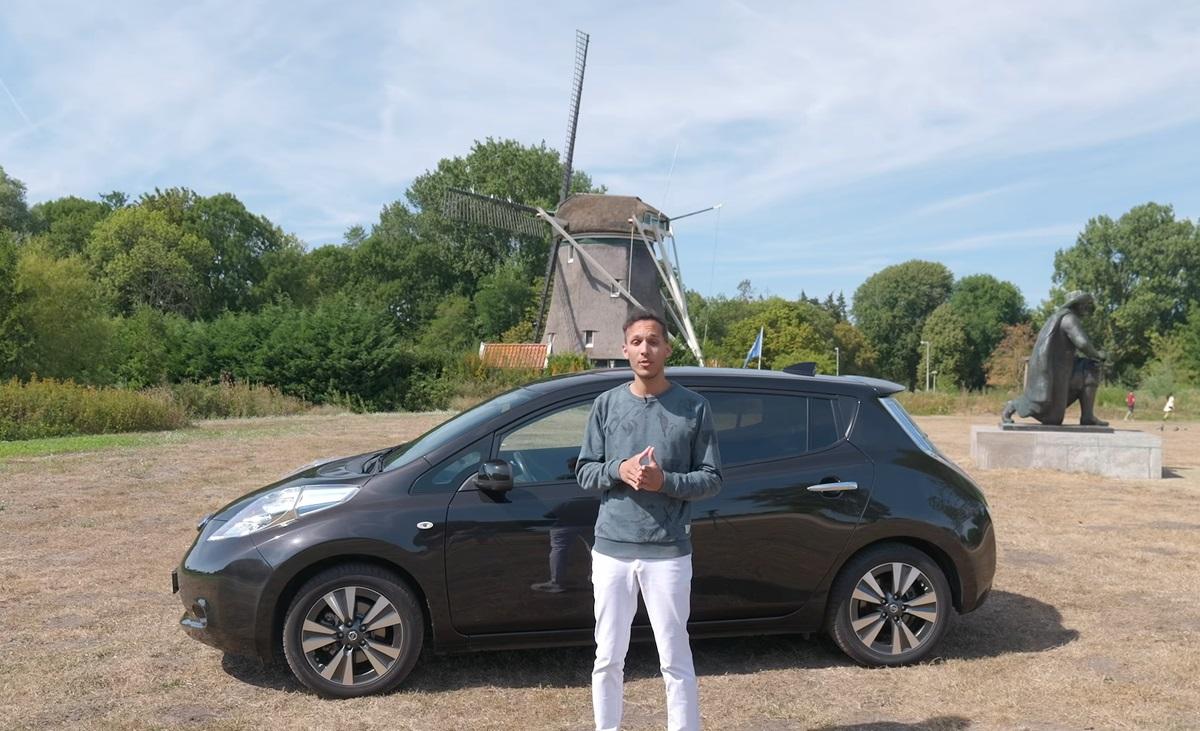
A 2016 Nissan Leaf owner boosted his electric car's driving range to more than 400 kilometres on a single charge after installing a higher-capacity battery pack himself.
The car owner, who documented the project on his YouTube channel MahlerCapital, spent just under 8,000 dollars to replace the vehicle's worn factory battery and avoid professional installation costs.
He swapped out the original 30 kilowatt-hour battery for a larger 62 kilowatt-hour pack, significantly increasing the energy storage capacity of the hatchback.
Automotive media outlet Supercar Blondie reported that the original 2016 Leaf battery lacked an active thermal management system. Severe weather conditions and seasonal temperature fluctuations caused heavy battery degradation over time, reducing the vehicle's real-world range to roughly 60 kilometres in cold weather.
In electric vehicles, thermal management systems use circulating liquid coolant or fans to maintain optimal battery temperatures. Without active cooling, lithium-ion battery cells degrade faster when exposed to heat and extreme cold, reducing their total charge capacity.
The blogger noted that fitting the upgrade was not an easy process. The 62 kilowatt-hour battery pack was physically taller due to its higher cell density, requiring him to install custom spacers and longer structural bolts to secure the unit safely.
The modification yielded dramatic performance improvements. The owner said the car's dashboard indicated 260 kilometres of range with 44 percent battery charge remaining, and after six months of routine use, the vehicle consistently surpassed 400 kilometres on a single charge.
Regenerative braking downhill
The battery upgrade story comes as another electric car driver shared details on the social media forum Reddit about charging his vehicle's battery while driving downhill.
The motorist said his 2024 Tesla Model 3 Highland Long Range RWD gained 8 percent in battery charge during a mountain descent covering approximately 1.8 kilometres.
He noticed the unexpected surge during an unusually long slope, which turned a routine downhill drive into an active charging session.
The charge gain was driven by regenerative braking technology. Instead of allowing kinetic energy to dissipate into heat through traditional friction brakes during deceleration, an electric vehicle's motor acts as a generator, capturing deceleration energy and transferring it back into the battery pack.
Tesla, the Texas-based electric vehicle manufacturer, builds regenerative braking as a standard software and hardware feature across its model lineup, allowing drivers to extend range during mountain driving and urban stop-and-go travel.


