

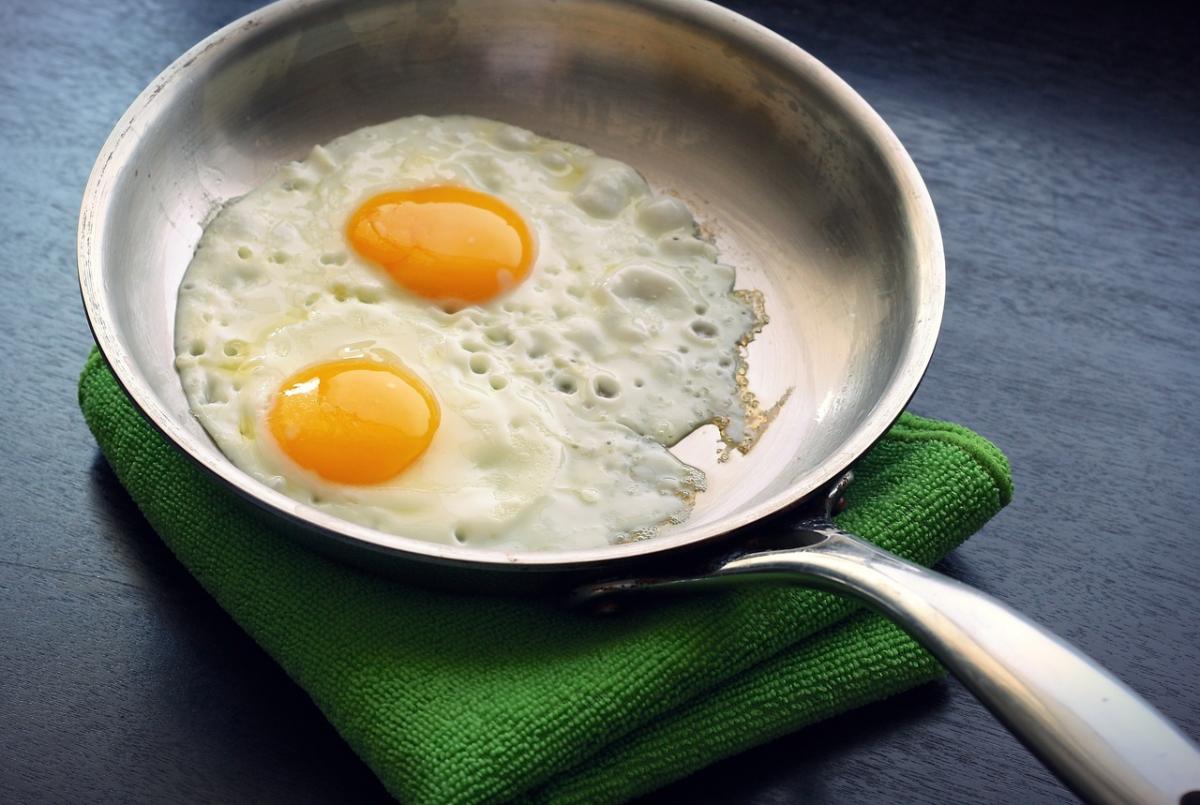
Professional chef Anne Wolfe has advised home cooks to swap butter for olive oil when frying eggs to achieve crisp, lacy edges. Writing in an article for the digital culinary publication Simply Recipes, Wolfe explained that olive oil outperforms butter due to its high heat tolerance, behavior in the pan, and rich flavor profile.
According to Wolfe, the defining feature that elevates a fried egg from good to great is a crackling, ruffled border. While butter remains a popular choice for gentle frying, its chemical composition prevents a skillet from reaching the intense heat needed to blister the edges of the egg white.
Simply Recipes is a prominent food website that publishes tested recipes, kitchen advice, and culinary techniques for home cooks. In culinary science, choosing the correct cooking fat depends heavily on smoke points, which define the temperature threshold at which an oil begins to decompose, produce smoke, and release bitter off-flavors.
The science of fat and water in the pan
Wolfe noted that traditional butter consists of only 82 percent to 86 percent fat, with the remainder composed of water and a small proportion of milk solids. As long as water remains in the pan, it caps the cooking temperature near the boiling point. A skillet cannot rise above that temperature barrier until all the moisture has evaporated completely.
By the time that water boils away, the milk solids in the butter are already on the verge of burning. Wolfe pointed out that this creates an unavoidable dilemma for cooks, forcing them to choose between frying at a temperature too low to crisp the egg edges or increasing the heat and scorching the butter into a bitter residue.
In contrast, olive oil is composed entirely of fat, containing no water or milk solids. Wolfe highlighted that olive oil is far more heat resistant than many home cooks realize, with a smoke point ranging from 175 °C to 213 °C. This thermal stability allows cooks to heat a pan thoroughly without sacrificing flavor.
Creating lacy edges with steam
The transformation that creates lacy egg edges relies on rapid evaporation during cooking. Raw egg white is composed of almost 90 percent water. When the thin outer perimeter of the egg white contacts oil heated well past the boiling point, at approximately 150 °C, that moisture converts instantly into steam.
As steam bubbles expand through the egg white at the exact moment the protein sets, the white solidifies around the escaping vapor. This process forms a foamy, delicate lace that fries into a crunchy golden crust. Wolfe described this texture as a snapshot of steam forcing its way through coagulating protein.
Butter cannot produce this effect because its water content keeps the skillet too cool initially, while its solid components burn before bubbles can form along the edges. Eggs fried in butter turn out tender and evenly set, a result that Wolfe likened to a sensible cardigan in comparison to the dramatic texture of eggs fried in oil.
While neutral cooking oils can also produce a crisp edge, Wolfe emphasized that olive oil provides a rich depth of flavor unavailable from neutral options. Depending on the olive oil chosen, cooks can introduce a broad spectrum of flavors, ranging from grassy and peppery to fruity and aromatic or nutty and buttery.
Basting techniques and serving recommendations
To achieve optimal results, Wolfe recommended using a larger amount of oil than seems necessary, allowing it to pool around the egg rather than thinly coating the pan. The oil should be heated over medium-high heat until it shimmers before the egg is cracked into the pan, where it should sizzle immediately.
Wolfe advised tilting the skillet to spoon hot oil over the top of the egg white while cooking. This basting method ensures the top of the white sets quickly while keeping the yolk rich and runny. Wavy golden edges typically develop within one to two minutes.
Cooks using slightly older eggs may see even more pronounced lacing, as thinner whites spread further across the hot pan. Wolfe noted that a fried egg cooked in flavorful olive oil and served on crisp sourdough bread can easily outshine traditional brunch offerings such as Eggs Benedict or breakfast casseroles.
The culinary advice was reported by Ukrainian news agency UNIAN, which previously published guidance on whether cooks should rinse rice before boiling.


