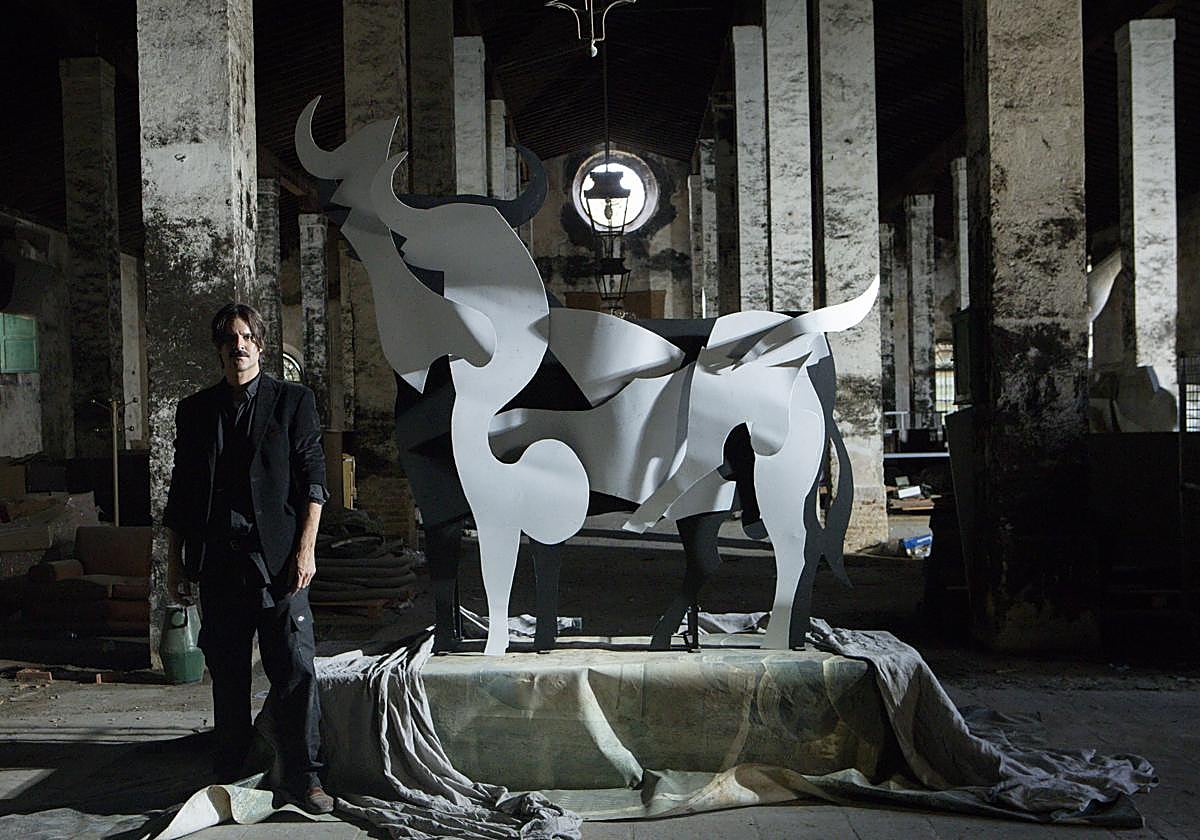
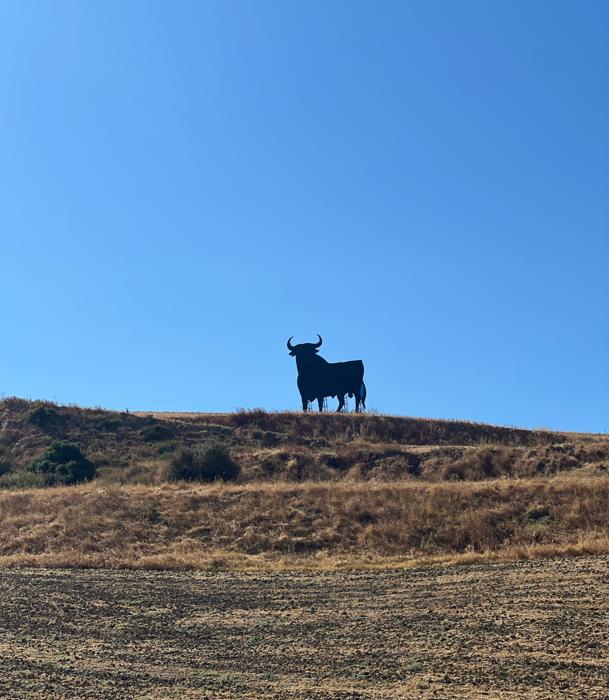
The Osborne Bull, the black silhouette that has watched over Spanish roads for seven decades, is marking its 70th anniversary with a new artistic reinterpretation by Malaga-born artist Ernesto Artillo. The figure, instantly recognisable from car windows during family holidays and from countless films, once came close to disappearing from Spain's highways in the 1990s.
Artillo told MUJERHOY that the bull's secret is that while it has always remained the same, it has never stopped transforming according to its context. He said it has changed the country, the landscape, the people who look at it and what those people project onto it.
For Artillo, the bull is tied to childhood memories. He said he spent his childhood weekends running wild in the countryside, and that seeing the bull on the way from the city to the countryside felt like a gateway into a time when he himself became an animal.
How the Osborne Bull was born
In 1956, the Osborne company commissioned advertising agency Azor to design a roadside billboard promoting its Veterano brandy on Spanish highways. The design was created by Manolo Prieto, an artist and graphic designer born in El Puerto de Santa María, Cadiz, who found in the bull the visual strength he needed.
The first billboard went up a year later in Cabanillas de la Sierra, Madrid. Made of wood, it stood just four metres tall. Over time, metal replaced wood and the figures grew, with the largest examples eventually reaching 14 metres in height.
The ruling that saved the bull
The most decisive chapter in the bull's history came decades later. In 1988, Spain's Roads Law banned advertising visible from state highways outside urban areas. Osborne removed all advertising text from its billboards, keeping only the black silhouette. Even so, the bull's survival was not guaranteed.
In 1994, a sanction against the company included an order to remove one of the figures, putting its future at risk. The threat of losing the bulls sparked public mobilisation involving citizens, artists and intellectuals. On 30 December 1997, Spain's Supreme Court ruled in Osborne's favour, deciding the figure had gone beyond its original advertising purpose and had become part of the landscape.
According to figures provided by Osborne for the anniversary, there are now 92 silhouettes spread across 14 of Spain's autonomous regions, along with examples abroad in countries including Mexico, Denmark and Japan.
Artillo said Prieto did not design an image for a medium, but an image that was itself its own medium. He said Prieto was asked to make advertising and ended up making landscape art, and praised the courage with which Prieto defended such a risky proposal.
From collage to fashion
Artillo said he grew up surrounded by images that had stopped being what they were to become something else, and that the most useful thing his father taught him was not an artistic technique but a way of thinking.
Over the years, Artillo has taken collage beyond paper, exploring bodies, spaces and even his own identity. He said there is no need to throw everything away to start again, and that sometimes it is enough to rearrange it.
His work draws on flamenco, religious imagery, fashion and Andalusian tradition. Some of his earliest fashion compositions, he has said, owed more to the altars he saw during Holy Week as a child than to the industry's usual references.
Taking the bull to the sea
Salvador Dalí, Keith Haring, Annie Leibovitz and Helmut Newton are among the major names who have drawn inspiration from the Osborne Bull over its seven decades. Artillo now joins that list, following Osborne's collaborations with designer Palomo Spain in 2024 and singer María José Llergo in 2025, part of the company's Fuerza y Genio initiative.
For this project, Artillo started from a simple idea: what would happen if the figure, used to watching others move while standing still, set off on a journey of its own?
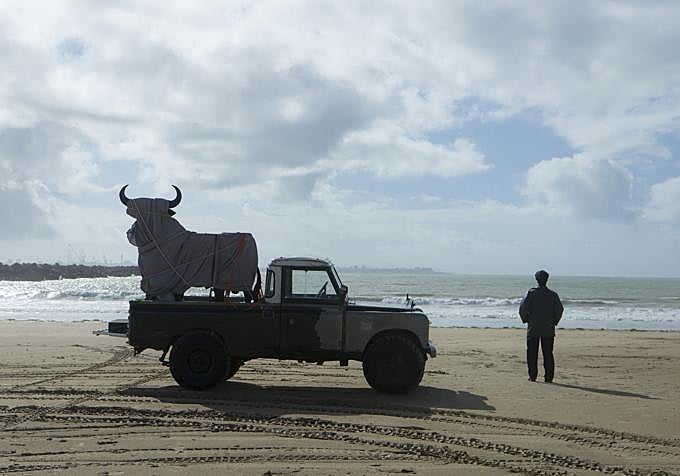
He said that in the film accompanying the piece, he takes the bull to the shore, explaining that after seventy years of watching people go by, he wanted the bull itself to move.
The rounded shapes of the waves and the white of the sea foam inspired the piece, which Artillo created with the Tejada brothers, whose family has been linked to the manufacturing of the bulls since their origins.
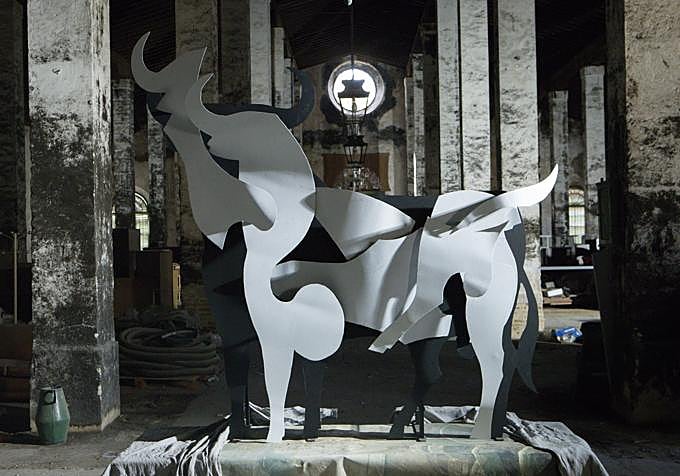
The result is a three-dimensional collage made up of seven white pieces, one for each decade of the bull's history, which attach to the black silhouette using magnets. None of the pieces has a fixed position, meaning the sculpture can take different forms each time someone interacts with it.
Artillo said this lets him move, turn and rearrange the pieces as many times as he wants, discovering shapes inside the bull he had never seen before. The project has also produced a limited-edition miniature version for collectors.
Reinventing Spanish roots
The conversation also turned to the growing fascination with Spanish folklore in fashion, music and contemporary art. For Artillo, reviving tradition is less about defending an aesthetic and more about finding new ways to keep it alive. He said that if something is purely Spanish, it must be tremendously impure, defending the cultural richness that comes from mixing influences.
That same appetite for change has shaped his own life. After eleven years living in Madrid, Artillo moved to Cabo de Gata, where the silence and the landscape led him to rethink his idea of success. He said he has made some of his best work there, some of it without anyone present to recognise it as art, and that this has changed how he understands success.
Asked what he would like someone to discover about today's Spain when looking at his reinterpretation of the Osborne Bull in another 70 years, Artillo said he would like the image to speak of a country that knew how to relate to its symbols without needing to destroy them or blindly worship them, a country that knew how to touch them, question them, play with them and keep loving them.
Test yourself
Who designed the original Osborne Bull in 1956?
What event in 1997 secured the bull's survival?
What does Ernesto Artillo's new piece consist of?
Have your say
Do you think classic cultural icons like the Osborne Bull should be reinterpreted by contemporary artists?
Where it happened
El Puerto de Santa María, Spain