

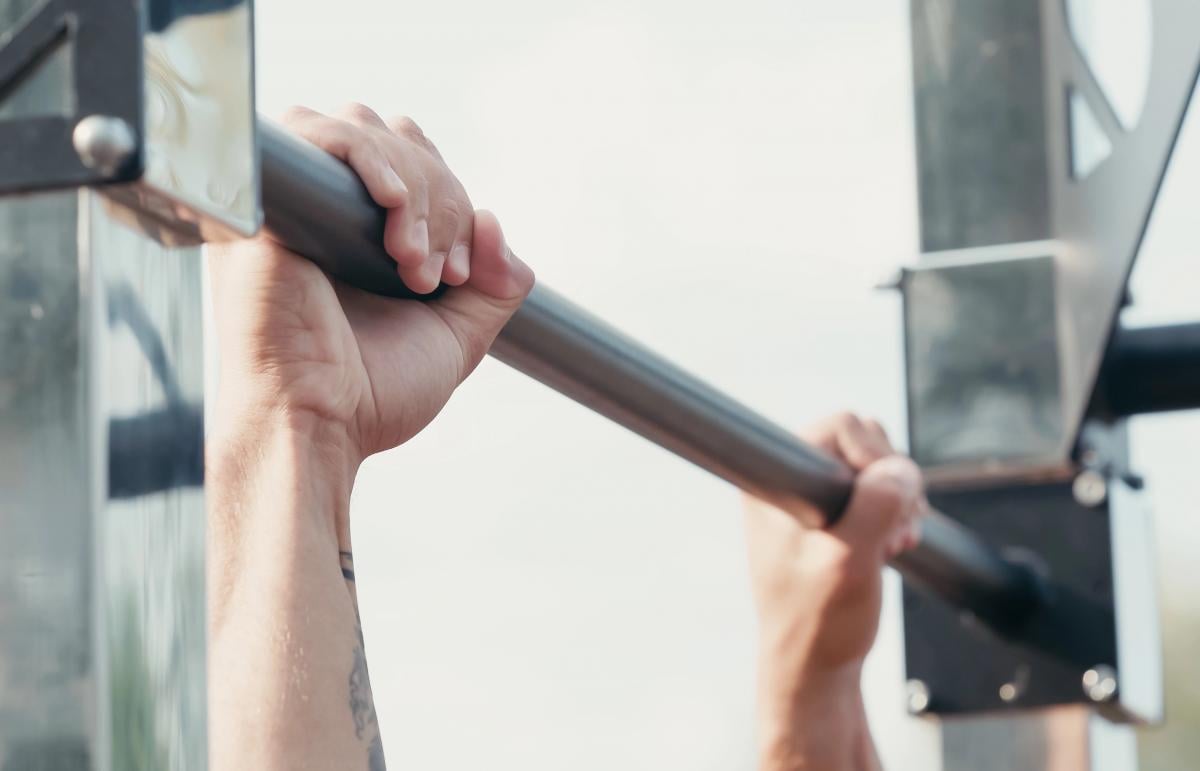
Overhead bar hanging, a childhood activity often abandoned in adulthood, offers significant physical benefits for people who spend long hours hunched over desks and mobile phones.
Physiotherapists say holding onto an overhead bar for as little as 30 seconds can stretch tight upper body muscles and build essential grip endurance.
Australian physiotherapist Daniel Vadnal demonstrated the exercise when he persuaded his 93-year-old grandmother to try supported hanging several years ago. She had not raised her arms fully overhead since childhood and expressed initial skepticism about the movement.
Within 30 seconds of holding an overhead bar while keeping her feet planted on the floor, she felt taller, moved more freely, and found it easier to reach items in her kitchen cabinets, according to Time magazine.
In its basic form, hanging involves gripping a sturdy overhead bar, such as one installed in a doorway, with straight arms to support part or all of one's body weight. The body remains vertical with arms overhead and feet pointing toward or resting on the floor, distinct from inverted hanging performed upside down.
Hazel Anderson, a physiotherapist and instructor at the University of St. Augustine for Health Sciences, explained that while the exercise is simple in concept, it is not easy to perform.
Passive and active hanging techniques
Vadnal outlined two distinct approaches to upper body positioning during a hang, regardless of whether the feet remain on the ground for support. Passive hanging involves complete relaxation, allowing gravity and body weight to pull the shoulders upward toward the ears and creating a stretch through the shoulders, arms, and torso.
Active hanging demands greater muscular engagement by intentionally pulling the shoulder blades down and away from the ears. This action activates muscles around the shoulders and back to provide greater joint stability while keeping the elbows straight.
Vadnal described passive and active hanging as opposite ends of a single spectrum. Passive hanging still requires sufficient grip effort to hold the bar safely, while active hanging involves coordinated muscular effort, allowing individuals to choose whichever intensity level feels most comfortable for their body.
Reaching upward helps counteract hours spent hunched over work surfaces by stretching tight pectoral muscles in the chest, triceps on the back of the arms, and the latissimus dorsi muscles across the back. While practitioners often report feeling taller and less compressed in their shoulders, experts emphasize that 30-second hangs are not proven by clinical trials to permanently fix posture or cure back and shoulder pain.
However, hanging moves the upper body into a position it rarely enters during daily routines, which explains why individuals frequently feel greater freedom of movement after stepping down from the bar.
Building grip endurance and health indicators
Beyond stretching upper body muscles, hanging actively engages the hands and forearms to maintain a hold on the bar. Anderson stated that the primary functional gain from bar hanging is grip endurance, which builds the stamina to sustain a hold rather than just short-term peak force.
This endurance assists with daily physical activities such as carrying groceries and builds foundational strength required for pull-ups. Vadnal noted that the palms, fingers, and forearms serve as the crucial connecting link to the back muscles, helping to prepare the body to support and ultimately lift its own weight.
Scientific research evaluating short, recreational hangs remains limited, with most published studies focusing on rock climbers. A small 2026 study evaluated 11 rock climbers who hung from a bar until their grip failed, finding that as fatigue set in, their shoulders and upper body muscles engaged progressively harder to maintain the hold.
A separate randomized trial revealed that experienced climbers who performed finger hangs for eight weeks with added weight attached to their bodies achieved measurable improvements in specific grip strength metrics. Although that trial utilized added weights and climbing holds rather than beginners performing relaxed 30-second hangs, experts say it supports the concept that regular loading on the hands adapts them to holding body weight.
Grip strength is also widely recognized as a broader indicator of general health and longevity. Vadnal stated that grip strength correlates directly with life expectancy, citing a study of nearly 140,000 adults across 17 countries that linked weaker grip strength to higher risks of mortality and cardiovascular disease. He added, however, that hanging longer does not guarantee a longer life, advising people to treat grip strength as a useful health signal rather than a path to immortality.
Beginner progression and safe positioning
Beginners do not need to hover off the ground to gain benefits from hanging. Anderson highlighted the utility of placing a small step or platform beneath a low bar, keeping the knees slightly bent so that enough body weight remains on the feet to keep the stretch controlled. Users can gradually allow their arms to support a larger portion of their weight as they become more comfortable.
Anderson stated that beginners do not need to attempt 30-second hangs right away. She recommended starting with a 10-second supported hang repeated three to five times, taking short rests between attempts. Practitioners can then build toward a 30-second goal, while Vadnal suggested aiming for three sets of 30 seconds once an individual selects a variation light enough to control.
Hand placement should initially be roughly shoulder-width apart, which Vadnal identified as the most comfortable setup for almost everyone. Wrapping the thumbs under the bar creates a more secure grip, though hands can be positioned wider or narrower based on individual preference.
For individuals who experience shoulder discomfort with a standard overhand grip, Vadnal suggested switching to a neutral grip with palms facing each other. Parallel handles available in many fitness centers or rotating gymnastic rings allow for neutral positioning, which Vadnal described as likely the gentlest option for shoulder joints.
Practitioners should assess whether passive or active positioning feels best and avoid forcing their shoulders into positions that cause discomfort. Vadnal warned that forcing shoulders higher than comfortable can induce pain or irritation, advising that range of motion should be allowed to improve gradually over time.
Maintaining proper breathing is also essential during hanging exercises. Anderson advised maintaining slow, controlled breathing and avoiding holding one's breath regardless of experience level. She emphasized that practitioners should not chase the stopwatch, adding that if technique degrades or control is lost, users should lower their feet, rest, and try again.
Safety guidelines and medical precautions
Hanging should produce muscle stretch and fatigue without causing physical pain. Vadnal stated that sharp or persistent pain, numbness, tingling, or weakness are clear signals to stop immediately rather than trying to push through the discomfort.
Anderson recommended obtaining medical clearance before attempting bar hangs for anyone who has had recent shoulder surgery or an injury affecting the neck, shoulders, elbows, wrists, or torso. The same precaution applies to individuals experiencing shoulder instability, pain when raising arms overhead, cardiovascular conditions, or uncontrolled high blood pressure.
Osteoporosis does not automatically rule out hanging exercises. However, because falls carry serious consequences for individuals with reduced bone density, Anderson emphasized that keeping feet supported on the floor and obtaining individualized medical guidance is especially critical.
To avoid overexertion, Anderson recommended practicing hanging two to three times per week on non-consecutive days, allowing muscles adequate time to recover. Beginners should avoid rapid increases in duration or unsupported body weight and should take a rest day if the hands, forearms, or shoulders remain unusually sore. Vadnal suggested keeping a bar in a frequently visited location, such as a laundry room, concluding that regular hanging functions much like daily hygiene, such as brushing teeth.


