

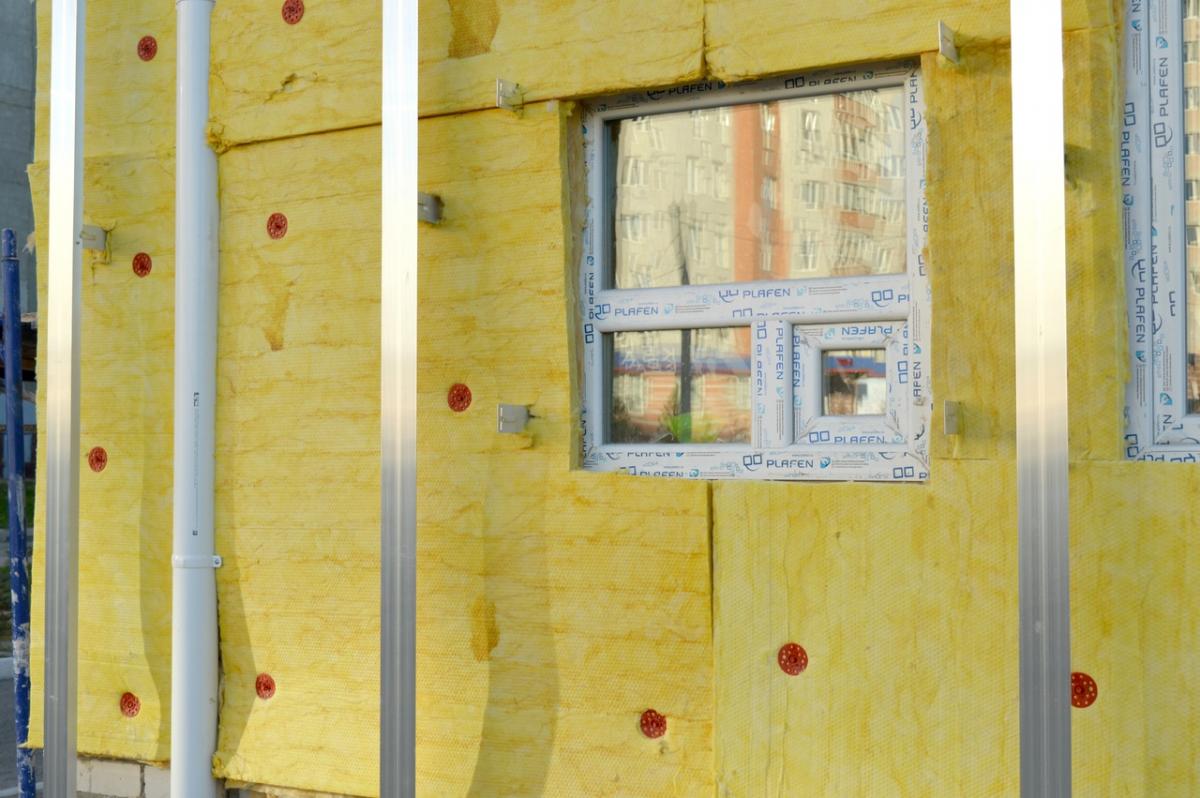
Homeowners chasing lower heating bills by adding ever-thicker insulation may be wasting their money, according to the Polish website kb.pl. Every insulation material has an optimal thickness, and only within that range does the insulation actually cut household costs, the outlet said.
kb.pl said the right thickness depends on several factors that must be weighed together: the thermal conductivity of the material, a cost-benefit analysis, the building's technical data, the use of moisture insulation, and the local climate and geographic location.
Thermal conductivity of common materials
kb.pl listed conductivity values, measured in watts per metre-kelvin, for common materials: mineral and glass wool at 0.035 to 0.040 W/(m·K), EPS and XPS polystyrene at 0.030 to 0.035 W/(m·K), polyurethane foam at 0.022 to 0.030 W/(m·K), and wood fibre board at 0.040 to 0.050 W/(m·K). The lower the value, the better the insulating properties, the outlet said.
Based on those figures, kb.pl gave minimum recommended thicknesses. For exterior walls: mineral wool 14 to 16 cm, polystyrene 12 to 14 cm, polyurethane 8 to 10 cm. For roofs: mineral wool 18 to 20 cm, polystyrene 16 to 18 cm, polyurethane 10 to 12 cm. For basement ceilings: mineral wool 10 to 12 cm, polystyrene 8 to 10 cm, polyurethane 6 to 8 cm. Passive or energy-efficient house standards can require thicker layers than these minimums, according to kb.pl.
Diminishing returns on thicker layers
kb.pl illustrated the law of diminishing returns with an example: a bare wall with a heat transfer coefficient of 1.0 W/(m²K) drops to 0.5 W/(m²K) once 5 cm of insulation is added, cutting heat loss by half. Doubling the layer to 10 cm lowers the coefficient to 0.25 W/(m²K), again halving heat loss but delivering only half the previous gain in absolute terms. Going from 10 cm to 15 cm brings the coefficient down to only about 0.17 W/(m²K), a marginal improvement. Past a certain point, the cost of extra insulation outweighs the savings on heating, so kb.pl advised finding a balance between cost and benefit.
One man's experience with foam insulation
kb.pl also cited the experience of a man who insulated his roof with PUR foam. The house warmed up more easily in winter, but the top floor began heating to 40 degrees Celsius in summer, forcing him to pay for an air conditioner. The method's advantage is speed, kb.pl noted, since an experienced crew with the right equipment can spray an entire attic with foam in just a few hours.


