

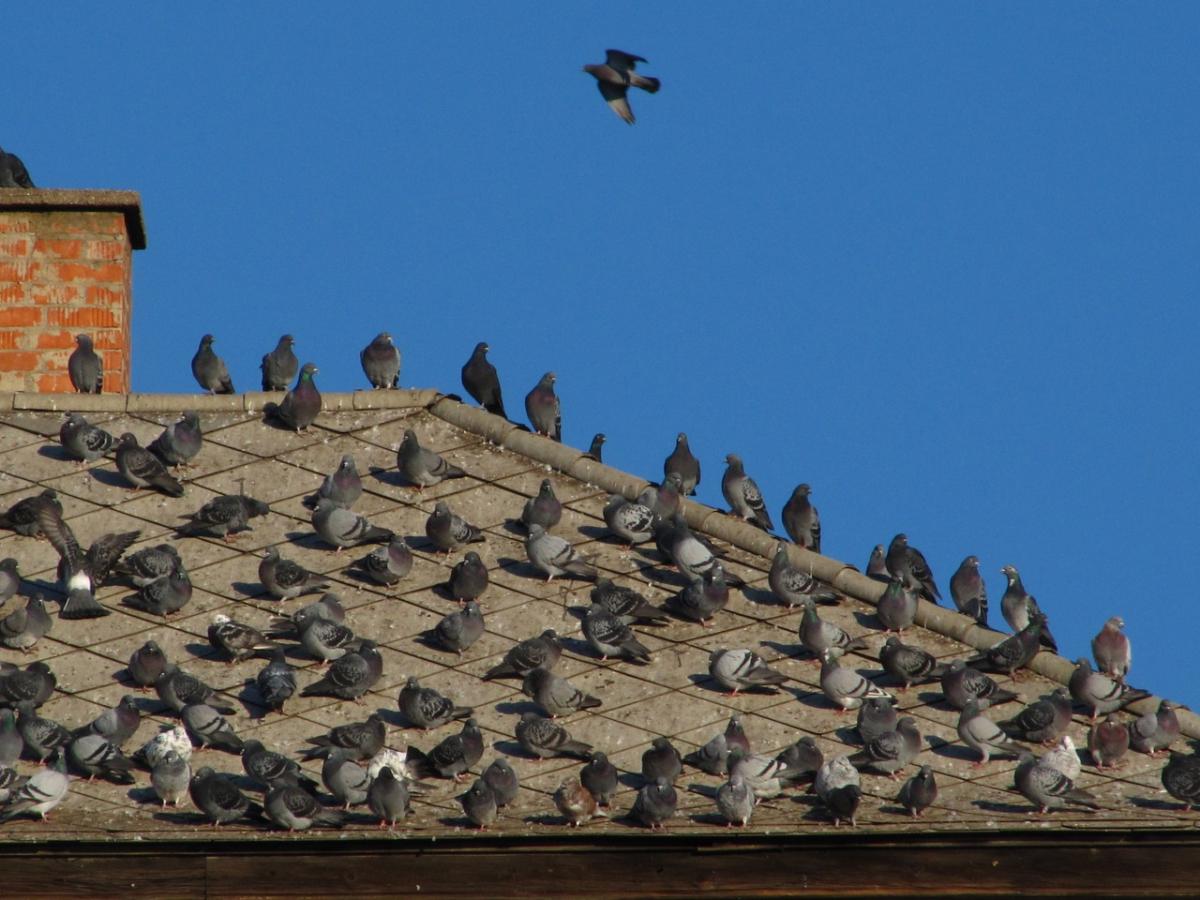
Physical netting is the most effective method for keeping pigeons off building balconies and roofs, as temporary deterrents quickly fail to keep birds away, according to a report published by news site evz.ro.
While apartment residents often try various scare tactics to stop birds perching on windowsills and ledges, physical barriers that block access completely provide the only reliable long-term solution. Protective netting and bird spike systems physically prevent birds from landing without causing them harm.
Feral pigeons are urban birds that naturally seek out elevated roosts such as building cornices and sheltered balconies, which resemble their ancestral cliff habitats. Once pigeons select a building ledge for resting or nesting, visual or acoustic deterrents rarely keep them away for long.
Choosing between netting and spike systems
For open balconies and covered terraces where pigeons fly inside, protective mesh netting is one of the most practical solutions reported by evz.ro. Netting seals off the entire open frame of a balcony rather than just the outer ledge, preventing birds from entering the space or reaching specific structural zones.
Commercial bird netting is typically manufactured from durable polyethylene mesh designed to withstand weather exposure without restricting light or air flow. By completely enclosing the open space, netting creates a physical wall that birds cannot breach.
Anti-roosting bird spikes offer an alternative for narrow surfaces where pigeons frequently perch, such as windowsills, roof edges, and exterior cornices. According to evz.ro, spikes are designed specifically to prevent birds from landing safely rather than to injure them.
However, spikes may prove insufficient for wide flat roofs or large open terraces. If any exposed areas remain unprotected between or around the spike strips, pigeons can easily land and walk around them.
Why visual and acoustic repellers fail
Low-cost methods such as aluminium foil strips or metallised tape are often used as quick home remedies, according to evz.ro. Light reflections and movement in the wind can startle pigeons temporarily, but the birds rapidly habituate to static visual stimuli.
Decoy birds of prey such as plastic owls or hawks suffer from the same limitation. Once pigeons realise that a replica predator does not move or pose a threat, they resume perching nearby. As a result, reflective items and decoys fail to offer the durable protection provided by physical barriers.
Sound deterrents that emit high-frequency ultrasonic noise present a different set of challenges. According to evz.ro, ultrasonic devices are poorly suited for apartment buildings because the sound frequencies can disturb neighbouring human residents and household pets.
Ultrasonic waves operate at frequencies above 20 kilohertz, which are inaudible to human ears but fall well within the sensitive hearing range of domestic dogs and cats, causing distress to animals in nearby flats.
Removing food sources and using natural scents
Before installing physical barriers, residents must address the root cause of pigeon visits by eliminating all food and water sources around the flat, evz.ro reported. Leaving food scraps, birdseed, or open water containers on terraces turns balconies into prime foraging sites.
If neighbours in surrounding units continue to feed birds nearby, repellers will prove ineffective. In such cases, installing protective netting becomes the only dependable way to secure a balcony permanently.
Residents can also use strong scent deterrents to make perching spots unattractive, as pigeons dislike intense odours, according to evz.ro. Wiping favoured balcony surfaces with a vinegar solution helps repel the birds.
Mixing essential oils such as peppermint, rosemary, or lavender into the vinegar solution enhances the scent barrier. Peppermint essential oil contains concentrated menthol compounds that irritate avian nasal passages. Scattering pungent culinary spices such as ground cinnamon across balcony ledges provides an additional natural deterrent that discourages perching without harming the birds.


