

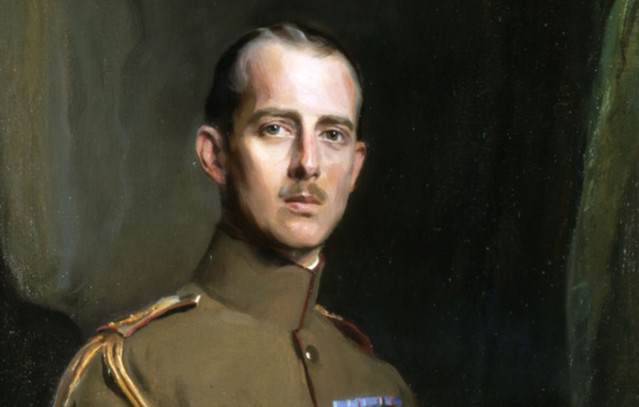
Prince Andrew of Greece escaped execution by a military tribunal in Athens in 1922 following high treason charges over the collapse of the Asia Minor front.
The commander of the II Army Corps faced a death sentence from a revolutionary court seeking scapegoats for Greece's devastating military defeat against Turkish forces. Public anger targeted the royal officer after senior military leaders openly questioned his battlefield decisions during the campaign along the Sangarios River.
Prince Andrew was born into the Greek royal family and was the father of Prince Philip, who later became the Duke of Edinburgh in the United Kingdom. The legal proceedings took place during the aftermath of the Greco-Turkish War, a major conflict that ended Greek presence in Asia Minor and led to the collapse of Greek military positions in Anatolia.
Dispute over the Ankara campaign
The criminal prosecution against Prince Andrew stemmed from events in August 1921 during the arduous Greek military advance toward Ankara. Operating under severe field conditions, the II Army Corps under Andrew's command suffered from extreme exhaustion, inadequate supplies, and fierce Turkish counter-attacks.
When Commander-in-Chief Anastasios Papoulas ordered an immediate offensive move, Prince Andrew judged the command operationally unfeasible and suggested an alternative maneuvering tactic. Military leadership interpreted his initiative as insubordination during battle, prompting Papoulas to remove Andrew from command immediately and clearing the way for subsequent criminal prosecution.
Trial in the Old Parliament
Following a military coup in September 1922, a Revolutionary Committee led by Nikolaos Plastiras and Stylianos Gonatas assumed control of the Greek government. The committee turned the country into a broad judicial forum to assign blame for the national catastrophe.
Authorities arrested Prince Andrew on the island of Corfu and transferred him to Athens to stand trial before an Extraordinary Military Tribunal sitting in the Old Parliament. The proceedings unfolded under an intense public mood following the execution of six prominent political and military leaders.
The tribunal charged Prince Andrew with high treason through disobedience and abandonment of his position. Facing an enraged crowd, the court moved toward a guilty verdict with the initial intention of imposing the death penalty, matching the fate of the other defendants.
British intervention and Lausanne telegram
The prospect of executing the prince triggered an unprecedented diplomatic crisis among foreign powers. British King George V issued urgent instructions and dispatched special envoys to Athens, threatening a complete rupture in diplomatic relations if Greece executed Prince Andrew, who had close ties to the House of Windsor.
In Switzerland, prominent Greek politician Eleftherios Venizelos sent an urgent telegram from Lausanne to the Revolutionary Committee in Athens. Venizelos warned in the strongest terms that executing a royal family member would destroy ongoing diplomatic negotiations.
Venizelos emphasized that an isolated and wounded Greek state could not afford to lose Allied support while international delegates were determining the country's new national borders.
Secret meeting and courtroom tactic
The diplomatic standoff peaked during a private meeting at the Hotel Grande Bretagne in central Athens. Captain Gerald Talbot, acting as a special envoy for the British crown, met directly with revolutionary leader Nikolaos Plastiras.
Talbot delivered a firm warning from King George V, stating that any execution of Prince Andrew would draw immediate retaliation, as British naval forces in the Mediterranean stood ready to isolate the Greek regime completely.
To resolve the crisis, the President of the Military Court, Theodoros Pangalos, executed a strategic courtroom maneuver. Pangalos sought to satisfy public demands for accountability while avoiding a complete diplomatic break with Great Britain.
Pangalos incorporated a finding of complete inexperience in commanding senior units into the court rationale. This specific formulation allowed the tribunal to deliver a guilty verdict while dropping the high treason charge that carried a mandatory death sentence.
Escape on HMS Calypso
The tribunal commuted Prince Andrew's sentence to life banishment and stripping of military rank. Authorities organized an immediate, quiet departure to Phaleron under heavy security to prevent public unrest.
The British warship HMS Calypso waited at Phaleron to evacuate the prince, his wife Princess Alice, and their children. Royal navy sailors created a makeshift cot for one-year-old Prince Philip using a wooden orange fruit crate lined with blankets to absorb the movement of the vessel.
Princess Alice carried her children up the ship ladder under close British military supervision before HMS Calypso set sail for Italy and France, ending royal ambitions in Asia Minor.
Exile in France and return to Tatoi
Following his arrival in Western Europe, Prince Andrew entered a period of permanent exile. Stripped of his titles and financial resources, he resided in southern France and later in Monte Carlo, living apart from decision-making centers and gradually becoming alienated from his family.
Prince Andrew died in 1944 in southern France shortly before the end of World War II. Due to wartime conditions, his family initially buried his body in the Russian Orthodox Cemetery in Nice, France.
In 1946, after political conditions in Greece normalized, authorities repatriated his remains to Greece aboard the warship Panther. Prince Andrew was laid to rest at the Royal Cemetery at Tatoi near Athens, joining the graves of his royal ancestors.


