

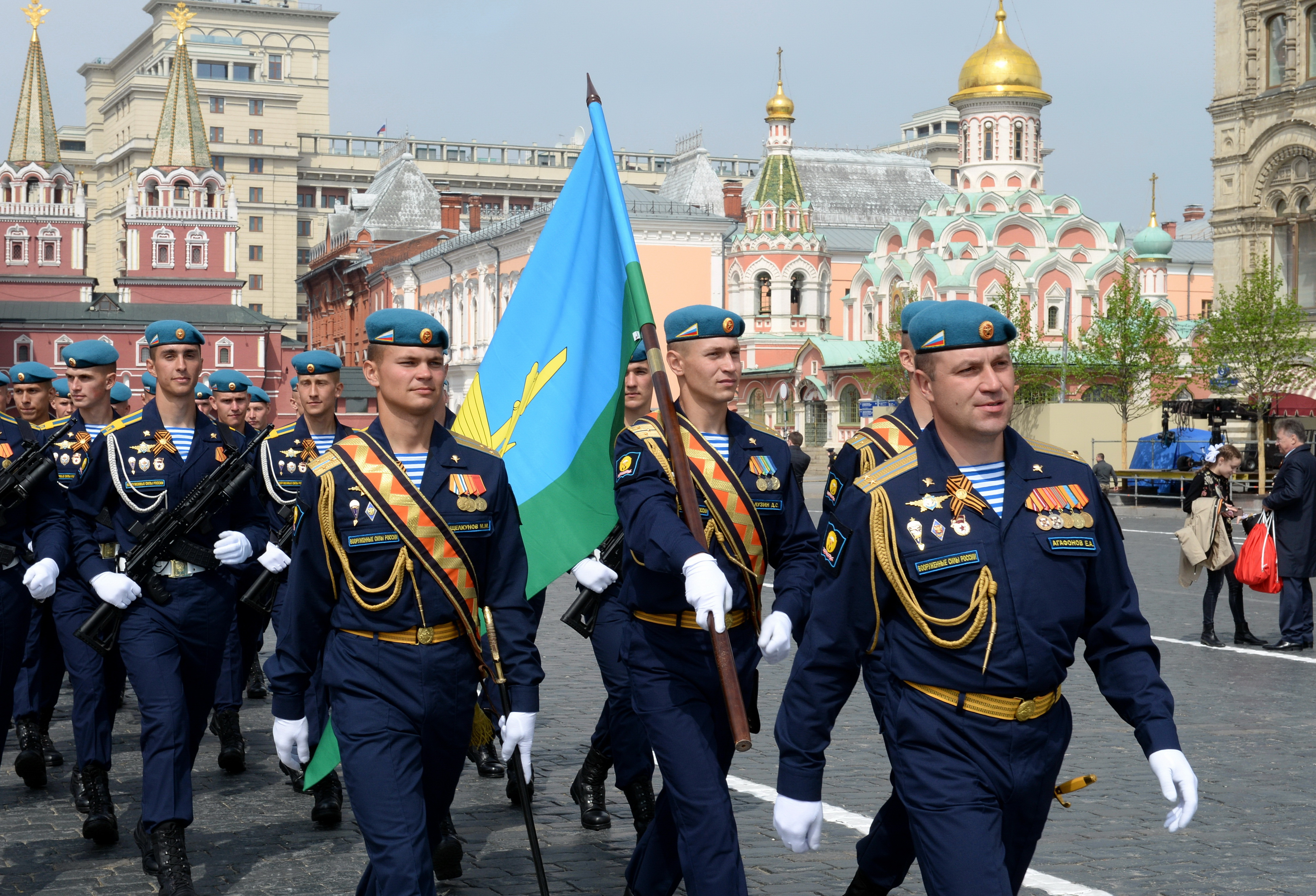
Russia's Airborne Forces are marking their 96th anniversary on Sunday, August 2, 2026, and the occasion ranks among the country's most exuberant military holidays. Across Russian cities, men in blue berets and striped telnyashka undershirts fill streets, squares, and fountains for a celebration that blends soldierly pride with an almost carnival atmosphere.
The holiday traces its origins to August 2, 1930, when a 12-man combat group became the first Soviet paratroopers, jumping with parachutes during military exercises near Voronezh. From that small team, the Airborne Forces grew into one of the Russian military's most storied branches, universally known by the initials VDV.
Uncle Vasya's Troops
Two symbols define the VDV in the popular imagination: the motto "Nobody but us!" and the affectionate nickname "Uncle Vasya's Troops." The latter is a tribute to General Vasily Filippovich Margelov, who commanded the Airborne Forces from 1954 to 1979, with a brief interruption in 1960. His name is synonymous with the modern shape of the branch, and the monument to him in Moscow serves as the main gathering point for the capital's August 2 celebrations. In St. Petersburg, crowds collect on Palace Square and Krestovsky Island. Car rallies are also a common feature of the day in many cities.
The holiday has been widely observed since the 1990s, but it only acquired formal status in 2006, when a presidential decree added VDV Day to the list of official professional holidays and commemorative dates recognized by the Russian armed forces.
Patron Saint and the Fountain Tradition
One of the most photographed VDV Day customs is paratroopers wading into public fountains, a tradition with an unexpectedly ancient layer of meaning. The prophet Elijah is regarded as the patron saint of the Airborne Forces, and his feast day in the Orthodox calendar falls on August 2, the same date as the holiday.
The overlap is more ironic than it first appears. Old Russian folk beliefs actually discouraged anyone from swimming on Elijah's Day, on the grounds that the water turns cold and that evil spirits grow especially active. One explanation for why paratroopers plunge into fountains each August 2 is precisely that defiance of the old superstition: a demonstration, as the source puts it, that no devil holds any fear for them.
Alongside the fountain dipping, eating watermelon is another established custom of the day, fitting neatly into the late-summer timing of the holiday.
A Holiday Built for Brotherhood
The VDV celebration is notable for the breadth of who takes part. The tradition calls for honoring everyone who served in the Airborne Forces, from conscripts who completed a single term to long-serving veterans. Laying flowers at monuments and memorials is standard practice. The blue beret and the telnyashka function almost as a uniform for the day, worn by former soldiers young and old as a mark of belonging.
Russia's greeting-card industry has developed an entire genre around the holiday. Messages range from the patriotic to the warmly personal, and a significant subset leans into humor. One popular line suggests that a paratrooper without a sense of humor is like a parachute without suspension lines: technically present, but flying in no predictable direction. Another notes that the blue beret is worn as naturally as a smile.
Cards invoking Margelov's legacy form their own category, with wishes that the general's dedication to the Airborne Forces and his faith in his soldiers continue to inspire the recipient. The source, published on Lenta.ru, collected more than 110 such cards across patriotic, humorous, poetic, and contemporary styles, reflecting how deeply the holiday has embedded itself in civilian as well as military culture.
96 Years On
The 96th anniversary lands on a Sunday, giving former soldiers a full day to gather with comrades, take in concerts and martial arts demonstrations, and mark another year of what is, by any measure, one of Russia's most visible days of military remembrance. The centenary, four years away, is already a fixed point on the horizon for a branch with a very clear sense of its own history.


