

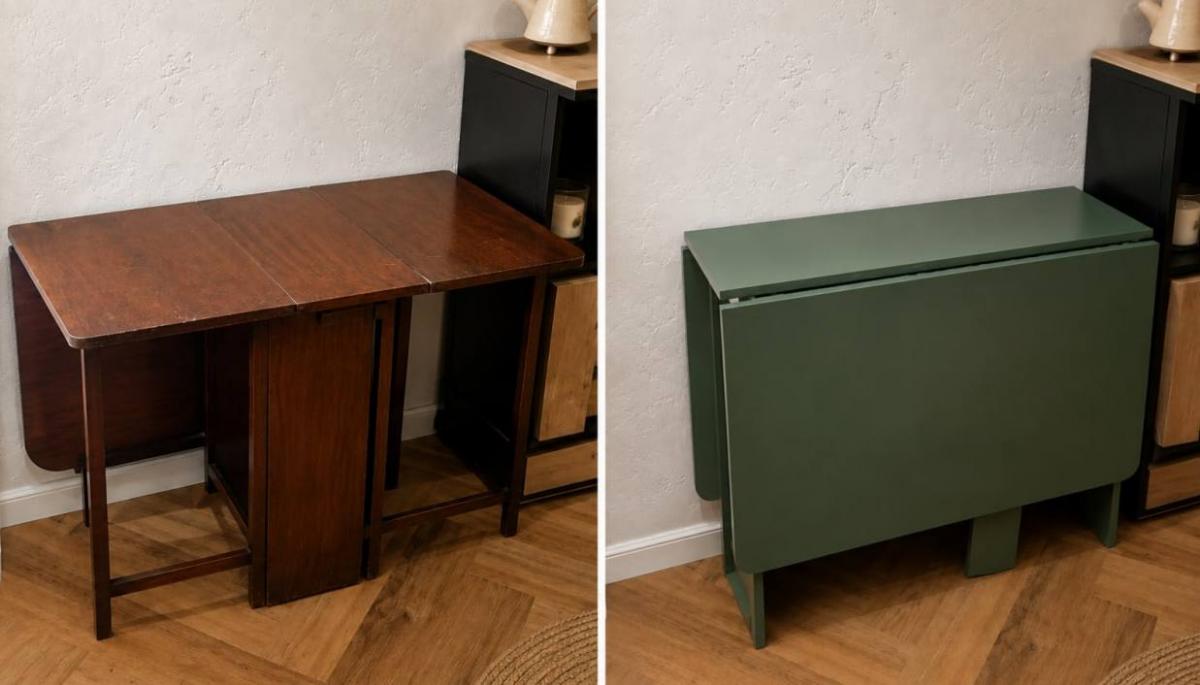
Soviet drop-leaf folding tables can be restored into modern home furnishings using basic sanding tools, targeted primer, custom paint, and updated hardware. Known as book tables across former Soviet states, these heavy multi-purpose units remain widely available across Ukraine but are often dismissed as outdated decor.
Second-hand Soviet tables sell on Ukrainian classifieds site OLX for between 300 and 1,500 hryvnias depending on their physical condition. Upgraded models rebuilt with contemporary styling and lighter materials command prices starting from 2,000 hryvnias, making self-restoration a significantly more affordable choice.
Purchasing an original table for 600 hryvnias and adding approximately 600 hryvnias in materials yields a customized piece of furniture for a total cost of 1,300 to 1,500 hryvnias. Homeowners who already possess an old table only need to cover building supply store materials alongside their own labor time.
The folding table, or stol-knizhka, became a staple of Soviet apartment living in the mid to late 20th century. Designed to maximize space in compact panel flats, its hinged side panels fold down to transform a broad dining table into a narrow side cabinet. Despite their durable frames, the heavy weight and dark varnish of these mass-produced chipboard pieces have led many households to consider them obsolete.
Required materials for furniture restoration
Restoring a Soviet folding table requires a set of standard renovation supplies:
- Number 80 and number 180 sandpaper or an electric sanding machine
- Wood primer or chipboard primer
- Chalk paint or enamel
- New furniture legs
- Hinges and mounting hardware
Surface preparation and sanding process
The restoration process begins by removing the existing table legs and old hardware, including handles and hinges. Workers must first rub the entire surface with coarse number 80 sandpaper to strip away the original glossy varnish layer. Following the initial pass, finer number 180 sandpaper or an electric sander is used to smooth the surface, after which a vacuum cleaner removes all accumulated dust.
Paint application depends directly on the core material of the table. Solid wood surfaces can accept paint directly, but chipboard requires one to two coats of specialized chipboard primer prior to painting. Omitting primer on chipboard surfaces can prevent paint from adhering properly to the material.
Paint selection and finishing hardware
Restorers can choose colors that match modern interior designs, such as dusty green, deep blue, graphite, or black, rather than sticking with traditional brown shades. Chalk paint provides a decorative matte finish with a velvety texture, which suits low-traffic households without children or pets. Practicality-focused owners can choose enamel, whose glossy surface offers superior resistance to physical damage and lasts longer over time.
Once the paint has dried and achieved the desired coverage, the new legs, handles, hinges, and fasteners are installed. Modern replacement hardware creates a visually lighter and more aesthetic appearance, transforming the heavy structure into an attractive piece of furniture that can be comfortably used for several more years.


