

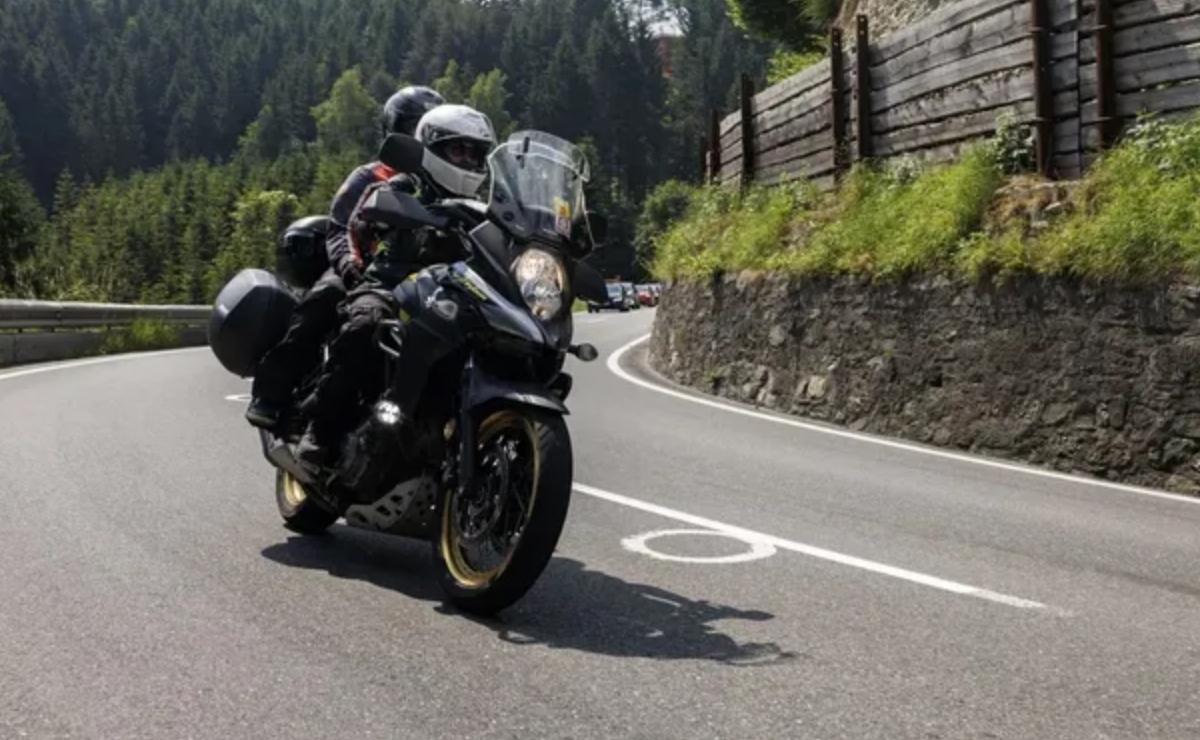
Spanish roads have been fitted with small white circular markings inside dangerous bends to prevent motorcyclists and cyclists from leaning into oncoming traffic. The new road layout aims to reduce head-on collisions on sharp curves.
The painted circles are situated sequentially near the central axis of the roadway on hazardous turns. Motorcyclists and cyclists are required to ride along the outer side of the markings without crossing over them, according to a report by news outlet Mediafax.
The measure addresses a frequent hazard that occurs when riders negotiate sharp curves at high speed. Even when a motorcycle's tires remain entirely within its own lane, a rider leaning into the turn can project their upper body across the center dividing line and into the path of opposing traffic.
By encouraging riders to keep a greater distance from the central dividing line, the layout reduces the risk of collisions with vehicles moving in the opposite direction. Mediafax explained that the circular markings are specifically designed so that an accidental tire strike will not cause a rider to lose control of their vehicle.
Traffic safety initiatives routinely focus on vulnerable road users such as cyclists and motorcyclists, who experience disproportionately higher risks on rural and winding highways. Spain features extensive mountain ranges and coastal routes where sharp bends present ongoing safety challenges for two-wheeled transportation.
Prohibition signs on American highways
Unusual traffic control measures are also deployed in other countries to manage driver and pedestrian behavior. In the United States, transportation authorities use a distinct circular sign displaying a black raised thumb crossed out against a white background.
The symbol indicates a formal prohibition on hitchhiking. It is installed along roadways to prevent individuals from standing on or beside the pavement to solicit rides from passing motorists.
Hitchhiking involves soliciting free transportation from drivers along public roads. Various highway authorities restrict the practice along major thoroughfares to safeguard roadside security, maintain steady traffic flow, and prevent pedestrian accidents.


