

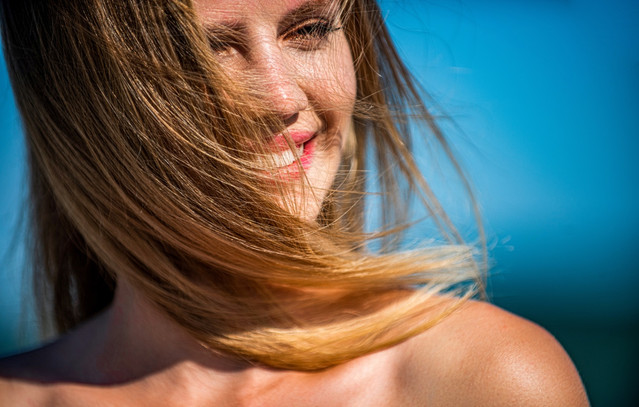
Summer is the season when hair often looks drier, duller and rougher, even when a careful care routine is followed for the rest of the year. High temperatures, the sun, the sea, pool chlorine and frequent washing can all strip moisture from the hair and cause the ends to suffer the most.
Hair ends are the oldest part of the hair shaft. Because they have spent more time exposed to the sun, heat, styling and mechanical stress, they are usually the first to show signs of damage.
Signs of hair damage
It is not always necessary to wait for severe split ends to appear before realising hair needs more care, as the texture and appearance of the ends provide plenty of information.
To the touch, damaged ends are often rougher and drier than the rest of the hair length. They may tangle easily in the fingers or fail to glide smoothly when a hand is run over them.
Visually, damaged ends can look dull, thin and lifeless. In many cases, split ends, small breaks or hairs of different lengths will be seen sticking out around the finish. Another sign of damage is when the ends immediately absorb any care product applied to them, but look dry again shortly afterwards.
Starting with a trim
While it can be tempting to try to seal split ends with products, an already split hair cannot be permanently restored to its original state.
If the ends have visible damage, a small trim from a hairdresser can make a huge difference. A light refresh can remove the most damaged parts and make the hair immediately look healthier, without necessarily losing any length.
Hydration and leave-in products
Conditioner is not a step that should be skipped, especially in the summer. It should be applied mainly to the lengths and ends and left to act according to the product's instructions.
Once or twice a week, the conditioner can be replaced with a richer hair mask, using a formula that targets hydration and hair strengthening.
A leave-in conditioner or a product specially designed for the ends can act as an additional protective step during the day. A small amount should be applied to damp or dry hair, according to the instructions, focusing on the lengths and ends.
For drier hair, a few drops of a light hair oil on the ends can reduce the feeling of roughness and provide more shine.
Heat styling and sun protection
If the ends are already damaged, daily use of a hairdryer, straightener and curling iron can worsen the situation. Whenever possible, hair should be left to dry naturally to limit the use of heat tools. When a hairdryer or other styling tool must be used, a heat protectant product should not be skipped.
In summer, protection is not just about the skin; hair also needs attention when spending many hours in the sun. A hat or a scarf is the simplest way to limit direct exposure.
Before swimming in the sea or a pool, hair can be wet with clean water and a suitable leave-in product applied. This ensures the hair is not completely dry when it comes into contact with seawater or chlorine. After swimming, hair should be rinsed as soon as possible with clean water.
Consistent care
Hair repair is more a matter of consistent care than a single miracle product. If the ends are dry but not severely damaged, the systematic use of conditioner, masks, leave-in products and heat protection can significantly improve their look and feel.
However, if split ends are severe or the hair breaks easily, a haircut remains the most effective solution to remove the already damaged hair. Following a trim, a proper care routine can help the new ends remain as strong, soft and shiny as possible.


