

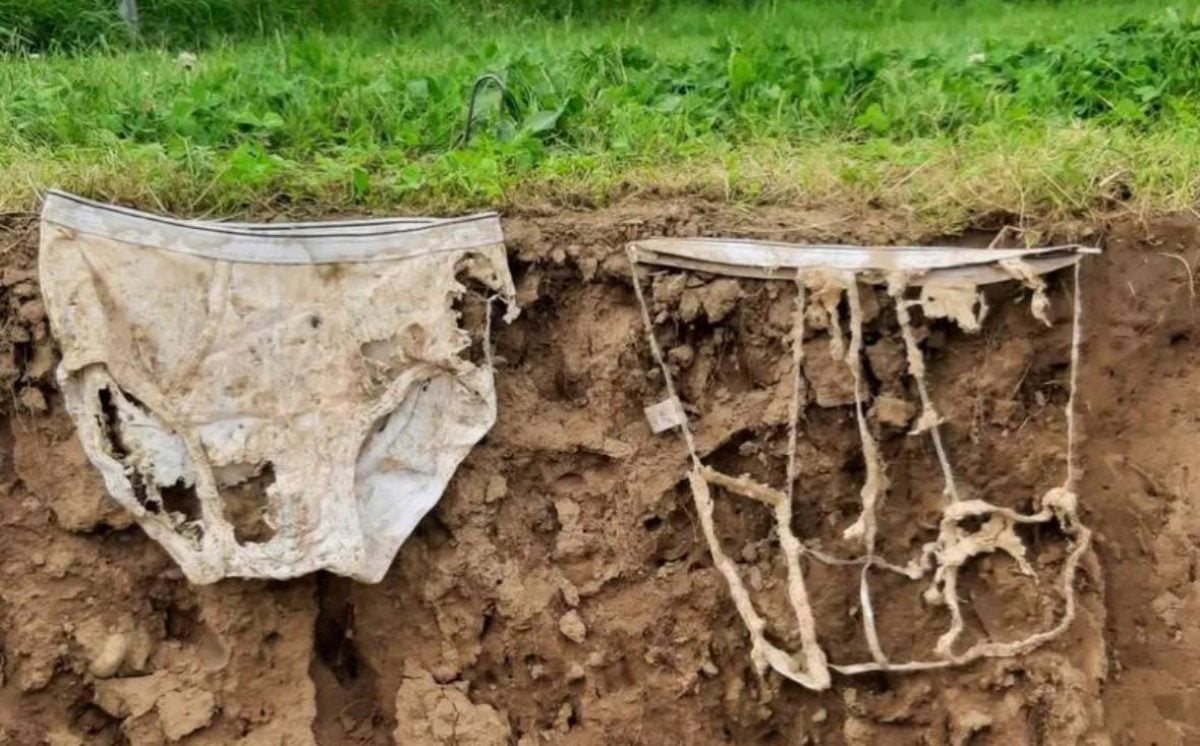
Swiss researchers have dug up 2,000 pairs of cotton briefs buried across Switzerland after two months to assess soil biological activity, Wionews reported.
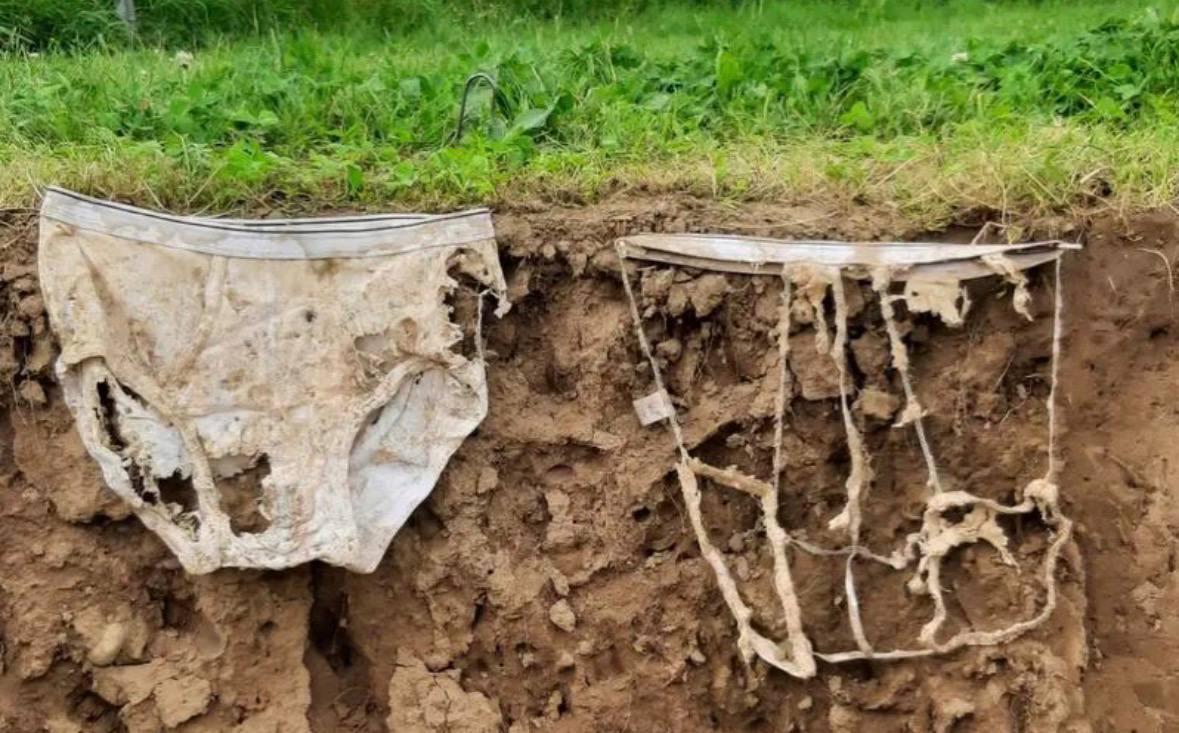
The nationwide research project, named Proof by Underwear, was designed as a simple and accessible initiative to draw public attention to the problem of soil degradation.
About 1,000 volunteers participated in the study by burying cotton underwear alongside tea bags in different regions across Switzerland. Researchers then retrieved the items two months later to measure how extensively soil organisms had broken down the fabric.
Cotton fabric consists primarily of cellulose, a natural plant polymer that soil microbes, fungi, and earthworms consume as an organic energy source. In biologically active soil, these organisms rapidly digest natural fibers, while nearly intact underwear points to low biological activity.
Decomposition Rates Across Land Types
The study, led by researchers at the University of Zurich, revealed notable differences in decomposition rates depending on how the land was utilized. Soil in private gardens exhibited the highest biological activity, with organisms decomposing roughly 58 percent of the cotton underwear over two months.
The University of Zurich, founded in 1833, is the largest university in Switzerland and a major center for environmental science. Scientists linked the high breakdown rate in private gardens to active land care and the regular application of fertilizers.
By contrast, lawns recorded the lowest biological activity among all surveyed land types, with an average decomposition rate of around 40 percent. Low biological activity was also recorded on agricultural lands and meadows across the country.
Plots containing grass monocultures located near residential homes and other structures proved to be especially infertile, according to the research team.
Marcel van der Heijden, an agroecologist at the University of Zurich and co-leader of the study, said the results demonstrate that how soil is managed can significantly affect both soil life and overall soil quality.
Public Awareness and Ecological Impact
Researchers selected cotton briefs as a playful and easy-to-understand tool to engage the public on the vital condition of soil ecosystems. Topsoil provides about 95 percent of global human food supplies and serves as the second largest carbon reservoir on Earth.
Soil ecosystems trap atmospheric carbon within organic matter, helping to buffer climate changes alongside oceans and forests. Scientists warned that soil degradation threatens food production, biodiversity, and ecosystem functioning, yet remains largely overlooked by the general public.
The experiment came with an important caveat regarding soil health interpretations. A higher rate of fabric decomposition does not necessarily mean the soil is healthier overall.
In private gardens, elevated levels of nitrogen, phosphorus, and potassium often stem from intensive fertilizer use. While these nutrients stimulate microbial activity, excess phosphorus can wash into nearby water bodies, harming aquatic environments and local biodiversity.
Agricultural research bodies such as Agroscope continuously monitor Swiss soil health to balance crop yields with environmental protection. Scientists hope the study's visual findings will encourage more sustainable land management practices across Switzerland.


