

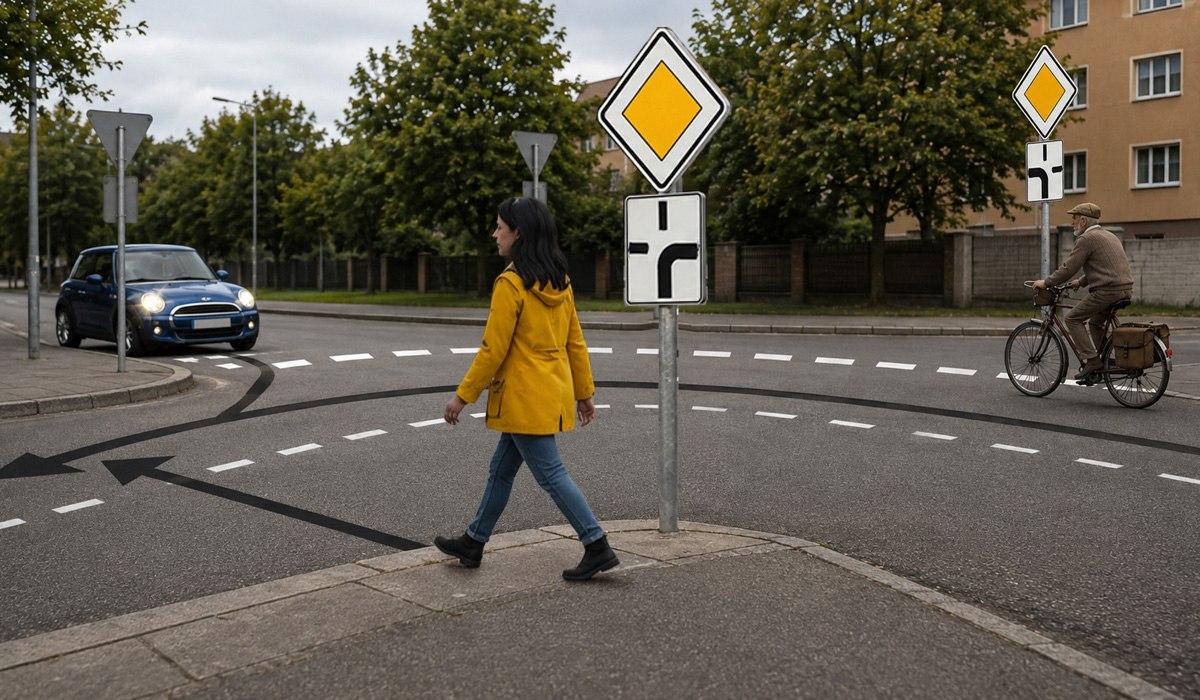
A driver, a cyclist and a pedestrian arrive at the same time at an intersection where the main road turns, raising the vital question of who holds the right of way to cross first.
The traffic rules test presents a common road scenario and asks participants to identify the correct sequence of passage from three choices: the cyclist, the car or the pedestrian. Although the situation seems simple at first glance, many drivers get the answer wrong when tested on practical road knowledge.
A widespread error occurs because many motorists assume that the cyclist must proceed first. This mistake stems from the fact that the bicycle is traveling along the main road as it bends through the intersection. However, official road traffic regulations stipulate that any vehicle driver who is turning must yield the right of way to a pedestrian crossing the roadway. The presence of a turning main road does not create an exception to this rule.
According to traffic regulations, the correct sequence of movement through the intersection is:
- the pedestrian;
- the cyclist;
- the automobile driver.
Understanding priority and pedestrian rights
Intersection priority rules are fundamental components of traffic management designed to prevent collisions and streamline traffic flow at complex road junctions. Standard traffic safety laws around the world establish that vulnerable road users, particularly pedestrians, maintain priority over turning motor vehicles at marked and unmarked crossings. Drivers who concentrate primarily on vehicle hierarchy and main road signage frequently misinterpret these turning duties, creating hazardous situations for pedestrians.
Traffic rules change from time to time, which makes regular knowledge updates and practice tests necessary for all drivers. In real world driving situations, identifying the correct right of way can be much more complex due to non standard road configurations, unusual signage or unexpected obstacles that challenge even experienced motorists.
Personality assessment options
For those interested in additional self assessment tests beyond road safety, a separate test covering personality types and temperament is also available for readers.


