

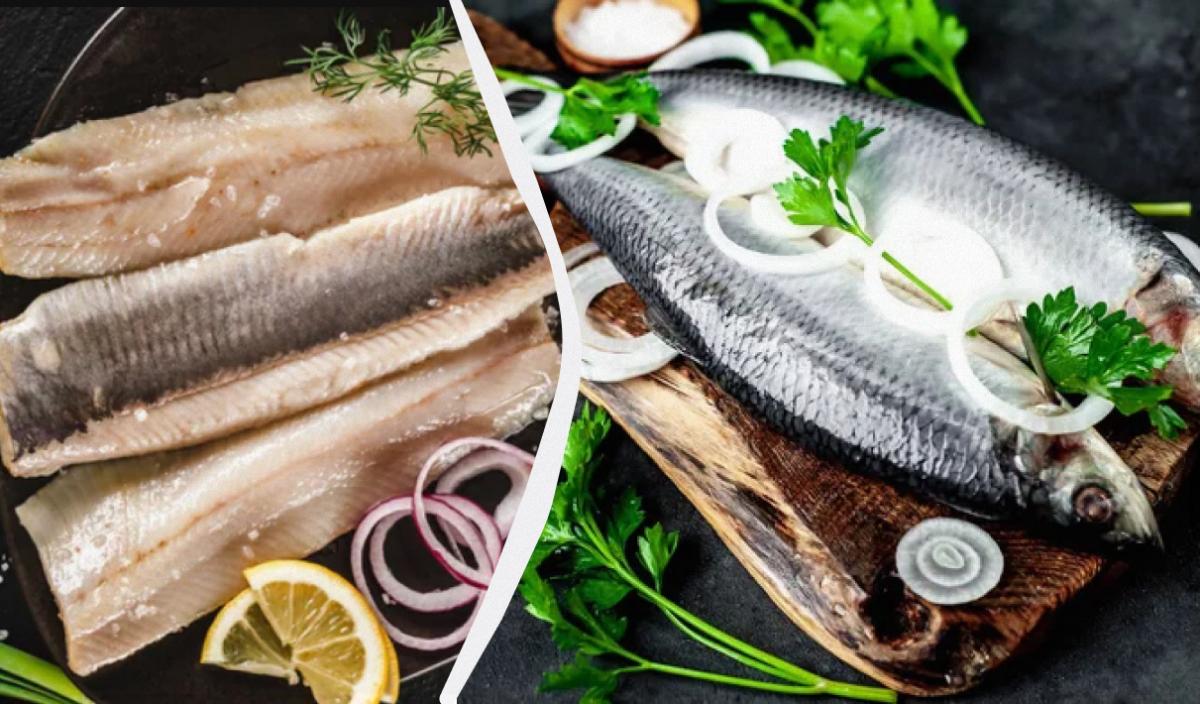
Shoppers who buy fish regularly may have noticed two types of herring on store shelves: standard herring and matjes. The matjes fillet is noticeably softer and contains almost no bones, but it also carries a higher price tag.
Matjes is not a different species of fish. It is the same Atlantic or Pacific herring, but the name refers to the age of the fish. The word comes from Dutch and means "maiden," indicating a young herring that has grown large enough to put on weight but has not yet reached sexual maturity.
This fish is caught only at the start of summer, when young herring feed on plankton and reach peak fat content. At that stage, the fish has not yet developed roe or milt, and the flesh is exceptionally tender. The near-absence of bones is also explained by the fish's youth , the skeletal structure simply has not fully formed yet.
The preparation method also sets matjes apart. When readied for sale, the gills are removed but the pancreas is left in. That organ produces an enzyme that naturally softens the flesh during a light curing process. Standard herring, by contrast, is cured more heavily to extend its shelf life.
Those factors , a short fishing season, a labour-intensive deboning process, a special curing method, and a limited sales window , all push the price higher.
From a nutritional standpoint, however, the two are identical in value to the body. The difference is purely one of taste and texture. Matjes suits a standalone dish, while standard herring works just as well in salads or other preparations where fish is one ingredient among many.


