

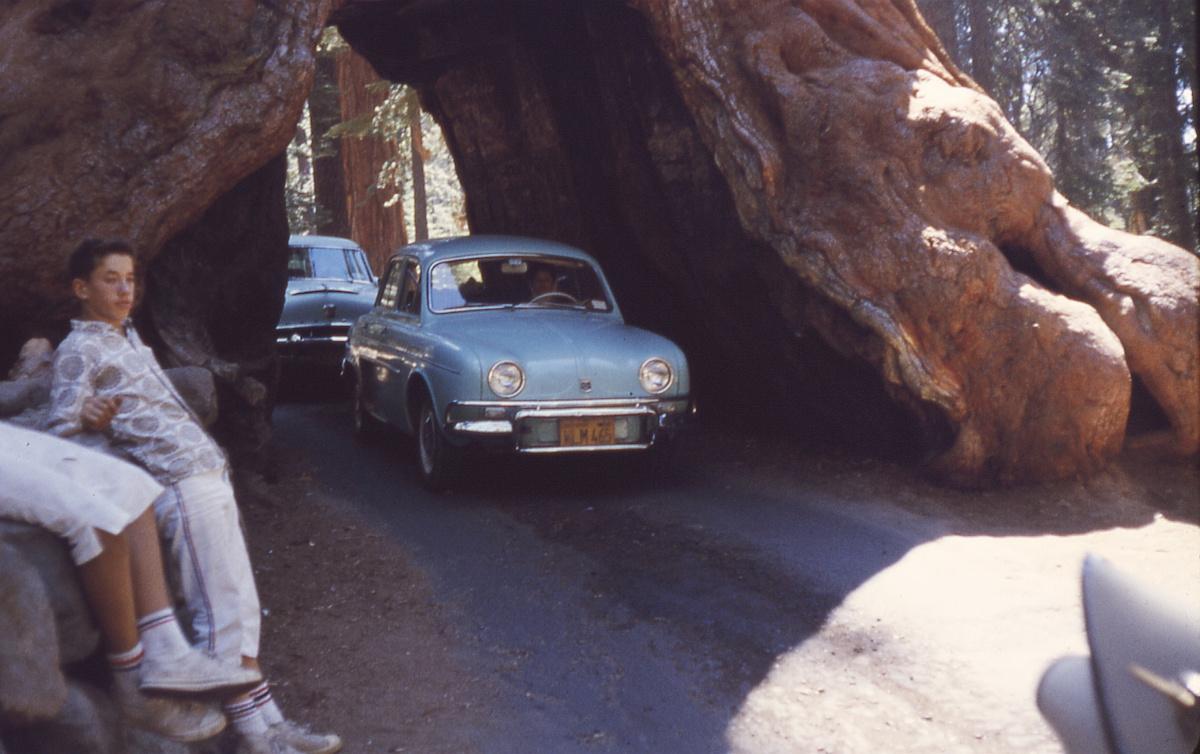
A hole was carved through the trunk of a roughly 2,300-year-old giant sequoia in Yosemite National Park in the southwestern United States in 1881, creating a tunnel wide enough for horse-drawn stagecoaches to pass through. The tree, known as the Wawona Tunnel Tree, became one of the park's most famous tourist attractions for decades, according to a report by SpaceDaily. Over time, it also came to illustrate how ideas about conservation have shifted dramatically.
According to SpaceDaily, the decision to cut the tunnel had nothing to do with making the road easier to travel. Two brothers named Scribner were paid $75 to widen an existing scar at the base of the tree into an opening large enough for a stagecoach to drive through. At the time, the sequoia stood 69 meters tall, with a trunk about 7.9 meters in diameter at its base.
The report's author wrote that the tunnel was never necessary for transport, since the road could easily have gone around the tree, and that from the very first day it was a marketing exercise.
A tourist attraction for generations
The plan worked. Stagecoaches stopped inside the trunk so passengers could take photographs, and after cars became common, generations of tourists drove through the sequoia as well. The author noted that the tree became so popular that, over the following decades, it was likely one of the most frequently photographed living objects in the United States.
The paradox, according to the author, was that the attraction also helped popularize the sequoia forest itself and the idea of protecting it. In the logic of the time, damaging one enormous tree seemed like a way to draw people's attention to nature, making the public value all the other trees more.
How the tree eventually fell
The consequences of the intervention became clear only gradually. The sequoia had already leaned slightly before the tunnel was cut, and the lean worsened afterward. In February 1969, a harsh winter brought heavy, wet snow that loaded down the crown, while waterlogged soil weakened the tree's shallow root system. Weakened by the cavity at its base, the trunk could not withstand the sideways load, and the Wawona Tunnel Tree fell.
Park administrators chose not to remove the fallen trunk. The report explained that a fallen sequoia remains an important part of the ecosystem, providing habitat for insects and animals and nutrients for new plant growth. The tree was renamed the Fallen Tunnel Tree, and its remains still lie where it fell.
A lesson for national parks
The tree's collapse came during a period when approaches to protecting national parks were changing. Yosemite never cut tunnels through any other sequoias after that. The Wawona Tunnel Tree itself became a kind of lesson for later generations: tunnel trees had their place in the early history of the parks, but healthy, intact sequoias are far more valuable.
Another sequoia in the same forest still stands with a tunnel cut into it in 1895, known as the California Tunnel Tree.


