

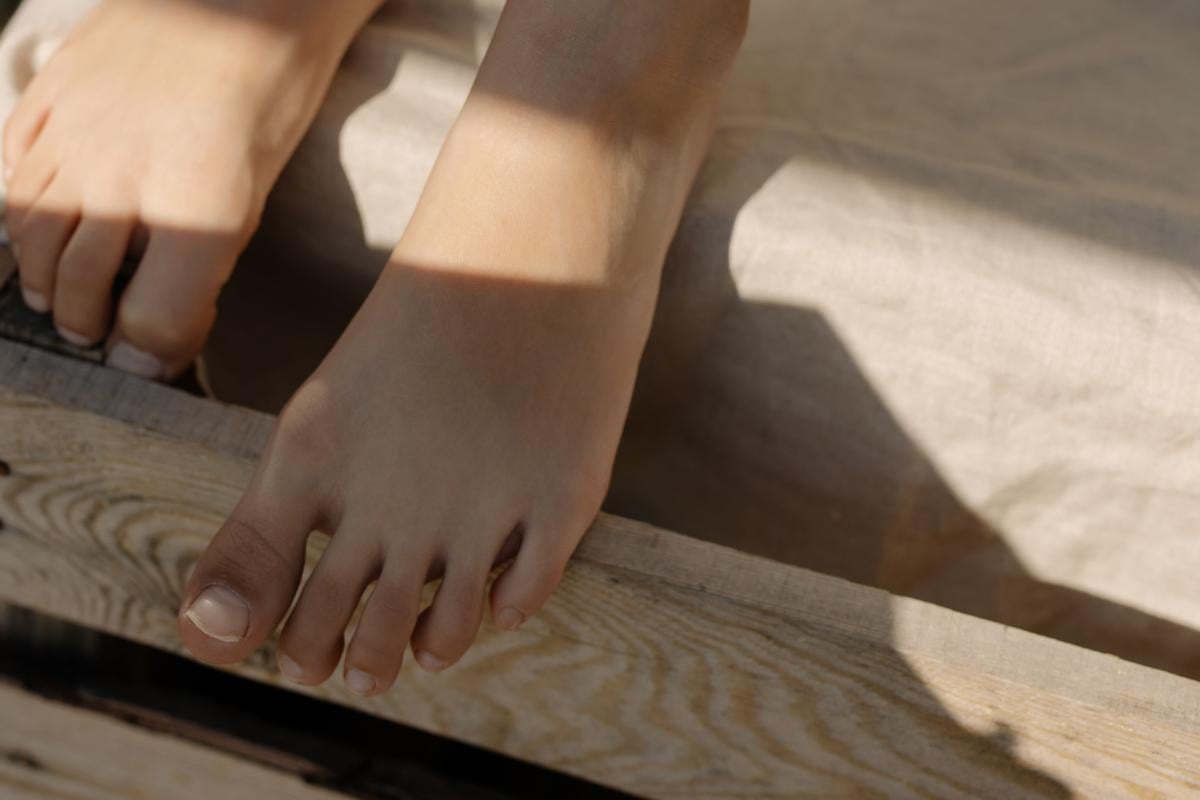
The pinky toe looks so small and insignificant that many people assume it barely matters at all, and some believe humans are slowly evolving to lose it altogether. Scientists have now explained why the fifth toe still matters, what part it plays in walking, and whether it could really vanish over time.
The findings, reported by Forbes, show that the pinky toe varies far more from person to person than any other toe on the foot.
Why the pinky toe differs from person to person
The big toe is built roughly the same way in nearly everyone, since it plays such a crucial role in walking and running. The pinky toe is a different story, with far more variation between individuals.
A 2018 study examined X-rays of the feet of more than 900 adults. It found that in roughly four out of ten people, the two outer bones of the pinky toe had fused into one. That fusion happens far less often in the fourth toe, and almost never in the third.
Scientists see this as an important clue. When a body part can be built differently from person to person without affecting how someone lives, it suggests that part has become less important over time.
How the toe lost its old function
The feet of chimpanzees and gorillas resemble human hands more than human feet, with long, curved toes and a big toe that splays outward. That structure helps them grip branches and hold onto trees.
Over the course of evolution, the feet of human ancestors gradually stopped being used for grasping. The big toe fell into line with the others and took on a central role in walking, while the remaining toes grew shorter.
A 2009 study found that the longer the toes, the more effort the muscles need to expend during walking and running, meaning shorter toes proved more efficient. The pinky toe became less essential than the rest in the process. Sitting at the very edge of the foot, it barely contributes to pushing off the ground, and humans no longer need their toes to grip branches.
It might seem logical that if the pinky toe has shrunk over time, it should keep getting a little smaller with each generation. But evolution moves far more slowly than that.
There is no noticeable difference between a person's pinky toe and their great-grandmother's. Changes like this only become visible when comparing modern humans with very distant ancestors.
Body parts inherited from ancestors that have shrunk or lost some of their function over time are called vestigial structures. Wisdom teeth and the tailbone are well-known examples. When a body part no longer plays as important a role as it once did, its exact shape stops mattering as much, which is why it can vary so widely between individuals.
Why the pinky toe still matters
None of this means the pinky toe is useless. The outer edge of the foot absorbs part of the load during walking, and the pinky toe helps maintain balance and stability.
A person can walk normally without it, since the foot usually adapts. Even the fusion of the two outer bones of the pinky toe, according to the 2018 study, has almost no effect on how the foot functions. Researchers say it is more accurate to describe the toe's role as diminished over time rather than to call it useless.
Footwear can also shape the foot. One study found that men who typically wore light sandals had certain foot muscles that were more developed than those of men who wore regular shoes.
That does not mean narrow shoes will leave future generations with four toes, however, since changes that occur in a person's foot during their lifetime are not passed on to their children.
There is also no evidence that humans are gradually losing the pinky toe altogether. The ancestors of modern horses, for comparison, took tens of millions of years to evolve from having several toes down to one main one.
Nothing similar is currently happening with the human pinky toe. It has become less important than it once was, but it still does its small job, and there is no reason to think it will disappear.


