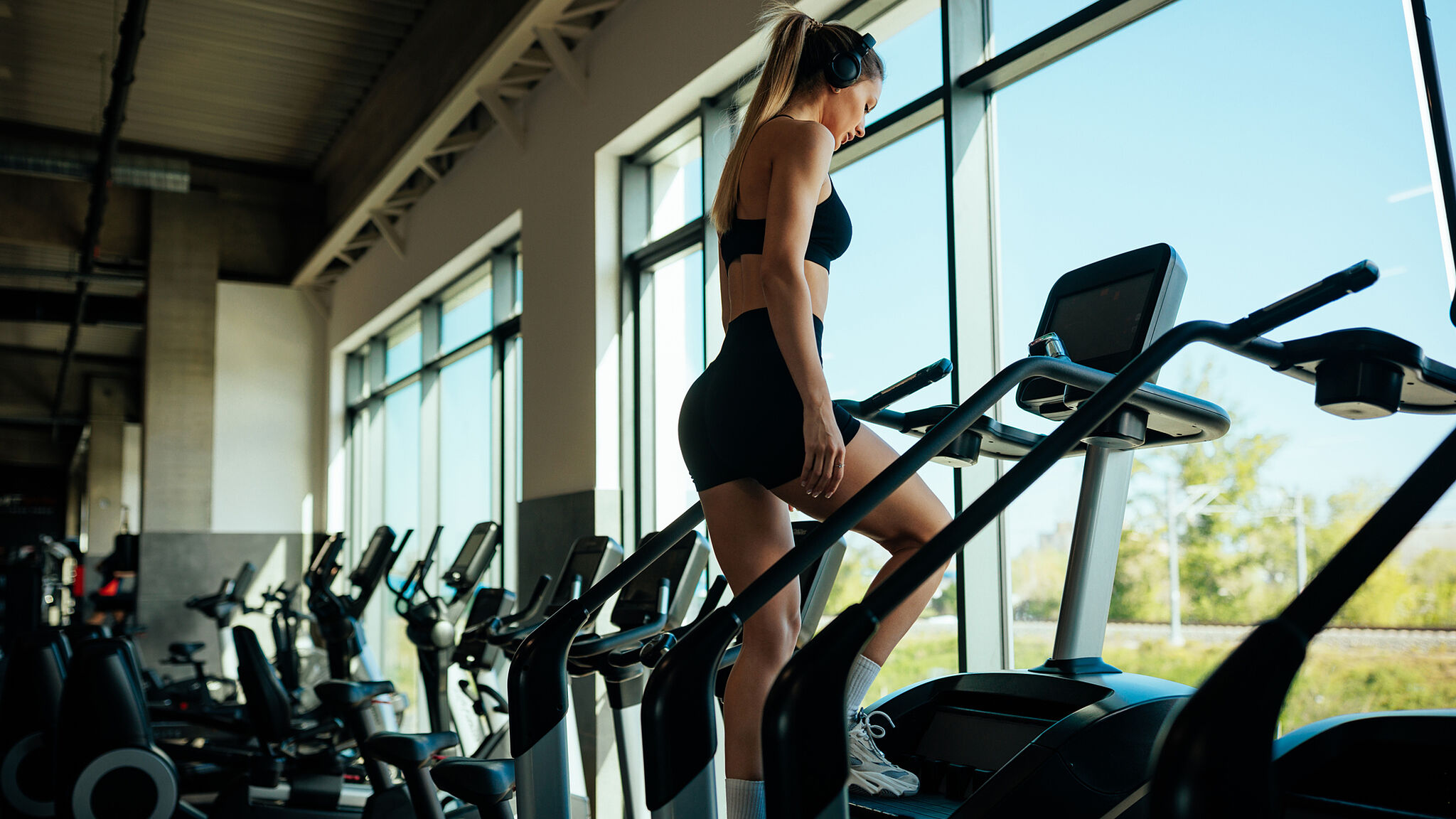
Choosing between the StairMaster and an inclined treadmill is less about turning 50 and more about current fitness, according to Ángela Isla, founder and trainer at BYAI. Isla said age alone does not determine physical capacity, and that what really matters is a person's condition, training experience and goals.
Both machines have become favourites among women over 50 at the gym, but they work the body differently. On the StairMaster, users exert more effort in less time, while incline treadmill walking allows people to adjust speed and slope and sustain the activity for longer. Isla said the key is finding an intensity that can be maintained without exhausting the person attempting it.
Legs and glutes
For leg and glute work, the StairMaster has an edge because each step requires pushing the body upward, engaging the quadriceps and glutes, Isla said. An inclined treadmill also activates the posterior muscles more than walking on a flat surface, she added.
Neither machine replaces lifting weights, however. Isla said someone could climb stairs for an hour and finish exhausted, but that this does not equate to having completed a strength session.
Fat burning and heart health
Both machines are effective for cardiovascular exercise, Isla said. Stair climbing tends to raise the heart rate quickly because it requires continuously moving body weight upward. Incline walking can also raise heart rate, with the added benefit that effort can be adjusted step by step.
On fat loss specifically, Isla said the StairMaster can produce a high energy expenditure per minute, especially at high intensities, but that a longer incline walking session can match or exceed that total expenditure. She said the outcome depends on the intensity, duration and characteristics of each session, and that diet, rest and strength training also play a role.
Knees and bone health
For people with knee or hip discomfort, climbing stairs requires repeatedly flexing both joints, which Isla said can make it more uncomfortable. She said the treadmill allows people to start with moderate inclines and speeds, which she generally considers an easier option to adapt to.
That does not mean a steep incline is automatically better, Isla said, since it can also be too difficult or alter a person's posture.
On bone health, Isla noted that both exercises involve bearing body weight, and neither clearly protects more against bone density loss than the other. She said that, especially during menopause, it is best to combine aerobic exercise with regular strength training.
Getting started after 50
For someone starting from zero, Isla said that if she had to choose a single machine for a woman over 50, she would probably pick the inclined treadmill for its ease of regulating effort and allowing progression.
Her suggestion for beginners is to walk two or three days a week for 15 to 25 minutes, starting with an incline of 3 to 5 percent and at a pace that still allows for holding a conversation.
For the StairMaster, Isla advises starting with sessions of 5 to 10 minutes without leaning on the handrails, then gradually increasing duration or intensity and adding at least two weekly strength sessions.
Test yourself
According to Ángela Isla, what matters more than age when choosing a cardio machine?
Which exercise does Isla say better targets the quadriceps and glutes?
What does Isla recommend combining with aerobic exercise, especially during menopause?
Have your say
Which would you rather do for cardio: stair climbing or incline walking?