Clint Eastwood has sparked renewed online debate after his 1990 comments comparing American and European culture resurfaced on the internet. In an archived conversation, the four-time Academy Award-winning actor and director stated that the United States possesses very few original art forms compared to Europe.
Speaking with film critic Richard Schickel on September 5, 1990, Eastwood reflected on the relationship between American and European cinema. He said he felt very close to the Western genre, adding that the United States differed from Europe because it lacked a wide range of original artistic expressions.
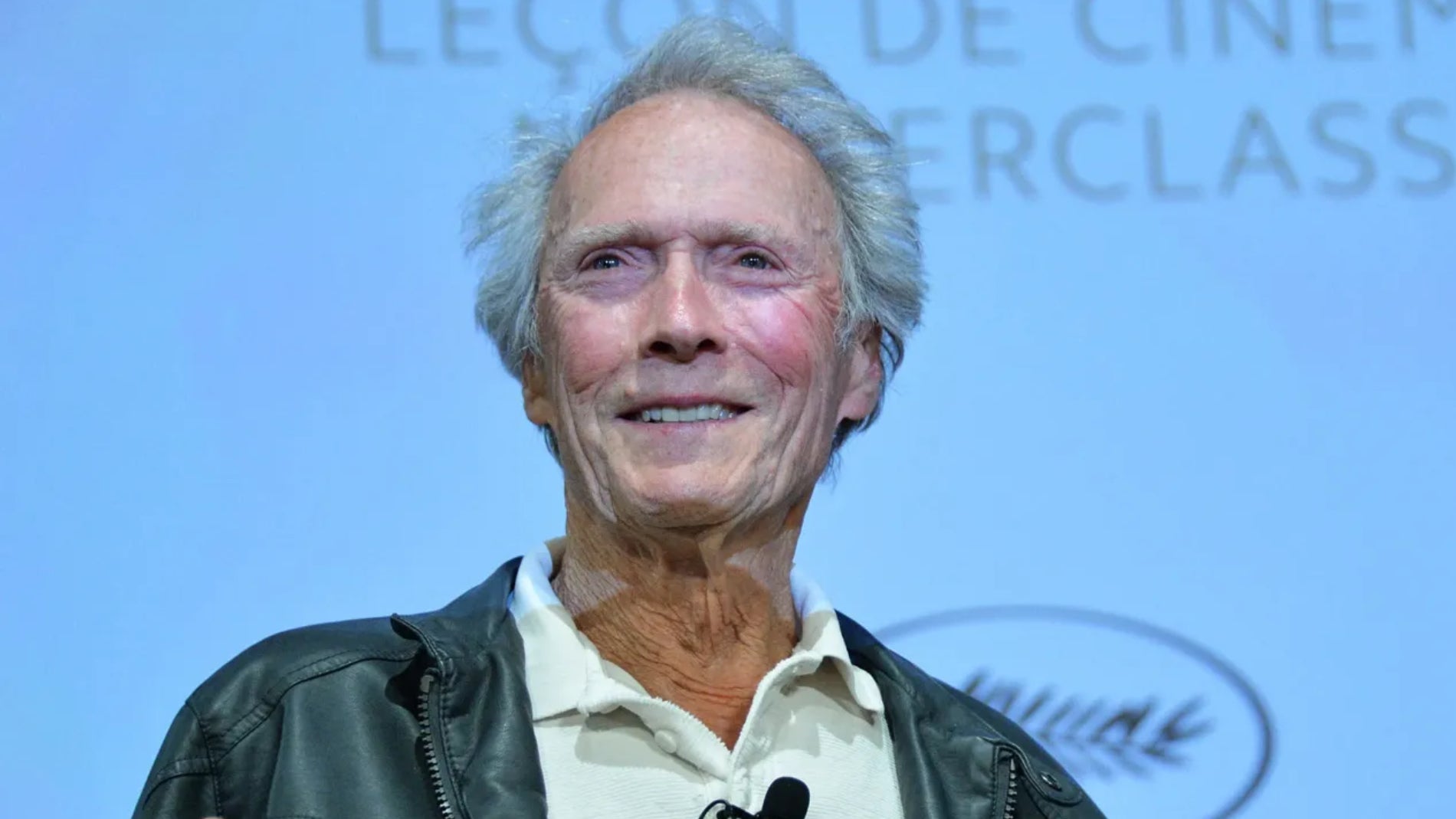
Eastwood asserted during the interview that most artistic expressions in the United States were derived from European traditions. He stated that, aside from the Western, jazz, and blues, there were no other truly original American art forms.
For decades, Eastwood has been one of the most recognizable figures in Hollywood as both an actor and director. His extensive career is deeply linked to the Western, a film genre built around tales of the American frontier, outlaws, and westward expansion.
American Cinema and Western Traditions
The Western genre was shaped by iconic figures prior to Eastwood's rise. Silent film star Tom Mix headlined early productions such as the 1917 film Single Park directed by E. A. Martin, and the 1926 feature The Great K&A Train Robbery directed by Lewis Seiler.
Actor Harry Carey built a career specializing in characters of questionable morality who ultimately chose to do the right thing. Later, John Wayne was launched to stardom by legendary director John Ford, featuring in classic films including Red River directed by Howard Hawks and Arthur Rosson in 1948, Ford's The Searchers in 1956, Hawks's Rio Bravo in 1959, The Man Who Shot Liberty Valance in 1962, and Henry Hathaway's 1969 film True Grit, which earned Wayne the Oscar for Best Actor.
Eastwood himself helped transform the Western genre during the 1960s in collaboration with Italian director Sergio Leone. The pair reshaped classic cinema through the Dollars Trilogy, which comprised A Fistful of Dollars in 1964, For a Few Dollars More in 1965, and The Good, the Bad and the Ugly in 1966.
Following his breakout success in Italy, Eastwood went on to direct several acclaimed Westerns of his own. These included High Plains Drifter in 1973, Pale Rider in 1985, and his 1992 film Unforgiven, for which he won the Academy Award for Best Director.
Cultural Origins and Adult Cinema
Eastwood explained to Schickel that his comparison was not intended as a direct attack on his home country, but rather as a defense of the Western as a distinct cultural creation tied to American history. A central paradox of his career is that Eastwood became a global Western star through a European director, as Leone reformatted traditional Hollywood codes into a grittier, quieter, and morally ambiguous Western hero that matched Eastwood's screen persona.
During the same 1990 conversation, Eastwood addressed questions from European filmgoers who asked when Hollywood would return to producing cinema aimed at adult audiences. He raised a dilemma that remains relevant today, asking whether audiences stopped attending adult-oriented films because studios ceased making compelling titles, or whether studios stopped making them because audiences had already stopped going to theaters.
More than three decades after the interview took place, Eastwood's reflections continue to spark discussion. Commentators note that the filmmaker was not suggesting the United States lacked culture entirely, but was highlighting how deeply its artistic heritage relies on European roots, with the Western, jazz, and blues standing as its key exceptions.