

Four feature films exploring restaurant kitchens show that movie chefs are consistently driven by childhood trauma, drug abuse, anger control issues, and failed relationships. The productions, including American titles Tony and Chef Adam Jones, Danish drama A Taste of Hunger, and Thai film Hunger, demonstrate how cinematic kitchens function as battlegrounds rather than places to prepare food.
Across these stories, kitchen commands are delivered exclusively by shouting, ten-second delays are treated as desertion, and an improperly placed basil leaf can destroy an entire dish. While the formula adapts across different countries, genres, and eras, the movies share a common theme that happiness remains as off-limits to film chefs as an overcooked steak.
Anthony Bourdain's early years in Tony
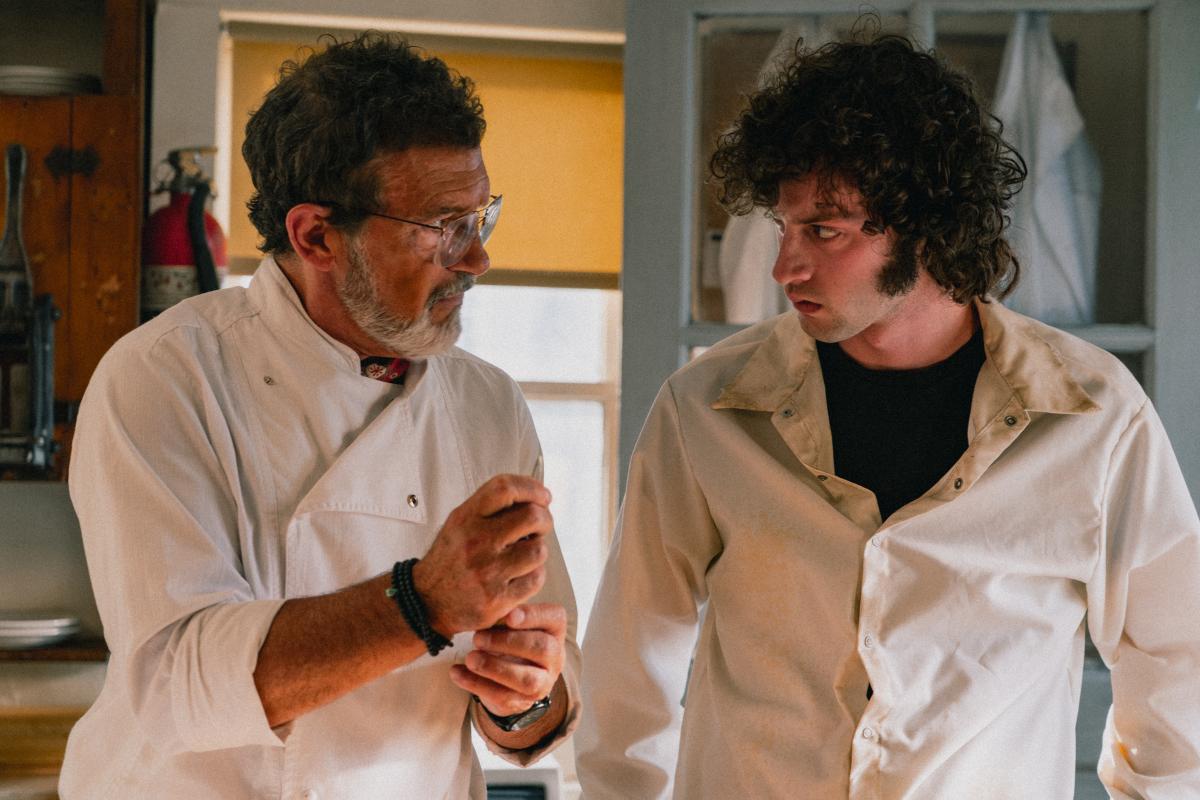
Director Matt Johnson, who previously directed the biographical film BlackBerry, focuses on the youth of Anthony Bourdain in the American movie Tony. Johnson shows little interest in the version of Bourdain known to most viewers as the witty author of Kitchen Confidential: Adventures in the Culinary Underbelly, television presenter, traveler, and gastronomic anthropologist. Instead, the director returns to an early episode from Bourdain's autobiography about his entry into the culinary industry.
At 19 years old, Tony dreams of becoming a writer but fails to secure a literary scholarship. He travels to Provincetown on Cape Cod, where instead of intellectual growth he finds a restaurant dishwashing pit, oysters, semi-professional kitchen chaos, and a girl he has pursued since high school. Bourdain recalled this period in the opening chapters of his book as his accidental introduction to the closed world of restaurants, which the film turns into a coming-of-age story under a chef played by Antonio Banderas.
Dominic Sessa plays Tony following his debut in Alexander Payne's film The Holdovers. Sessa portrays a confused young man facing a harsh adult world. While his character in The Holdovers was left at boarding school by his parents for Christmas, Tony flees his home and strict mother. Sessa displays a single expression of surprise, mild fright, and confusion throughout much of the movie, looking almost identical whether staring at his girlfriend, a lobster thermidor, or a burning house.
In Tony, the kitchen serves as a noisy, rude, and toxic dysfunctional family rather than an arena for ambition. The young man finds a familiar sense of chaos and belonging among the cooks, though the film stretches a few pages of autobiography into a feature length that is not always engaging.
Marriage and Michelin stars in A Taste of Hunger
While Tony depicts a restaurant as an adopted family, director Christoffer Boe's Danish film A Taste of Hunger shows a restaurant gradually destroying a real family. Boe, director of Reconstruction, wrote the screenplay alongside Tobias Lindholm, co-writer of the Oscar-winning movie Another Round. The Scandinavian drama features Maggie and Carsten, played by Katrine Greis-Rosenthal and Nikolaj Coster-Waldau, who have two children, love each other, and run a prestigious restaurant in Copenhagen.
The only thing missing is a Michelin star, which turns from a professional goal into proof for Carsten that his entire life was lived correctly. On the evening a Michelin inspector is expected to visit, their system begins to fall apart, causing professional crisis to expose old marriage problems.
Boe structures the movie around tastes including sweet, sour, and bitter, using flashbacks to trace different moments in the couple's relationship. The culinary metaphor explores the modern ambition of balancing career, prestige, love, children, and free Friday evenings. The story highlights that even in a country with a good social safety net, a day contains only 24 hours, leaving work-life balance out of reach.
The kitchen serves as a litmus test for marriage, where Carsten's obsession with perfection makes him resemble an addict despite having no history of drug abuse. Fine dining functions as a background for melodrama, demonstrating how a pursuit of absolute quality can become an excuse for forcing everyone nearby to suffer.
High stakes and Michelin ambitions in Burnt
While previous films explain the origins of kitchen obsession, the American movie Chef Adam Jones, released as Burnt, presents a familiar culinary story. Director John Wells, a writer and producer known for ER and Shameless, directed the film from a screenplay by Steven Knight, creator of Peaky Blinders. Bradley Cooper plays Adam Jones, a genius chef, former drug addict, emotionally unstable tyrant, and owner of a massive ego.
Jones built a career in Paris kitchens, gained fame, quarrelled with colleagues, became addicted to drugs, and fled to New Orleans to perform voluntary penance by shucking one million oysters. After opening the final shell, Jones returns to Europe to assemble a team in London and compete for a third Michelin star. The cast includes Daniel Brühl, Sienna Miller, Omar Sy, Uma Thurman, and Emma Thompson, while gangsters present additional threats.
The film highlights intense kitchen battles where dozens of cooks execute identical dishes under strict pressure. The narrative contrasts classic French cooking with modern techniques, illustrating how a single oversalted dish can ruin years of effort. Jones manages the kitchen like a military unit, acting as a commander unaware that Geneva Convention rules apply inside restaurants.
The story falters when it moves away from the kitchen to rehabilitate its lead character, offering a basic message that abusive geniuses must learn teamwork and trust. Cooper previously played a character based on Bourdain when he portrayed Jack Bourdain in the television series Kitchen Confidential, which was inspired by Bourdain's book.
Class struggles and corporate pressure in Hunger
Thai director Sitisiri Mongkolsiri uses fine dining as a direct metaphor for class structure in the movie Hunger. The story follows Aoy, a young cook frying noodles in a family eatery in Bangkok, who is recruited by a representative for Chef Paul, played by Nopachai Chaiyanam. Paul is a brilliant and tyrannical chef who prepares private dinners for wealthy clients rather than managing a traditional restaurant.
In Paul's business, clients purchase proof of status through exclusive culinary events where food is no longer meant to satisfy hunger. The chef sells an uncapped spectacle alongside his own image rather than simple flavors.
The main conflict begins when Aoy leaves Paul's team to run her own restaurant, discovering that learning to cook was the easiest part of the profession. She must build a personal brand, manage staff, promote her uniqueness, and convince wealthy patrons that her dishes will elevate their status above others. Paul states that clients must be hungry for the chef rather than the food.
Hunger provides a harsh view of fine dining by rejecting the idea that talent guarantees success in an industry dominated by corporate stamina and self-promotion. The ending returns to a conservative moral as Aoy returns to everyday cooking, establishing a boundary between personal ambition and self-preservation that differs from American cinematic conventions.
Across all four films, screen chefs rarely select their career simply out of a love for cooking, requiring trauma or a drive for recognition to operate inside closed hierarchical kitchens. The films demonstrate that kitchen drama remains effective when combining familiar tropes, though narrative pacing suffers when overemphasizing internal reflection and slow dialogue.