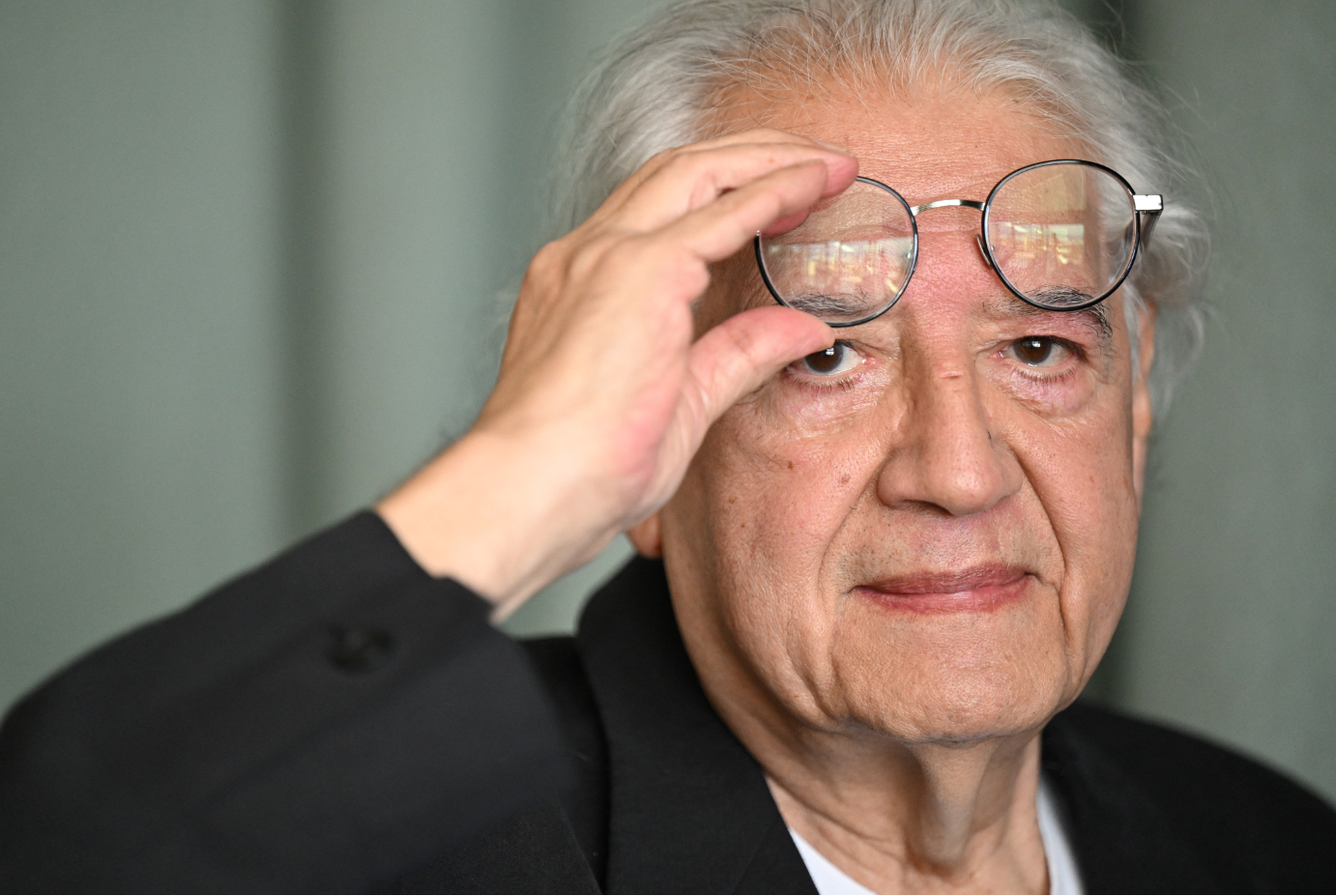
Chilean documentarian Patricio Guzmán, widely regarded as the most prominent documentary filmmaker in Latin America, died on Tuesday, September 15, 2026, at a hospital in Paris. He was 85 years old.
The acclaimed director passed away following a respiratory arrest, according to reports. His death marks a major loss for Latin American cinema, where his landmark work served as a guiding light for documentarians exploring politics, history, and social memory.
Guzmán established a lasting paradigm for non-fiction filmmakers across Latin America and the Caribbean. His career was defined by a commitment to confronting political upheaval and preserving historical truth through the medium of film.
He was best known for his monumental three-part documentary series La batalla de Chile (The Battle of Chile). The trilogy comprises La insurrección de la burguesía (The Insurrection of the Bourgeoisie), released in 1975, El golpe de Estado (The Coup d'État) in 1976, and El poder popular (Popular Power) in 1979.
The central narrative of the trilogy documents the collapse of democratic governance in Chile and the events leading up to the military coup d'état on September 11, 1973. Guzmán personally witnessed and filmed the political instability and repression that accompanied the rise of General Augusto Pinochet to power.
In the aftermath of the coup, Guzmán was arrested and detained for 15 days inside Santiago's Estadio Nacional. During his captivity at the national stadium, which the military regime used as a mass detention center, he was subjected to psychological torture by military authorities.
The Pinochet dictatorship targeted Guzmán because he had actively supported the candidacy and presidency of Salvador Allende through documentary filmmaking. Allende, a democratic socialist elected president of Chile in 1970 under the Unidad Popular coalition, implemented sweeping social reforms including agrarian reform and the nationalization of the nation's copper industry.
Guzmán's initial landmark work, El primer año (The First Year), released in 1971, chronicled the first 12 months of Allende's administration and showcased those economic and social transformations. As a result of his work highlighting the government's policies, Guzmán became a prominent figure of concern for the incoming military regime.
Smuggling the archives and decades of exile
Guzmán was eventually released from detention after 15 days because he did not hold formal membership in any political party. Immediately following his release, he fled the country to safeguard his life and his footage.
Leaving Chile required extraordinary measures to protect the original physical film rolls of La batalla de Chile from confiscation or destruction by military forces. Guzmán succeeded in smuggling the footage out of the country with the direct assistance of the Swedish ambassador to Chile.
After escaping Chile, Guzmán traveled first to Cuba and subsequently moved to Europe. He eventually established permanent residence in France, where he lived for more than 40 years until his death.
The smuggled films of La batalla de Chile went on to premiere at international film festivals to critical acclaim. However, due to state censorship under Pinochet's military rule, the trilogy could not be publicly screened inside Chile until 1997.
The effort to preserve and smuggle the master rolls represented a dangerous rescue operation driven by Guzmán's awareness of the need to protect historical memory. State dictatorships frequently seek to erase or rewrite historical events to suit official narratives, a manipulation Guzmán resisted by placing his life at risk to save the footage for future generations.
International awards and cinematic legacy
Throughout his career, Guzmán directed numerous other documentaries and select works of fiction, earning major international honors. He received the Silver Bear at the Berlin International Film Festival in 2015 for his documentary El botón de nácar (The Pearl Button).
In 2022, his feature documentary Mi país imaginario (My Imaginary Country) won the Goya Award for Best Ibero-American Film from the Spanish Academy of Cinematographic Arts and Sciences. Despite these international accolades, his most cherished honor was the National Prize for Performing and Audiovisual Arts awarded by his native country of Chile in 2023.
Guzmán's death comes amid global political shifts in which radical movements attempt to alter historical narratives. Throughout his life, the director used cinema as an active tool to preserve historical facts without relying on political demagoguery.
Where to watch 'La batalla de Chile'
For viewers looking to explore his work, La batalla de Chile is currently available for streaming on the global film platform Mubi.