


Medical services data shows 77 percent of Russians experience sleep problems, prompting health experts to highlight the vital role of pillow selection. Research indicates that a properly chosen pillow cuts falling asleep time in half and improves sleep quality by 30 percent. Journalist Anna Samoylova reported on August 6, 2026, that choosing the right pillow requires evaluating filler material, shape, size, height, and firmness to protect long-term physical health.

Decades ago, options were limited to heavy feather and down pillows or cotton wool models. Today, choices have expanded to the point where select hotels and sanatoriums offer dedicated pillow menus. Guests can select their preferred pillow based on filler, shape, height, and firmness upon check-in.

Natural filler materials
Pillow fillers fall into natural materials derived from plants and animals, and synthetic materials produced from polymers. Natural fillers offer distinct benefits and maintenance requirements.
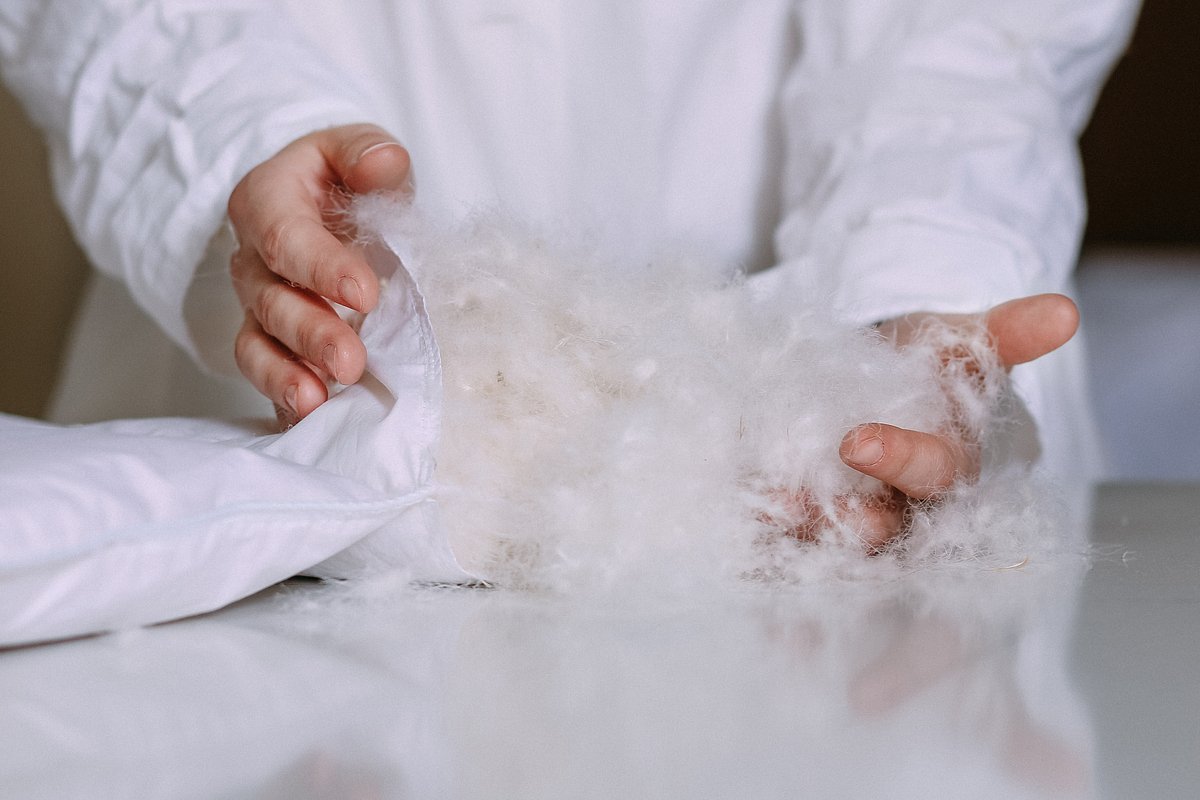
Goose and duck down represents the most elastic and lightweight natural filler, providing natural thermoregulation. Quality is measured by the Fill Power indicator, where higher values retain more air to keep the pillow warmer at a lower weight. A Fill Power 850 down pillow is rated as an elite, durable accessory matching top international hotel standards. However, down loses shape quickly, requires regular fluffing, and creates an environment for dust mites and bacteria. Owners must air and dry them several times a year and replace them every two to three years. Down-and-feather models add feathers for extra resilience.
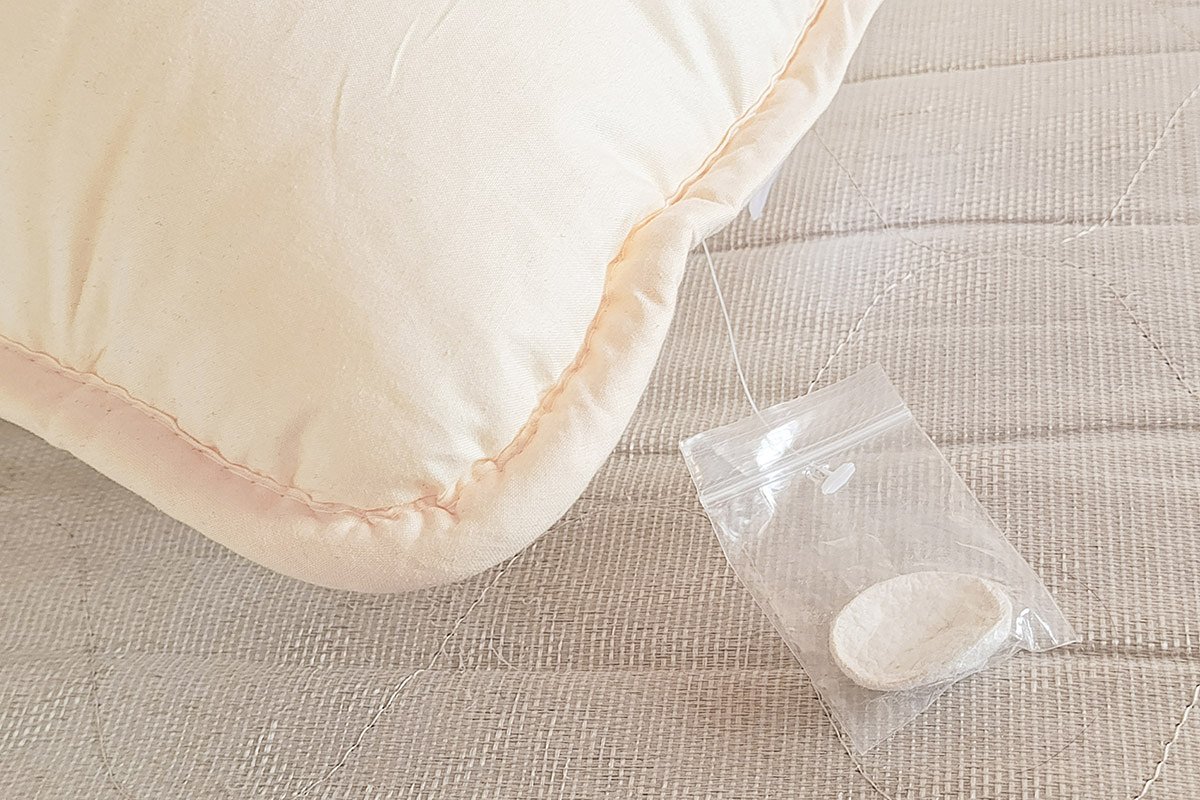
Silk fillers, including Mulberry Silk and Tussah Silk, are high-quality natural materials derived from silkworm cocoons. Silk regulates temperature, repels dust, has natural antibacterial properties, and is hypoallergenic for people with allergies or sensitive skin. Silk pillows can last up to 10 years, with prices starting at 6,000 rubles per pillow.

Natural latex is produced from the foamed sap of the hevea rubber tree. Latex pillows are anatomical accessories that adapt to body curves without deforming, supporting head and neck contours to relieve muscle and spinal strain. They are durable, elastic, hypoallergenic, and last from 7 to 12 years. However, latex foam does not absorb moisture or allow air flow, making it unsuitable for people who sweat heavily, and new pillows may carry a rubber smell.
Bamboo fiber is an eco-friendly filler derived from woody bamboo stems. It does not accumulate dust or harbor dust mites, absorbs moisture, dries quickly, and offers high breathability. Without regular fluffing, bamboo fiber can mat down and lose volume, requiring replacement every two to three years.
Other natural fillers include cedar pine shavings, buckwheat hulls, sheep, camel, or alpaca wool, and cotton wool.
Synthetic filler options
Synthetic fillers offer various levels of support, density, and ease of care. Each synthetic material carries specific lifespans and maintenance rules.
Hollofiber consists of hollow polyester fibers formed into spirals or springs through thermal bonding. Its hollow structure creates air pockets that deliver breathability, elasticity, strength, and mold resistance. Hollofiber can lose shape under body weight, and high-temperature washing reduces its elasticity. Users should replace hollofiber pillows every 1.5 years or sooner if deformed.
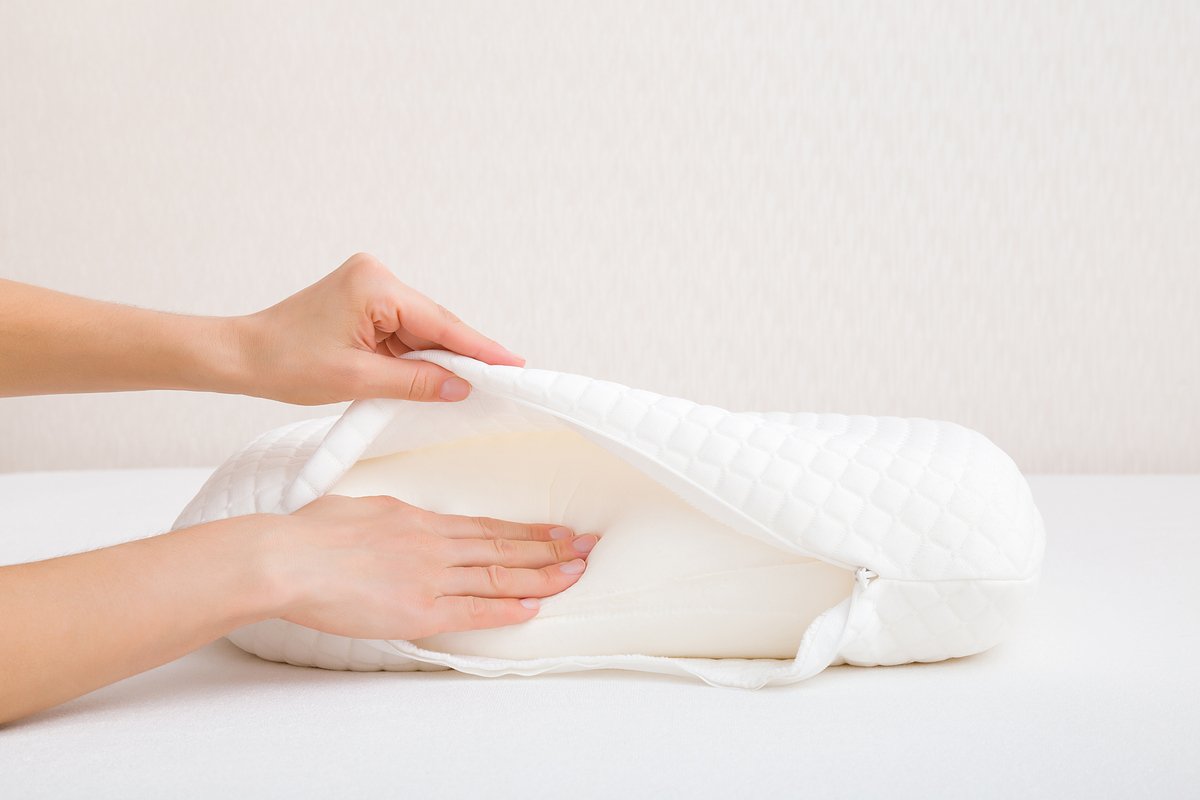
Memory Foam, also known as memoryx or viscoelastic polyurethane foam, softens under body heat and weight to adapt precisely to head and neck contours. This provides anatomical support while remaining hypoallergenic, breathable, and durable for up to seven years. Higher polyurethane density creates a stronger memory effect and longer lifespan. Memory foam cannot be washed and should not be used in humid rooms.
Padding polyester, or sintepon, is a budget polyester fiber filler that is soft, moisture-resistant, voluminous, and hypoallergenic. It rapidly loses shape and volume, requiring replacement after one year to 1.5 years, and must be washed and dried by hand.
Microgel features microfibers ten times thinner than cotton connected thermally into hollow spheres. Microgel drains moisture quickly, holds shape, and has high breathability, but it can accumulate dust and requires replacement every five to seven years.
Other synthetic options include polystyrene balls, synthetic latex, and artificial swan down.
Pillow shapes and functions
Pillows come in several primary shapes tailored to different sleeping positions. Classic rectangular or square pillows provide universal support for any sleeping pose.
Wave-shaped pillows feature one or two edge rollers of different heights to support the neck alongside a central depression for the head. The higher roller suits side sleeping, while the lower roller fits back sleeping.
Pillows with a shoulder cutout feature a bottom depression that prevents hand numbness and relieves shoulder pressure during side sleep. Butterfly-shaped pillows feature cutouts on four sides to adapt to body contours, designed specifically for stomach sleeping.
Specialized options address specific health needs. Anti-snoring pillows feature two height zones from 6 to 12 centimeters to elevate the chin, align airways, reduce soft tissue vibration, and optimize head tilt. Reading pillows support the torso at a comfortable angle. U-shaped maternity pillows support the lower back, legs, and belly during pregnancy, with some models offering memory foam or cooling effects.
Dimensions and height selection
Standard adult pillow sizes measure 50 by 70 centimeters and 70 by 70 centimeters, while child sizes measure 40 by 60 centimeters, with custom sizing available from manufacturers. Height categories include low soft models for stomach sleeping, medium models for people who change positions, and high firm models for wide shoulders or side sleepers filling the space between ear and shoulder.
Irina Frolova, a candidate of medical sciences, somnologist, and cardiologist at the Persona and Prozreniye network of clinics, stated that height selection depends on shoulder length, measured from the base of the neck to the shoulder-arm joint. Wider shoulders require a higher pillow. Height guidelines include 3 to 5 centimeters for children, 8 to 11 centimeters for women, and 13 to 15 centimeters for men. Frolova noted that because people shift positions overnight without controlling their posture, universal models that adapt to different poses are preferable to keep the cervical spine in a neutral position.

Firmness levels and posture impact
Soft pillows suit stomach sleepers or those who like to sink into the pillow. Medium firmness provides a universal option for back sleeping, while firm models are recommended for side sleepers and larger body builds needing neck support.
Sleep posture determines muscle, joint, and spinal strain. Side sleeping is the most physiological posture for most adults, reducing lumbar load and assisting brain lymphatic function, provided pillow height matches the shoulder-to-ear distance. Back sleeping keeps the spine neutral without internal organ pressure, making medium-height pillows optimal to prevent pushing the chin to the chest and impairing breathing. Stomach sleeping is the most problematic pose because the neck rotates 90 degrees all night and the lower back arches, making flat pillows or no pillow recommended.
Experts recommend replacing pillows every two to three years because fillers lose elasticity and fail to function properly.
Health benefits and expert insights
Anton Shestakov, a psychiatrist, psychotherapist, and somnologist, told Lenta.ru that sleep occupies approximately one-third of human life, directly affecting brain function, mood, and physical health. Shestakov stated that a pillow serves as a functional support affecting spinal position and sleep continuity, which governs brain recovery.
Shestakov noted that proper pillows prevent and relieve chronic neck and shoulder pain from incorrect height, while correct height prevents morning headaches linked to compressed neck blood vessels. Hypoallergenic fillers eliminate dust mites to aid allergy and asthma sufferers, proper support ensures the brain enters deep sleep phases, and switching from synthetics to natural down or silk can address night sweating without medical intervention.

Frolova noted that morning well-being serves as the main criterion for a correctly chosen pillow. She added that pillows form part of medical therapy for specific conditions, such as wedge-shaped pillows elevating the head end for gastroesophageal reflux disease and snoring. Patients undergoing CPAP therapy for obstructive sleep apnea benefit from pillows with mask cutouts that prevent mask displacement while sleeping on their side. Positional rollers reduce pain and swelling for orthopedic patients, while long maternity pillows assist body positioning.
Shestakov and Frolova warned that unsuitable pillows can cause health damage. Overly high pillows force the neck to bend forward, distributing uneven strain on the cervical spine throughout the night. Excessively flat pillows tilt the head backward, keeping muscles tense, compressing blood vessels, and worsening apnea or reflux symptoms.


