

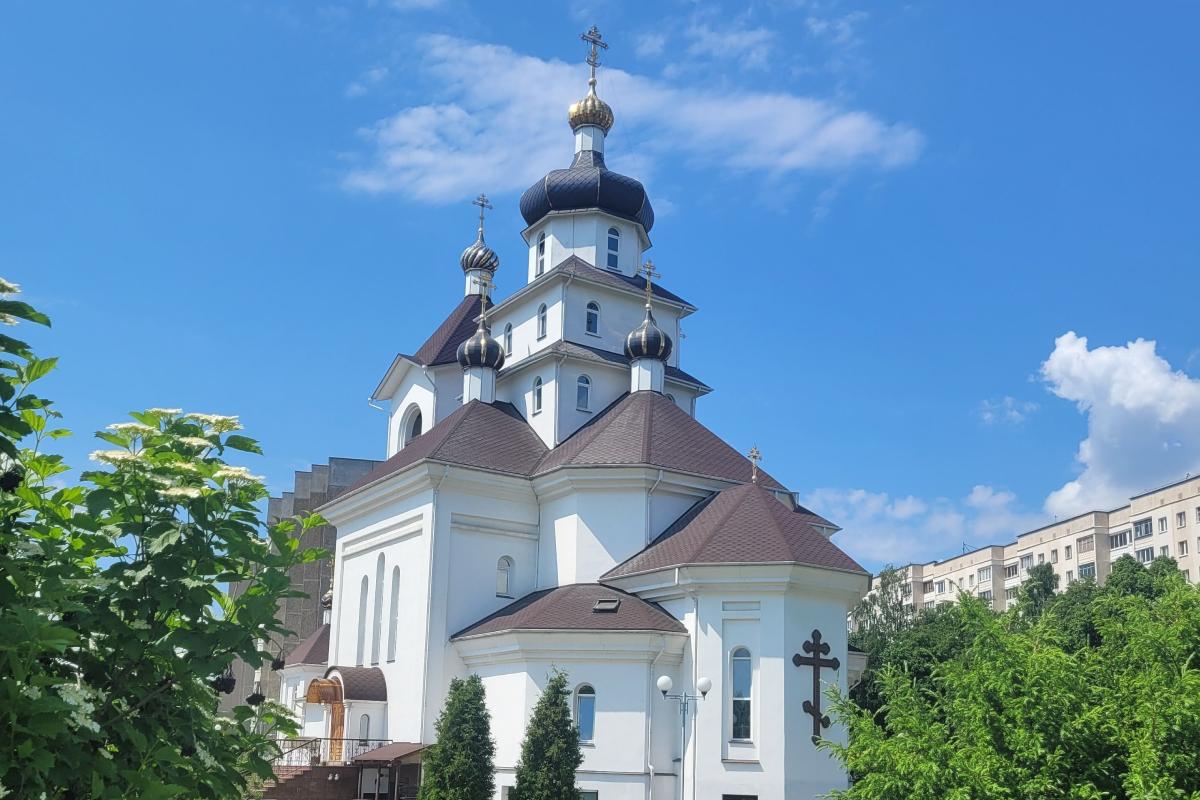
Orthodox Christians in Ukraine commemorate Saint Alipi of the Caves on August 17 under the revised church calendar, honoring the medieval master iconographer.
Under the traditional Old Style liturgical calendar, August 17 corresponds to August 30 and marks the commemoration of the Venerable Martyr Eudoxia of Rome.
The dual calendar dates reflect Ukraine's historic transition in September 2023, when the Orthodox Church of Ukraine officially adopted the Revised Julian calendar. This reform shifted fixed religious feast days 13 days earlier than the Julian calendar previously observed by Eastern Orthodox communities.
Saint Alipi of the Caves lived during the 11th and 12th centuries and served as a monk at the Kyiv-Pechersk Monastery. He was the first and one of the most prominent icon painters in the historic state of Kyivan Rus, earning widespread renown for his artistic mastery and spiritual devotion.
Beyond his celebrated work as an iconographer, historical records honor Alipi as a skilled mosaic artist, fine jeweler, and physician. He entered monastic life as a young man and acquired his formal training in icon painting directly from visiting Greek masters.
The Kyiv-Pechersk Monastery, founded in 1051, stood as the primary center of culture and religious art in medieval Eastern Europe. Monks residing in the cavern complex produced religious artwork that defined regional spiritual heritage for centuries.
Icons created by Alipi came to be revered by believers as miraculous holy objects. Two of his famous works survive to this day, including the icon depicting the Pechersk Mother of God standing beside Saint Anthony and Saint Theodosius, as well as the depiction known as the Mother of God Great Panagia, also called the All-Holy Virgin. Both of these historic artifacts were subsequently removed from Ukraine and taken to Russia.
Alipi also painted seven icons forming a Deesis row for a church situated in the Podil neighborhood of Kyiv. These Podil icons achieved veneration as miraculous works after surviving a devastating fire intact. Further historical records indicate that Alipi participated in decorating the interior of the Assumption Cathedral at the Kyiv-Pechersk Lavra and possibly completed intricate mosaic installations for St Michael's Golden-Domed Monastery in Kyiv.
Orthodox believers offer prayers to Venerable Alipi of the Caves to seek the strengthening of their faith and to request protection against spiritual temptations. The historic district of Podil, where his Deesis icons survived, remains one of the oldest riverfront commercial neighborhoods in the Ukrainian capital.
Folk Customs on Myron Day
Popular folk traditions also designate August 17 as Myron Day in honor of the Hieromartyr Myron. The date is widely known by the traditional name Widow's Help because community members gather to assist widows, impoverished households, and vulnerable individuals.
Refusing assistance to people in need on August 17 is regarded as a serious transgression in folk culture. Saint Myron served as a historical exemplar of Christian mercy, establishing the belief that even the smallest act of charity carries deep spiritual value on his feast day.
Seasonal weather changes gave rise to another popular title for the date, Myron the Wind-blower, because strong winds intensify and autumn leaves begin to fall during mid-August. Housewives utilize this period to prepare essential provisions for the upcoming winter season by salting and drying wild mushrooms, cooking jams from forest berries, and simmering sweet apple compotes.
A major custom observed on Myron Day involves purging the home of old and obsolete household items. Traditional belief dictates that useless possessions must be burned in fire rather than thrown away, as smoke is believed to carry away lingering illnesses, personal sorrows, and general misfortunes.
To safeguard living spaces against evil forces, residents place worn footwear near the entrance of their homes. According to local lore, collecting a larger bundle of old shoes near the front door provides greater spiritual protection for the household.
Religious Prohibitions and Traditions
Church authorities explicitly condemn interpersonal arguments, harmful gossip, envy, greed, and acts of revenge on August 17, while deeming the denial of charity to the needy a severe sin. Folk tradition additionally cautions against engaging in fortune-telling or invoking evil spirits, as Myron Day is considered spiritually volatile and capable of attracting dark influences.
Traditional folk omens mark August 17 as an unfavorable date for weddings and church matrimony, warning that marital unions formed on this day tend to be short-lived. People are advised against sharing personal plans or future ambitions because unrevealed goals are believed to fail, while quarrels with family members will lead to lengthy reconciliations.
Observances on August 17 strictly forbid visits to cemeteries or holding formal memorial tributes for the deceased. According to longstanding popular belief, departed souls visit one another on this specific date, and living relatives should avoid disturbing their gatherings.
Weather Omens and Name Days

Folk weather omens associated with Myron Day allow rural observers to forecast upcoming seasonal conditions. Heavy cloud cover over the sky indicates that bad weather will persist for an extended period, whereas clear, sunny weather points toward an early spring.
When birds begin gathering in large flocks on August 17, observers expect a cold snap to arrive shortly. Traditional weather lore holds that conditions recorded on Myron Day predict the atmospheric conditions expected on the feast of the Protection of the Most Holy Mother of God, known as Pokrova.
August 17 marks the angel day or name day for individuals named Myron, Pavlo, Ulyana, and Pylyp. People born on this day are traditionally characterized as brave individuals who hold firm convictions and defend their principles, combining a complete lack of personal aggression with a sincere determination to achieve their goals.


