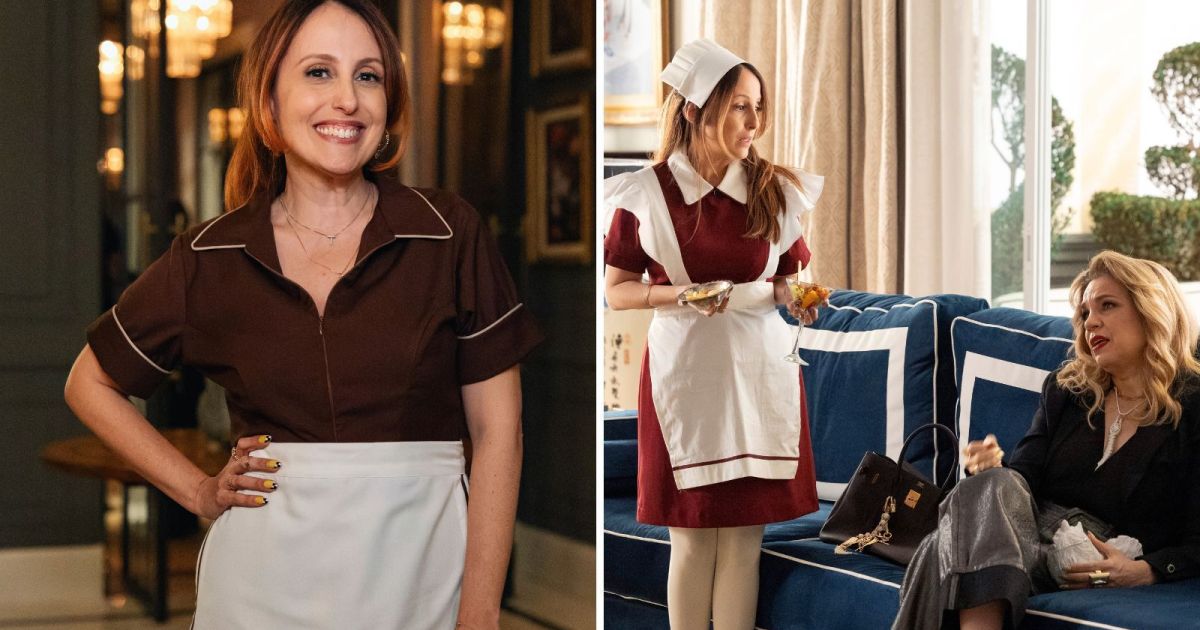


Russian film and television director Sergey Ursulyak has outlined his upcoming serial adaptation of Leo Tolstoy's classic novel War and Peace for state broadcaster Russia. Speaking in an interview with newspaper Rossiyskaya Gazeta published on August 14, 2026, Ursulyak detailed the production's casting choices, filming locations, and creative approach for the project, which is being created to mark the 200th anniversary of Tolstoy's birth.
Production for the project recently moved to the historic city of Kostroma to film sequence depictions of the 1812 fire of Moscow. Ursulyak, who concurrently serves as president of the Window to Europe film festival in Vyborg, joked that between his arrivals for the festival's opening and closing ceremonies, he had been busy burning down Moscow. Due to the intensive filming schedule, the director was able to spend only two days at the Vyborg event before returning to the set.
Leo Tolstoy's 1869 masterpiece War and Peace is widely regarded as one of the cornerstone works of world literature, detailing Russian society during the Napoleonic wars through the lives of several aristocratic families. The novel was famously adapted for the screen by Soviet director Sergei Bondarchuk in an Oscar-winning film series released in the 1960s.
Filming Locations and Historic Architecture
Explaining the choice of Kostroma for the fire sequences, Ursulyak noted that historical 19th-century architecture no longer remains in modern Moscow. Kostroma provided well-preserved historic mid-rise structures that could serve as visual anchors for the production. Rather than constructing an entire replica of Moscow from scratch, the crew elected to build supplemental structures onto existing historic buildings across Kostroma, Rostov Veliky, and several other Russian towns.
Addressing questions regarding whether the series would reflect contemporary events, Ursulyak explicitly rejected any intended parallels to Russia's ongoing special military operation. The director stated that he did not want the adaptation to be associated with the conflict in any way, adding that while the drama explores individuals at critical historical crossroads, direct modern allegories would be inappropriate. He stressed that works about the current military operation should address that topic directly rather than through Tolstoy's novel.
Ursulyak, whose previous directorial work includes the acclaimed 2015 television adaptation of Mikhail Sholokhov's Quiet Flows the Don and the 2023 historical film Righteous, revealed that adapting War and Peace was not a long-held personal ambition. He agreed to direct the project after extensive deliberation when producers formally presented the offer to him.
Cast Transformations and Character Models
The production features major physical transformations by its young lead actors. Nikita Yazykov gained 30 kilograms to play Pierre Bezukhov, whom Tolstoy described as a large and heavy man. Ursulyak recalled that Yazykov had previously been as thin as a rail when he first noticed him as a classmate of actor Mark Eidelstein. Meanwhile, Nikita Volkov lost 15 kilograms to portray Prince Andrei Bolkonsky after convincing the director of his deep dedication and willingness to transform for the role.
Maria Zolotukhina, who previously collaborated with Ursulyak, was cast as Natasha Rostova after undertaking extensive preparation that included French language training and horseback riding lessons. Several younger cast members were selected from Moscow's Mayakovsky Theatre, prompting Ursulyak to express gratitude to artistic director Yegor Peregudov for fostering young talent. Varvara Bochkova was cast as Helene after Ursulyak saw her at the Shchukin Theatre Institute, while Annushka Sukhoveeva secured the role of Sonya while studying at GITIS before joining the Mayakovsky company.
Ursulyak highlighted the dedication of the ensemble, noting that numerous young actors were passed over because they were unwilling to turn down other commercial projects, such as a hypothetical action film called Kill Me 2, to commit entirely to War and Peace. He emphasized that his goal is to present characters who can serve as genuine role models, inspiring young viewers to live intentionally, honestly, and sincerely.
Veteran Performers and Supporting Roles
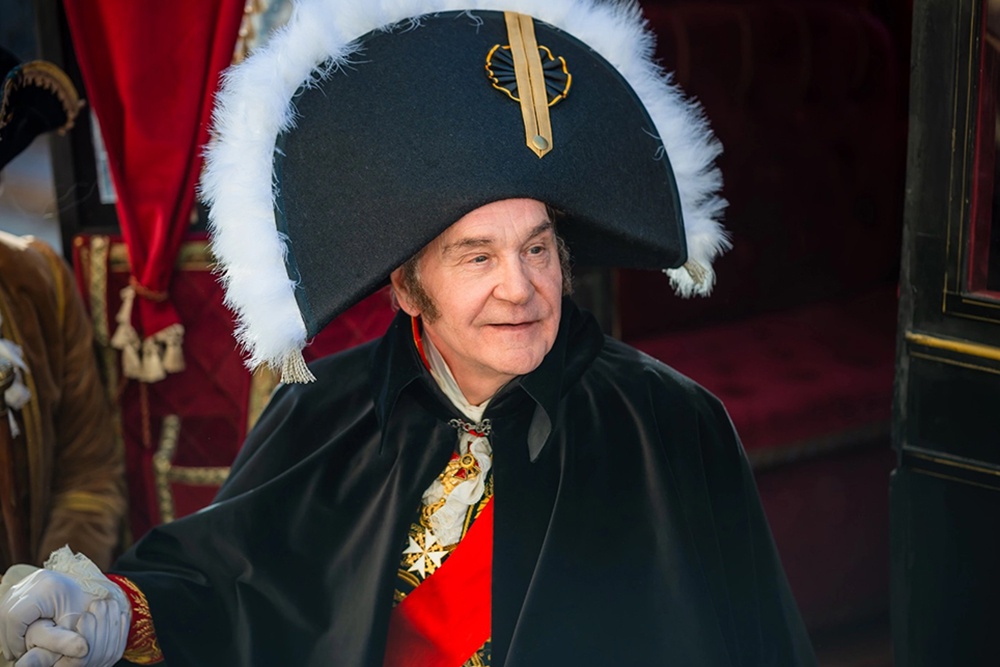
The adaptation also brings together prominent veteran Russian performers across supporting roles. Actress Svetlana Kryuchkova portrays Countess Marya Akhrosimova, a formidable character who manages affairs and speaks her mind directly. Sergey Makovetsky plays Prince Vasily Kuragin, a role Ursulyak described as vital and vivid. Anya Mikhalkova appears as Countess Natalya Rostova, while Mikhail Porechenkov was selected at the last moment to portray her husband, Count Ilya Rostov.
Addressing comparisons with Sergei Bondarchuk's 1960s film adaptation, Ursulyak acknowledged the differing technical conditions of the two productions. While Bondarchuk had entire Soviet army divisions at his disposal for massive battle scenes, the new series relies on actors and computer-generated imagery. However, Ursulyak insisted that he will not create a digital-heavy film, explaining that his narrative focus remains on the individual human experience within war rather than sheer visual scale.
The director rejected suggestions that staging a new adaptation 60 years after Bondarchuk is sacrilegious, pointing out that theatrical audiences regularly accept diverse stage versions of War and Peace, such as those directed by Rimas Tuminas at the Vakhtangov Theatre, Pyotr Fomenko at the Fomenko Theatre, Yuri Grymov at the Modern Theatre, and Andrey Konchalovsky's opera staging at the Stanislavsky Theatre. He added that potential critical backlash does not intimidate him, as he has encountered extensive commentary throughout his career.
Broadcasting and Industry Perspective
The narrative also highlights the contrast between battlefield realities and the insulated world of Russian high society, a central theme in Tolstoy's writing. Produced for state television channel Russia in collaboration with media executive Anton Zlatopolsky, the project has proceeded with complete creative freedom following initial agreements on core concepts.
Reflecting on wider film industry trends, Ursulyak expressed concern over an increasing tendency for productions to prioritize audience pleasing over director vision and complex themes. He also criticized regulatory restrictions banning the depiction of blood or smoking on screen, describing such rules as anti-artistic decisions by cautious officials. Despite these constraints, he expressed confidence in his cast and reiterated his aim to return Tolstoy's masterwork to active public conversation.