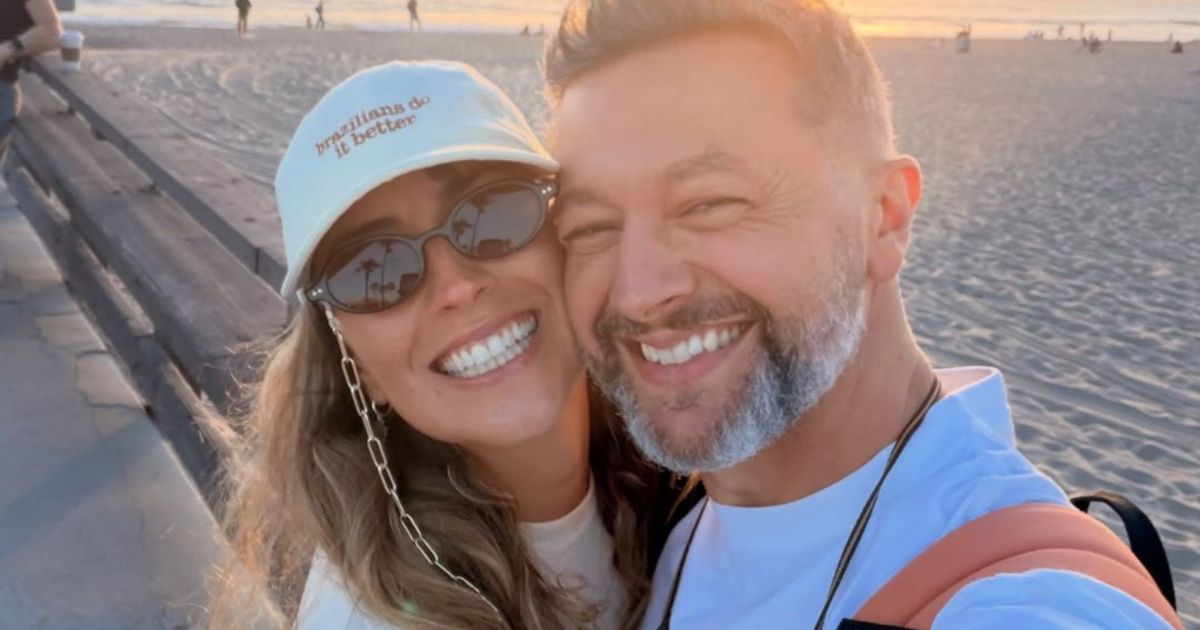


Australian podcaster Zoe Marshall has confessed to secretly taking the antidepressant Prozac for 11 months to treat obsessive compulsive disorder.
The 41-year-old media personality, who is married to rugby league great Benji Marshall, admitted she spent years judging people who relied on medication, viewing antidepressants as a "cop-out" before reaching breaking point.
In a candid interview with the Daily Mail, Marshall revealed she found it far easier to speak publicly about undergoing medically prescribed psychedelic therapy than to tell people she had taken a conventional antidepressant.
"I've always misunderstood and judged people who take medication. I thought it was a cop-out," she said. "I'd been quite open about the MDMA, but I felt way more shame about taking something that a lot of Australians take - Prozac."
The podcaster added that she deeply regrets harbouring those prejudices. "That felt like a cop-out to me, and I feel really ashamed to say that now, because so many people have taken it and it's saved their lives," she said.

Lifelong battle with obsessive compulsive disorder
Marshall explained that her secret decision to begin taking medication came after reaching a desperate breaking point in her lifelong struggle with obsessive compulsive disorder (OCD).
Obsessive compulsive disorder is a chronic mental health condition marked by uncontrollable, recurring thoughts and repetitive behaviours. Marshall has lived with the condition for decades alongside emetophobia, an intense and debilitating fear of vomiting.
For years, Marshall did not realise the two conditions were intertwined until she consulted a specialist. "I went to a doctor and she said, 'It's not a phobia, it's OCD masking as a phobia,'" she recalled.
Despite undergoing years of specialised psychological treatments, including Exposure and Response Prevention (ERP) therapy, Marshall reached a point where she felt her condition had seized complete control of her day-to-day life.
"I got to the point where I was so desperate. I felt like I was being hijacked by this OCD," she said.

Turning point and emotional blunting
It was her husband Benji Marshall, the former New Zealand international rugby league star and current Wests Tigers head coach in the NRL, who ultimately persuaded her to reconsider her stance on pharmaceuticals.
"He was actually the one who turned it around for me," Marshall said. "He said, 'This could change your life. The stigma and shame that you have is holding you back.'"
Seeking clarity on the most effective treatment, Marshall underwent blood testing that was sent to the United States to determine which medications would best suit her biology. She ultimately began a course of Prozac, the well-known brand of the selective serotonin reuptake inhibitor (SSRI) fluoxetine.
The medication proved transformative. "It really saved my life. It gave me the ability to do situations where I thought I was going to die," Marshall said.
Reflecting on her journey, she expressed grief that she had resisted medical intervention for two decades. "If I knew that SSRIs could help with OCD 20 years ago, my life would be so different now," she said. "I waited until I was 41 to try it. I felt so robbed of access."
However, the medication also brought unexpected side effects, leaving Marshall experiencing emotional blunting and struggling to access her feelings.
She recalled a particularly poignant moment at her recent book launch, when her husband performed a traditional Maori haka in her honour.
"I couldn't feel a lot of emotions," she explained. "I remember while I was hugging him, whispering to him, 'If it wasn't for the Prozac, I would be crying right now.'"

Combining medication with ongoing therapy
Marshall emphasised that antidepressants were not a standalone solution, explaining that she took the daily medication in direct combination with fortnightly Exposure and Response Prevention therapy.
"The SSRIs were in partnership with fortnightly ERP therapy. I had to do both. The SSRI wouldn't have helped me get through on its own," she said. "To get meaningful change, you have to be doing therapy in partnership with it."
Exposure and Response Prevention therapy is considered the gold standard behavioural treatment for OCD, requiring individuals to confront anxiety-provoking triggers while actively choosing to resist engaging in compulsive rituals.
One of the most confronting aspects of Marshall's journey was acknowledging that her anxiety remained overwhelming despite enjoying a loving family and comfortable circumstances.
"The thing is, life was really good. All my needs were met, and yet I got to the point where I was thinking, 'Why is this still terrifying? Why do I still feel like I'm going to die all the time? Why is my brain being hijacked?'" she said.
After 11 months on Prozac, Marshall made the decision to wean herself off the antidepressant in order to undergo MDMA-assisted psychotherapy, which she undertook for three months earlier this year.
The clinical psychedelic treatment demanded substantial logistical arrangements and financial investment, requiring extended family members to fly in to assist with caring for the couple's children.
"I didn't want to be in the house after I took it, so logistically it required a lot," Marshall said. "It was a big time and financial commitment."

Psychedelic treatment and marital impact
Her husband Benji was initially hesitant about the experimental treatment, given his lifelong personal opposition to recreational drugs.
"He's very anti-drugs. He's never done a drug in his life. So psychedelics, particularly MDMA, are very misunderstood," Marshall explained. "He needed to have a conversation with the medical team before he was on board."
Once underway, Marshall found that MDMA-assisted therapy allowed her to process deep-seated emotional pain in a way that conventional approaches had never achieved over three decades.
"MDMA allows you to look at trauma without shutting down. You can finish the loop of spiralling thoughts," she said. "I've done 30 years of different types of therapy, and it's never been like that."
The therapeutic breakthroughs also transformed her marriage, with Benji noticing a marked improvement in her ability to handle uncertainty.
When Marshall first began taking Prozac, Benji told her that he felt it was the first time their family had collectively been able to breathe.
Marshall admitted the comment was deeply confronting, as it laid bare how much her condition had impacted her entire household.
"When you have someone who is highly micromanaging, things are tightly wound," she said.

Future therapies and personal lessons
Looking ahead, Marshall revealed she plans to undergo clinical psilocybin treatment in March, accessing the therapy through Australia's medical framework.
Psilocybin is a naturally occurring psychedelic compound found in certain species of mushrooms. In 2023, Australia became the first country in the world to officially regulate psychedelics as medicines, allowing authorised psychiatrists to prescribe MDMA for post-traumatic stress disorder and psilocybin for treatment-resistant depression.
Despite her previous positive experience with MDMA, Marshall admitted to feeling nervous about the next phase. "It's a hallucinogenic, and for me, that feels a lot scarier than the MDMA," she said.
The treatments have coincided with an intense period of self-discovery for Marshall, who hosts the interview podcast The Deep. She has recently been diagnosed with both autism and attention deficit hyperactivity disorder (ADHD).
"It's been a big unravelling of all these parts of me," she said.
Following her experiences with medication and therapy, Marshall got eight tattoos, each commemorating an important lesson she learned about herself.
One of the tattoos reads "Be With Me", serving as a constant reminder to stay grounded in the present moment rather than becoming consumed by anxious thoughts.