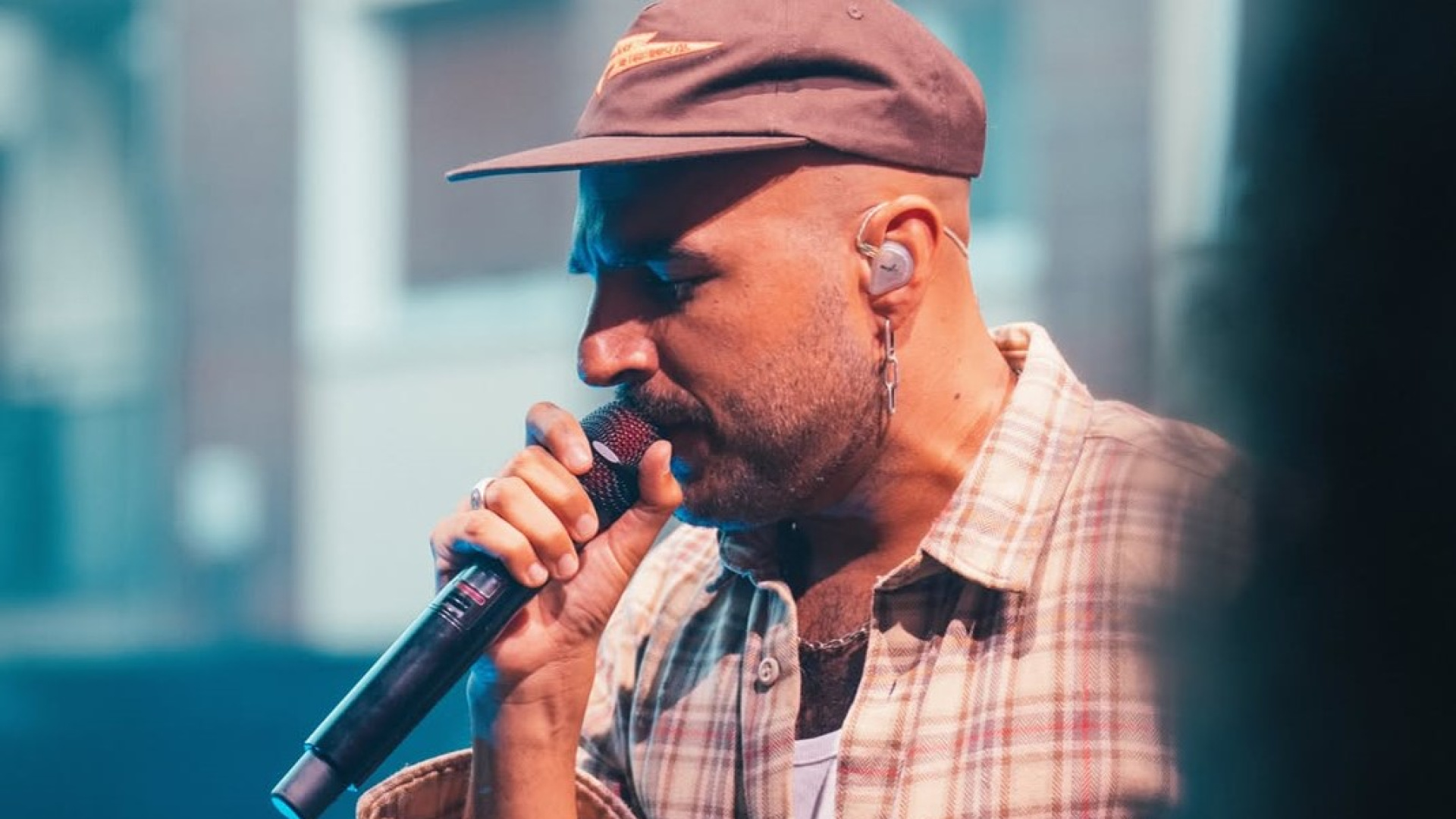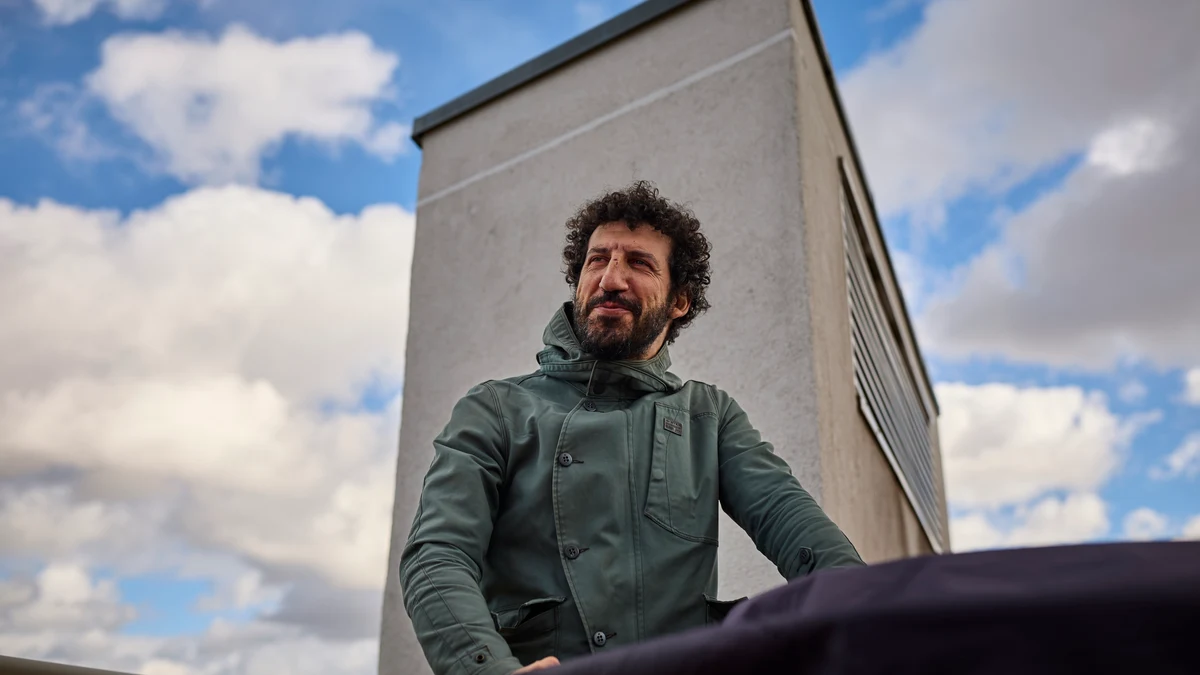
Marwán, a 47-year-old singer-songwriter from Madrid, has released a new album, "Adrenalina," alongside a companion poetry collection titled "Memorias de un amor superlativo." Love and its opposite run through both works.
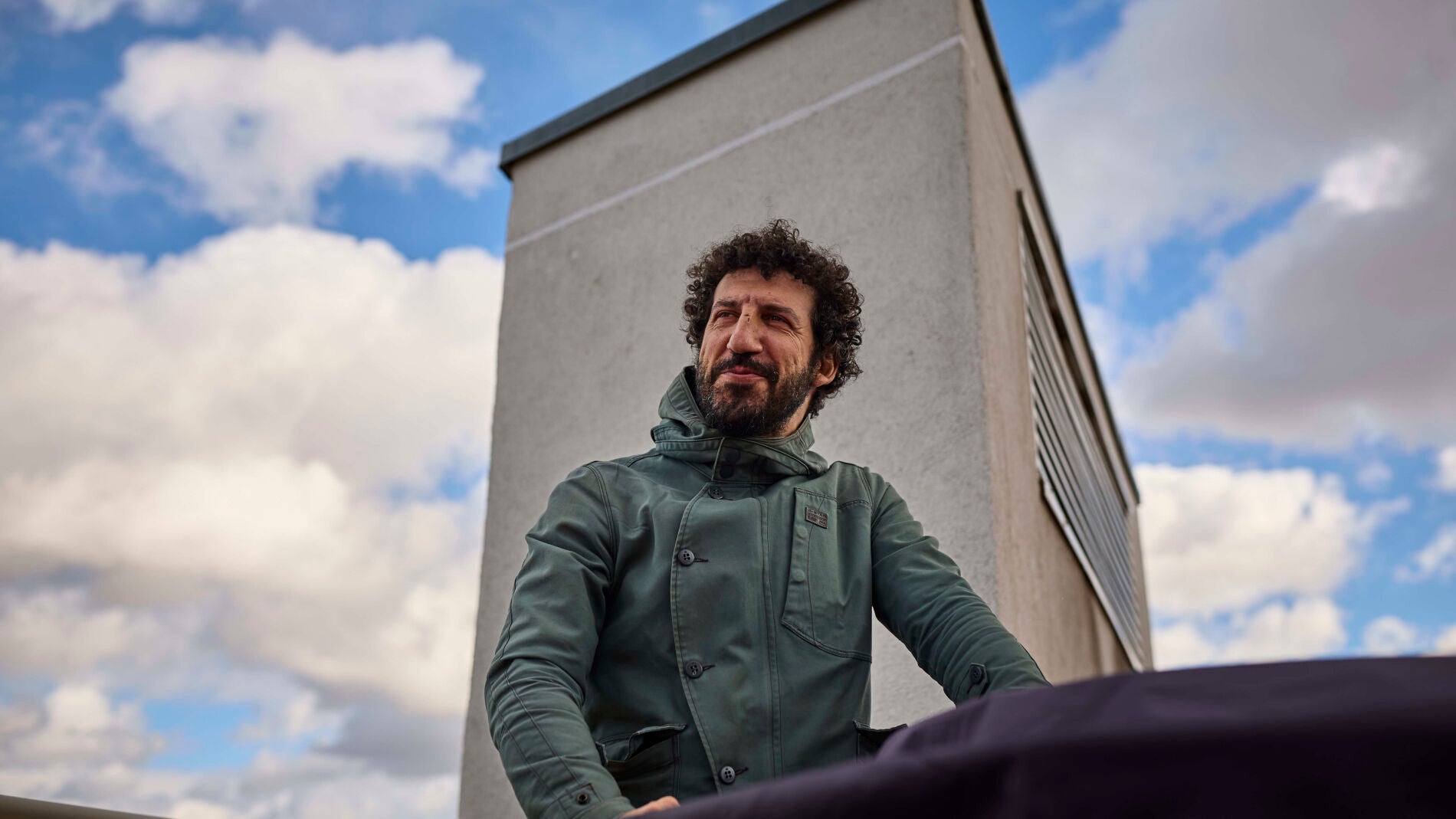
Marwán said many of the love and heartbreak songs on the record grew out of a very toxic relationship that pushed him deep into old wounds, including what he called his original wound from childhood. He said the relationship involved love and heartbreak at the same time, and that the songs burst out almost on their own. Aside from "La canción que no van a olvidar," dedicated to his parents, and "Maldita sociedad," which took longer to finish, he said the whole album was written in a single sitting.
Where song and poetry part ways
Marwán said all singer-songwriters come from a poetic tradition, having drawn on many different poets, but that song and poetry remain distinct things. He named Joan Manuel Serrat as the only songwriter to set both forms to music at a spectacular level, pointing to Serrat's work with the poetry of Miguel Hernández and calling the song "Elegía" immense. He also praised Pedro Guerra for turning Ángel González's non-rhyming, free-verse prose poems into songs that worked brilliantly.
He recalled that Guille Galván of the band Vetusta Morla once told him that by the 45-second mark or the one-minute mark of a song, when the chorus arrives, a songwriter has to have said almost everything, because the chorus works as the core of the message being expressed. A poem, by contrast, can resolve everything in its final line, and can carry dense reflection and language twisted by literary devices in ways a song cannot sustain without losing its footing.
A career built around long tours
Despite a 25-year career, Marwán said he is not a prolific artist, something he put down to touring cycles that stretch to three years because he loves playing live. He compared his pace to that of Uruguayan singer-songwriter Jorge Drexler, who also releases an album roughly every three years for the same reason, and said he tends to put out his next record almost as soon as a tour ends.
He said he does not identify with the label of poet, feeling his poetry sits closer to his own songwriting style than to other poets' work, though it leans toward what he called the poetry of experience, plain and close to prose. He said he has always sought poetry free of what he termed architectural barriers to understanding. Song and poem, he said, can tell the same stories in different ways, like two characters who travel hand in hand without being the same person.
Marwán said that to get to know him, his music would be enough, but that his poetry lets him say things he does not dare put into songs, allowing for deeper reflection and language twisted differently. He admitted his songs have long leaned too heavily on autobiography, faithfully telling his own story without disguise, and said he felt he lacked irony until this album, where irony now appears and feels healthy to him.
On the Israeli-Palestinian conflict
Marwán, the son of a Palestinian father and a Spanish mother, is an outspoken defender of the Palestinian cause. Asked whether the Israeli-Palestinian conflict has no solution, he objected to the word "conflict" itself, saying a conflict exists when two different interests clash, whereas what exists in this case is an occupation involving apartheid and sustained pressure on Palestinians.
He said a solution is possible but requires intervention from the international community. He argued that as long as the international community, driven by lobbying or geopolitical interests, keeps backing Israel rather than isolating it economically, stripping its weapons and withdrawing international support, and fails to create a genuine de facto state for the Palestinian people, the situation will not change. He noted that the Palestinian Authority lacks the full rights of a state, has no army, and has its borders controlled by Israel.
Marwán rejects blaming Hamas
Marwán said Hamas is not what is preventing peace. He said people need to understand that Hamas emerged in the 1980s, while the occupation began in the 1960s. He acknowledged that Hamas holds an almost hegemonic role in Gaza but said it does not govern the West Bank, where he said the same abuses against Palestinians continue regardless.
He said the real problem is that Palestinians in the West Bank and Gaza live under a state of oppression that Hamas did not create, describing them as stateless people treated as third-class citizens, denied rights other people on Earth have, mistreated and expelled from their own homes and land. He said blaming Hamas is rhetoric the West has used to portray Palestinians as an embodiment of evil in order to justify the killings and expulsions carried out against them since 1948.
A tribute from the newsroom
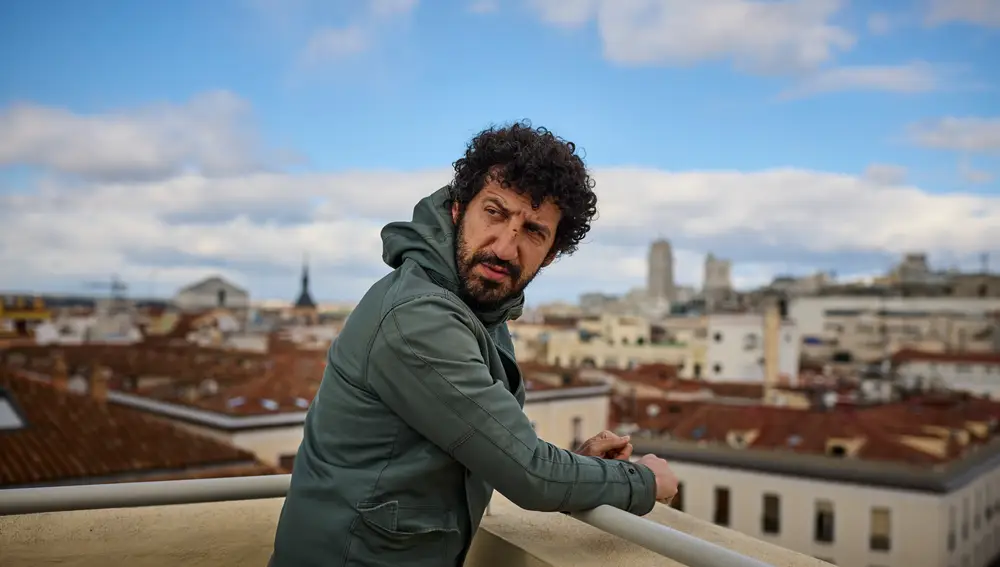
The interview is accompanied by a separate tribute piece from the same writer portraying Marwán as a lifelong troubadour, recalling more than a decade spent performing at Madrid's Libertad 8 and Galileo Galilei venues alongside musicians including Andrés Suárez, Luis Ramiro, Pez Mago, Conchita and Funambulista, part of the music scene that grew up around Madrid's Plaza del Rey.
Test yourself
What is the title of Marwán's new album?
Which songwriter did Marwán say was the only one to set both song and poetry to music spectacularly?
What does Marwán say is the real cause of Palestinian suffering?
Where it happened
Madrid, Spain